Alaska Rules for Riding a Trail to Town
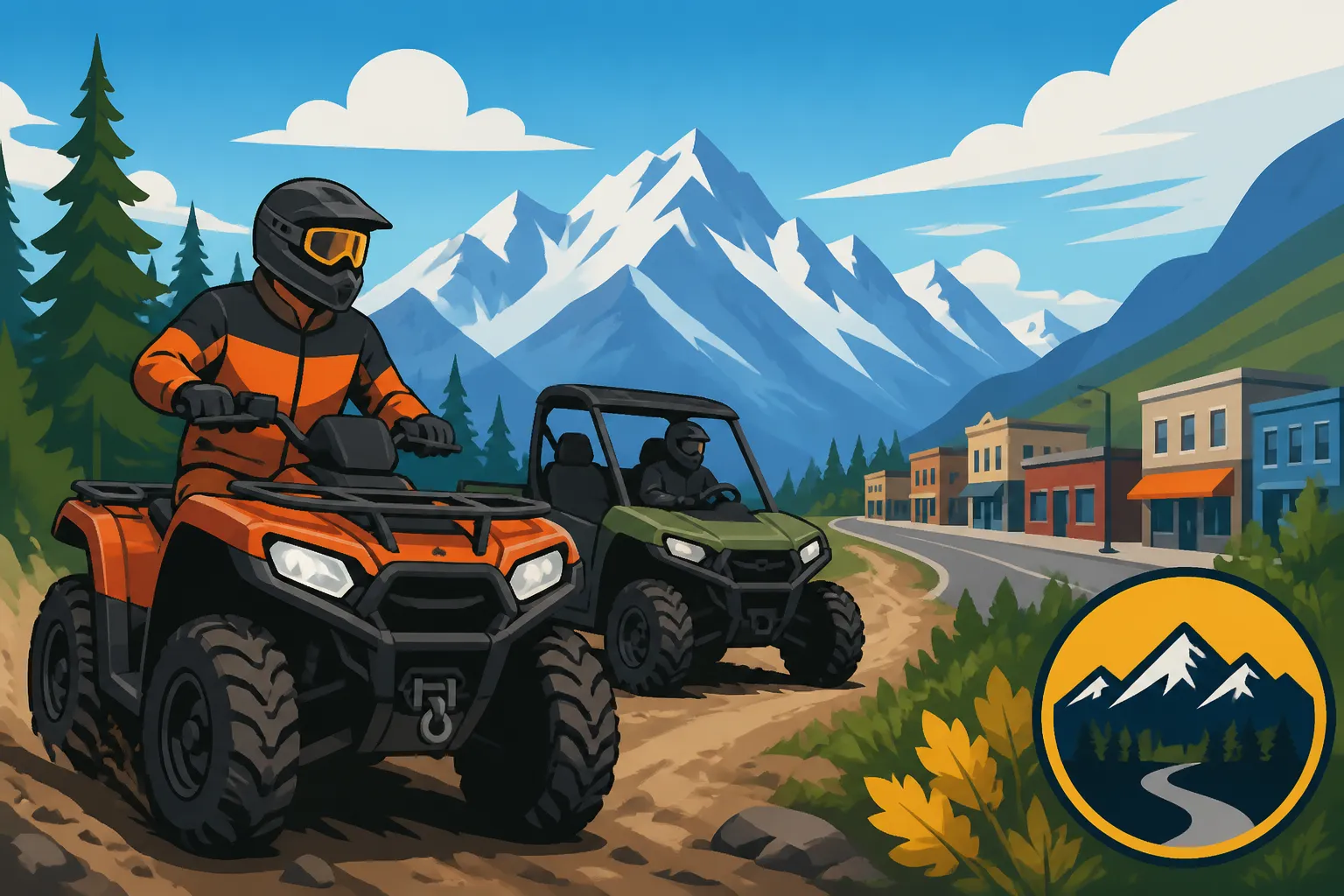
There's a unique pull in Alaska, a blend of rugged wilderness and the need to connect with civilization. It's not uncommon to be out on a trail, enjoying the vast landscapes on your ATV or UTV, only to find that the most direct route to town for fuel, supplies, or a hot meal involves a stretch of road. This desire to transition seamlessly from trail to pavement can lead to a lot of confusion and frustration, as the rules aren't always clear-cut. This guide is here to untangle the complexities of using your all-purpose vehicle to get from the trail into town, ensuring you understand what's allowed and, more importantly, what isn't.
Understanding Alaska's APV Road Use Framework
Navigating the rules for riding your ATV or UTV on Alaskan roads can feel like trying to read a map in a whiteout – confusing, to say the least. Unlike some states where general guidelines might apply across the board, Alaska's approach to all-purpose vehicle (APV) use on public roads is nuanced, often delegating critical decisions to local communities. It's a patchwork of regulations that requires riders to be diligent.
The General Prohibition on Road Riding
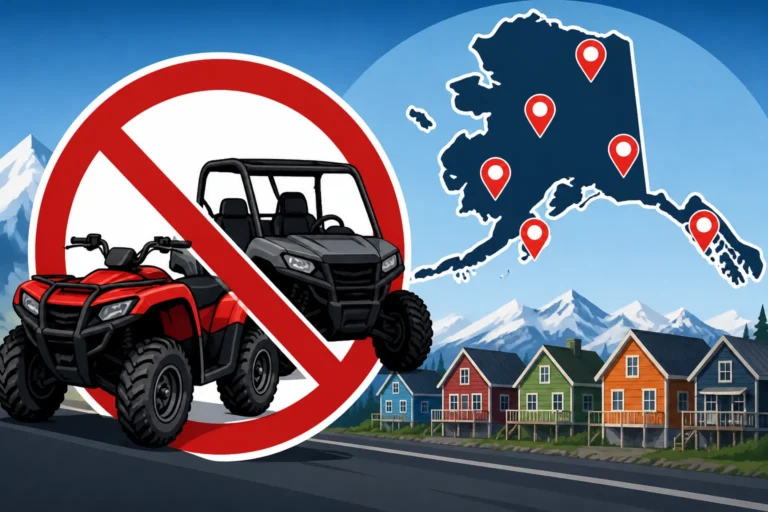
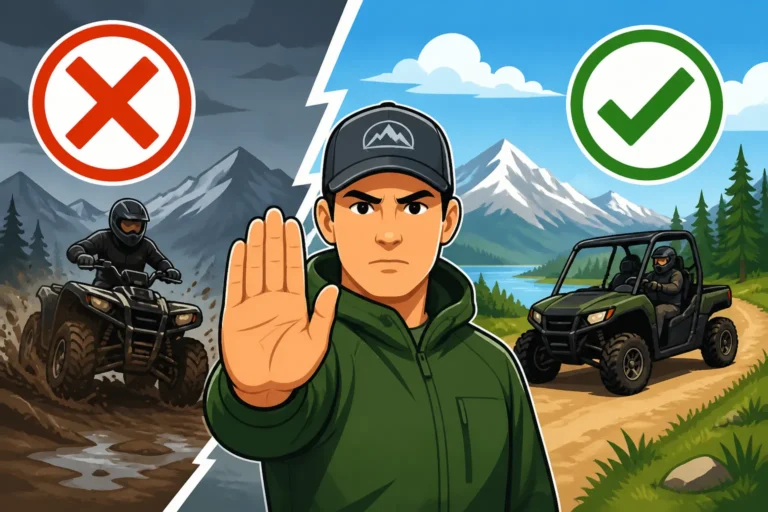
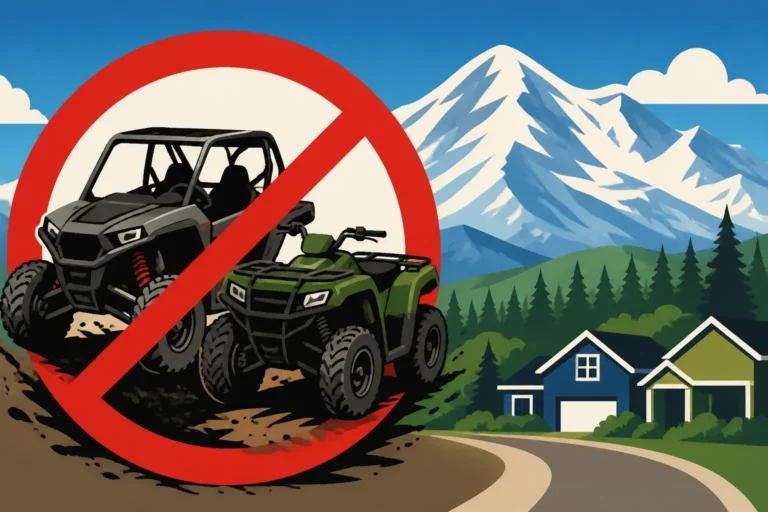
Let's start with the baseline: in Alaska, your ATV or UTV is generally not permitted on public roads. This isn't just about highways; it applies to most paved and maintained public thoroughfares. The state's primary concern here is safety. APVs are designed for off-road conditions, not for sharing space with cars, trucks, and larger vehicles at typical road speeds. Their handling characteristics, braking distances, and lack of certain safety features make them less suitable for road environments.
Think about it from the perspective of a driver in a regular vehicle. An ATV might be harder to spot, move differently, and simply not be expected on a roadway where cars are traveling at 55 mph or more. This general prohibition aims to prevent dangerous interactions and reduce accidents. While it might feel inconvenient when a trail dead-ends near a town, this rule is a foundational principle of Alaskan APV law. Simply cutting across a road or riding along the shoulder, even for a short distance, can put you at risk of a citation and, more importantly, a serious accident.
The "Trail to Town" Exception and Local Control
Now, for the critical nuance: Alaska law does allow communities to create exceptions to this general prohibition. Instead of a statewide "yes" or "no" for APV road use, it's left up to individual cities, boroughs, and villages to decide if and where they want to permit APVs on their local roads. This means that an APV rule that applies in Nome might be completely different from one in Anchorage or a smaller rural village. It creates a dynamic environment where a rider absolutely must check the local ordinance before venturing onto any public road.
These local decisions are typically driven by the unique needs and infrastructure of the community. In many Bush communities, for instance, ATVs and UTVs are essential transportation, and the "road" might just be a gravel path connecting homes to a store or airstrip. In contrast, larger, more developed communities like Anchorage have extensive road networks and higher traffic volumes, making broad APV road access impractical and unsafe. Understanding that this power rests with local governments is key to legal riding. You can't just assume; you have to investigate. The responsibility to know the rules falls squarely on the rider. If you're wondering about a specific area, looking up [Alaska Municipal ATV Ordinances] is a crucial first step.
Specific Conditions for Permitted Trail-to-Town Travel
When a community does decide to allow APVs on certain roads, it's never a free-for-all. There are always very specific conditions attached, designed to integrate APV traffic as safely as possible with conventional vehicle traffic. These conditions often relate to where you can ride, how fast you can go, and what equipment your machine must have.
Designated Roads and Speed Limits
If a community opens its roads to APVs, it's usually not every road. Often, it's specific, lower-traffic, lower-speed routes that are designated for APV use. Think residential streets, gravel roads, or roads leading directly to popular trailheads. These roads are typically identified by local signage, and it’s your job to look for them. You won't find yourself able to legally cruise down the main highway into town, even if you see others doing it.
Furthermore, there's a strict speed limit when APVs are allowed on any public road: you cannot exceed 45 mph. This is a statewide limit for APVs on public roadways, regardless of what the posted speed limit is for cars. So, even if the road is posted at 55 mph, your APV must adhere to the 45 mph maximum. [Alaska's 45 mph Road Limit for APVs] This speed restriction is another safety measure, acknowledging the inherent differences between APVs and street-legal vehicles. For instance, in a village setting, you might find specific streets designated, allowing a rider to move from a [Alaska Rules for Riding a Village Street] to a gravel thoroughfare. Similarly, if you're on a remote [Alaska Rules for Riding a Gravel Road] connecting to a smaller town, you'd still need to observe the 45 mph limit. These designated routes often act as connectors, bridging the gap between an extensive trail system and the amenities a town offers, but always with safety precautions in mind.
Equipment and Rider Requirements for Road Use
Just because a road is open to APVs doesn't mean your trail-ready machine is instantly street legal. When operating on a public road, even a designated one, your ATV or UTV must meet specific equipment requirements to enhance visibility and safety for everyone. This isn't optional; it's a legal necessity.
Your machine must have working headlights and taillights, visible from specific distances, along with reflectors. Brakes are a given, but they must be in good working order. A muffler is essential to control noise, and a spark arrester is often required, particularly in fire-prone areas, to prevent unintended ignitions. [Alaska OHV Equipment Requirements] For example, imagine you're riding your UTV, maybe one you've outfitted with SuperATV accessories like robust mirrors or brighter LED lights, thinking about how well they perform on the trail. Those very accessories become critical when you hit a designated road segment, ensuring you meet visibility and safety standards. Beyond the machine itself, the rider has requirements too. You need a valid Class D driver's license to operate an APV on a public road in Alaska. [Alaska Requires a Class D License] There's also a mandate for liability insurance. [Alaska Requires Liability Insurance for an APV] And don't forget the helmet law: if you're under 16, a helmet is legally required. [Alaska Helmet Law for Riders Under 16] These aren't just suggestions; they are legal obligations to protect both you and others on the road.
Navigating Local Ordinances and Enforcement
The decentralized nature of Alaska's APV road rules means that what's legal in one community can be a violation in the next. This makes understanding local ordinances paramount and can often be the most challenging aspect for riders new to an area or traveling through multiple jurisdictions.
Identifying Communities That Allow or Ban APV Road Use
It's a common misconception that if one town allows APVs on its streets, they all do. This simply isn't true in Alaska. Some communities have embraced APV road use as a practical necessity, while others have explicitly banned it to maintain traffic flow and safety for their residents. For example, communities like Nome and Bethel have extensive APV access on their city streets, reflecting their reliance on these vehicles for daily life. [Nome's Citywide OHV Access in Alaska] and [Bethel's ATV Ordinance in Alaska] offer clear examples of communities where APVs are integrated into the transportation fabric.
On the flip side, larger metropolitan areas have taken a different stance. Cities like Anchorage, Fairbanks, and Juneau, along with the more populated parts of the Mat-Su Valley (Wasilla and Palmer), generally prohibit APV use on public roads. [Alaska Bans APVs in Anchorage] and [Alaska Bans APVs in Fairbanks] are strict examples where you absolutely cannot ride your APV on the streets. This means you need to be very clear about where you are and what the local rules are. The best way to check is to visit the specific city or borough's official website, look for their municipal code or transportation ordinances, or even call the local police department or a DMV partner office. Don't rely on anecdotes or what you think you saw someone else doing.
Potential Consequences of Non-Compliance
Ignoring the local rules or simply not knowing them can lead to significant headaches and financial penalties. Riding an unregistered machine, or one that doesn't meet the equipment requirements, on a designated road can result in a citation. Worse still, riding on a road where APVs are explicitly prohibited will almost certainly land you in trouble. [Alaska Penalties for Riding Unregistered] can range from fines to impoundment of your machine, depending on the severity and frequency of the offense.
When you encounter law enforcement, whether it's an Alaska State Trooper or local police, they have the right to ask for your driver's license, proof of insurance, and machine registration. [What a Trooper Can Ask to See] If you're on a public road where you shouldn't be, or if your machine isn't equipped properly, you're not just risking a ticket; you're risking a costly learning experience. Furthermore, an accident on an unauthorized road can have severe implications for your insurance coverage. Your liability insurance might not cover damages if you were operating your vehicle in violation of local laws, potentially leaving you personally responsible for medical bills and property damage. It's a high-stakes gamble that's simply not worth taking.
Practical Strategies for Trail-to-Town Access
Making the most of Alaska's trail networks, while respecting the boundaries of its communities, requires a proactive and informed approach. Assuming you can simply "figure it out" once you reach the edge of town is a recipe for trouble.
Planning Your Route and Verifying Rules
The golden rule for any Alaskan APV adventure, especially one that might involve road segments, is to plan ahead. Never assume that a trail will legally lead you directly into a town center. Before you even load your machine, study maps. Look for official trail maps that clearly indicate permitted road crossings or designated APV routes into communities. Online mapping tools, combined with official city or borough websites, can be invaluable. Don't just trust a GPS routing meant for cars; it won't distinguish between APV-legal and APV-illegal roads.
Once you've identified a potential route, the next crucial step is verification. Call the local police department, the city clerk's office, or even a local DMV partner office in the community you intend to enter. Ask direct questions: "Are ATVs permitted on Main Street to access the gas station?" or "What are the designated routes for UTVs from the [Jim Creek Riding in Alaska] area into Palmer?" [Questions Worth Asking a DMV Clerk] will confirm or deny your assumptions. If there's any doubt, or if the rules seem too complex, seriously consider an alternative: staging your vehicle at a designated trailhead and using a truck and trailer to transport your APV into town. This might add a step, but it ensures you remain compliant and avoid potential fines.
Best Practices for Riding on Permitted Roads
If you've done your homework, confirmed that a specific road segment is legally accessible to your APV, and ensured your machine meets all equipment requirements, you're ready to proceed. However, riding on a public road, even a designated one, demands a different level of awareness and caution than trail riding.
Always ride defensively. Assume that other drivers might not see you, even if your machine is equipped with bright lights and reflective strips. Maintain a safe distance from other vehicles, and ride as far to the right side of the road as safely possible, giving larger vehicles ample room to pass. Use clear hand signals for turns and stops, and be especially vigilant at intersections. Remember the 45 mph speed limit – no matter how open the road feels, stick to it. Regularly check your lights, brakes, and tires to ensure they're in top condition; a quick visual inspection before you transition from trail to pavement can save a lot of grief. Outfitting your machine with SuperATV accessories like robust turn signals, an aftermarket horn, or a wider mirror can significantly enhance your safety profile and ensure you meet requirements. Always wear appropriate safety gear, including a helmet, even if you're an adult and the law only mandates it for younger riders. Being visible, predictable, and courteous on the road goes a long way in fostering good relations between APV riders and the general public, and helps ensure these vital trail-to-town connections remain open for everyone.
| Feature/Requirement | Trail-Only Riding (Generally) | Permitted Road Riding (Local Option) |
|---|---|---|
| Location | Designated trails, private land | Specific designated roads, gravel roads |
| Speed Limit | Varies by trail/conditions | Maximum 45 mph statewide for APVs |
| Driver's License | Not always required | Class D (standard car) license required |
| Insurance | Not always required | Liability insurance required |
| Headlights | Often required (dusk/night) | Required, visible 100 ft |
| Taillights | Often required (dusk/night) | Required, visible 1000 ft |
| Reflectors | Recommended | Required |
| Muffler | Required, spark arrester | Required, spark arrester |
| Helmet (Under 16) | Recommended | Required by law |
| Local Ordinance Check | Good practice | Absolutely essential before riding |
| Enforcement | Troopers, land managers | Troopers, local police |
Disclaimer
This article is for general informational purposes only and does not constitute professional advice. Laws, prices and regulations vary by location and change over time. Consult a qualified professional for guidance on your specific situation.