Alaska Rules for Riding a Shoulder
Riding an All-Purpose Vehicle (APV) in Alaska offers an unparalleled sense of freedom and access to some of the most breathtaking landscapes on earth. However, the open road – or, more specifically, the shoulder of the road – can be a confusing place for APV owners. Many folks assume that because they're not on the main travel lane, it's fair game, leading to frustration, citations, and even unsafe situations. This guide aims to clear up the often-misunderstood rules about riding an APV on the shoulder in Alaska, ensuring you can enjoy your machine safely and legally.
Understanding Alaska's APV Classification and Road Use
Before we delve into the specifics of shoulder riding, it's absolutely vital to understand what Alaska considers an APV and, more broadly, how these machines are viewed in relation to public roads. This foundational knowledge will help make sense of all the nuanced rules.
What Qualifies as an All-Purpose Vehicle APV in Alaska?
In Alaska, an All-Purpose Vehicle, or APV, is a specific classification that includes many of the recreational machines we love to ride. Generally, an APV is defined as a motor vehicle that is not a snowmobile, is not designed for travel on a highway, and does not exceed 60 inches in width or 1,200 pounds in weight. Think of your typical four-wheel ATV, many side-by-sides (UTVs) within those size limits, and even some specific types of dirt bikes.
However, it's just as important to know what isn't an APV under this definition when it comes to road use. Things like a standard passenger car, truck, or motorcycle are obviously out. But also, larger side-by-sides that exceed the width or weight limits may fall into a different category, or simply not be permitted for certain APV privileges. Similarly, three-wheelers and tracked vehicles are often excluded from the APV classification for road-related purposes. Understanding these distinctions is your first step to staying compliant on or near Alaska's road system.
The General Restrictions on APV Road Use
Here's the tough truth that many APV owners grapple with: in Alaska, APVs are generally not designed or intended for travel on public roads, and therefore, their use on roadways is restricted. The core principle is that public highways are for highway-legal vehicles. This means that, for the most part, you can't just hop on your quad and ride down the main highway like you would a car. This is a common source of confusion, especially for new residents or those coming from states with more permissive laws. The state wants to keep all travelers safe, and an APV operating at different speeds with different visibility than standard vehicles can pose a risk.
There are, however, specific, limited exceptions to this general prohibition, which is where the conversation about shoulder riding comes in. These exceptions are often granted to allow for practical purposes, such as connecting to trails, accessing remote properties, or crossing a highway safely. But it's crucial to remember that these are exceptions, not a green light for general road travel. For a deeper dive into the overall regulations, you might want to read [Alaska APV Road Rules Explained]. It's also worth noting that some communities have gone further and enacted outright bans on APV road use within their municipal limits, regardless of statewide allowances. For example, [Alaska Bans APVs in Anchorage] outlines how these local ordinances can affect your riding.
Specific Rules for Riding a Shoulder in Alaska
Alright, let's get down to the nitty-gritty of riding on the shoulder. While general road use is restricted, there are very specific circumstances where APV operation on the shoulder becomes permissible. These are not broad permissions, but rather narrow allowances for practical purposes.
When Shoulder Riding is Permitted and Why
Alaska law allows APVs to operate on the shoulder of a public highway only under certain conditions. These conditions are typically designed to facilitate access to trails or private property, or to safely cross a highway, rather than to allow for extended travel on the shoulder as a form of transportation.
Here are the primary scenarios where shoulder riding might be permitted:
- Crossing a Highway: If you need to get from one side of a highway to the other to access a trail or private land, you may be allowed to ride a short distance on the shoulder to make that crossing safely and directly. The key here is "safely and directly" – it's not an excuse for a joyride. [Crossing a Highway on a Quad in Alaska] covers this in more detail.
- Accessing a Trail or Private Property: If your trail access point or private property abuts a highway and there's no other reasonable way to get there, you might be permitted to use the shoulder for the shortest practical distance to reach your destination. This often applies in rural areas where dedicated trailheads are scarce, or where a village road system blends into a state highway.
- Connecting Designated APV-Legal Areas: In some limited instances, a community might have specific ordinances that designate short stretches of shoulder as legal connectors between APV-friendly zones. However, these are rare and highly localized, requiring you to do your homework on local laws.
It's absolutely essential to understand that these allowances are not an open invitation to cruise down the shoulder for miles. The intent is to minimize highway travel for APVs, not enable it. Think of it as a brief, necessary transit, not a riding opportunity.
The Importance of Designated "Street Legal" Equipment
Even if you're only using the shoulder for a brief, permitted transit, your APV needs to be properly equipped. Alaska law requires any APV operating on or immediately adjacent to a public highway (including the shoulder) to meet specific equipment standards to enhance safety and visibility. These aren't just suggestions; they're legal requirements.
Required equipment typically includes:
- Headlights and Taillights: These must be operational and visible from required distances, especially during dusk, dawn, or any low-light conditions.
- Brakes: Your braking system must be in good working order and capable of stopping the machine effectively.
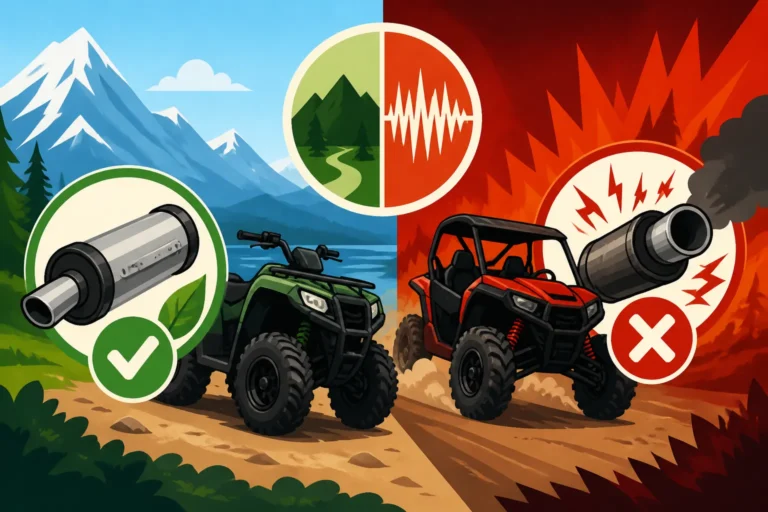
- Muffler and Emission Controls: To prevent excessive noise and pollution, your APV must have an effective muffler and comply with emission standards. Exhaust cutouts are a definite no-go.
- Spark Arrester: A spark arrester is crucial for preventing wildfires, particularly in dry conditions.
- Reflectors: Additional reflectors may be required to increase visibility to other motorists.
- Rear-view Mirror: While not always required for all APV operation, a mirror is highly advisable for situational awareness when near traffic, and often explicitly required for road-adjacent travel.
Many riders, myself included, look to aftermarket parts from companies like SuperATV to ensure their machine meets these requirements. Investing in quality lighting upgrades, robust mirrors, or well-designed fender flares (which often house required reflectors) can make a significant difference in both your safety and your compliance. Just make sure any modifications are installed correctly and actually meet the legal standards. For a comprehensive list of what your machine needs, check out [Alaska OHV Equipment Requirements]. Remember, having the right gear isn't just about avoiding a ticket; it's about making sure you're seen and can react appropriately when sharing space with highway traffic.
Practical Considerations and Safety for Shoulder Use
Even when permitted, riding on the shoulder presents its own unique challenges and requires a high degree of caution. It's not the same as riding a trail, and the risks are significantly higher due to proximity to high-speed traffic.
Navigating Different Shoulder Types and Conditions
Shoulders aren't all created equal, especially in Alaska. You'll encounter a variety of conditions, each with its own set of considerations:
- Paved Shoulders: These can feel like an extension of the road, but they often have debris, potholes, or rough edges not found in the main lane. Plus, traffic moves fast right next to you.
- Gravel Shoulders: Common on rural highways, gravel shoulders can be loose, uneven, and unpredictable. This is particularly true if they're freshly graded or if heavy rains have washed out sections. Riding on gravel can significantly impact steering and braking, requiring a slower speed and more deliberate control. For more on navigating these, see [Alaska Rules for Riding a Gravel Road].
- Narrow Shoulders: Sometimes, the "shoulder" is barely wider than your tires. In such cases, the margin for error is incredibly small, and you might be forced precariously close to the main travel lane or the ditch. If a shoulder is too narrow to ride safely, it's often best to find an alternative route if possible.
- Seasonal Conditions: Alaska's seasons drastically alter road and shoulder conditions. In winter, shoulders might be snow-covered, icy, or piled high with snow from plows, making them treacherous or impassable for an APV. During breakup (spring thaw), they can become muddy, soft, or riddled with standing water. And during dry summers, dust can be a major issue, reducing visibility for both you and other drivers. Always assess the conditions carefully before attempting any shoulder travel.
No matter the type, always assume that the shoulder is not as smooth, clear, or stable as the main roadway. Give yourself ample space, reduce your speed, and be extra vigilant for hazards that could cause you to lose control or swerve.
Minimizing Risk and Staying Compliant
When you do find yourself needing to use the shoulder, your primary goal should be safety and compliance. Here's how to minimize risks:
- Be Highly Visible: This cannot be stressed enough. Wear bright, reflective clothing. Ensure your headlights, taillights, and any additional running lights are fully operational. Consider an orange flag or whip light, especially if your APV might be obscured by roadside vegetation. This is even more critical when riding after dark; make sure you understand [Alaska Rules for Riding After Dark].
- Ride Predictably: Avoid sudden movements, swerving, or stopping abruptly. Signal your intentions clearly if you have turn signals, or use hand signals. Drivers of larger vehicles might not expect an APV on the shoulder and need extra cues.
- Maintain Awareness: Constantly scan for traffic, both in front of you and behind. Check your mirrors frequently. Be aware of driveways, crosswalks, and other areas where vehicles might enter or exit the highway.
- Know Your Speed Limits: Even on the shoulder, you must adhere to any posted speed limits applicable to APVs. Alaska generally imposes a [Alaska's 45 mph Road Limit for APVs] for APVs when they are allowed on designated roads. While you likely won't hit that speed on a shoulder, it's the maximum to keep in mind. More importantly, always ride at a speed appropriate for the conditions and your visibility.
- Carry Your Documents: Always have your driver's license (yes, you need one to operate an APV on or near a public road; [Alaska Requires a Class D License]), registration, and proof of insurance on you. A small, waterproof bag is perfect for this.
- Check Local Ordinances: Before you even consider riding on the shoulder, know the local rules. Many towns and boroughs have stricter regulations than the state, potentially banning APV shoulder use entirely within their limits. Before you invest in upgrades, always check local ordinances, as even a fully equipped machine with SuperATV parts might not be legal on city shoulders if the community has banned APV road use.
| Scenario for Shoulder Riding | Permitted? | Key Considerations |
|---|---|---|
| Crossing a Public Highway | Yes (Limited) | Shortest, safest, most direct path; full stop at road |
| Accessing a Trailhead | Yes (Limited) | Shortest distance; proper equipment; local rules |
| Connecting Private Property | Yes (Limited) | Shortest distance; proper equipment; no alternative |
| General Travel/Commuting | No | APVs not designed for highway travel; illegal |
| Extended Distance Riding | No | Not the intent of the law; unsafe |
| Avoiding Traffic Delays | No | Illegal and highly dangerous |
Penalties and Local Ordinances Impacting Shoulder Riding
Ignoring the rules for APV use on Alaska's road shoulders isn't just a minor infraction; it can lead to significant headaches, including fines, citations, and even impoundment of your machine. Furthermore, local governments play a huge role in determining what's permissible in their areas.
Consequences of Illegal Shoulder Use
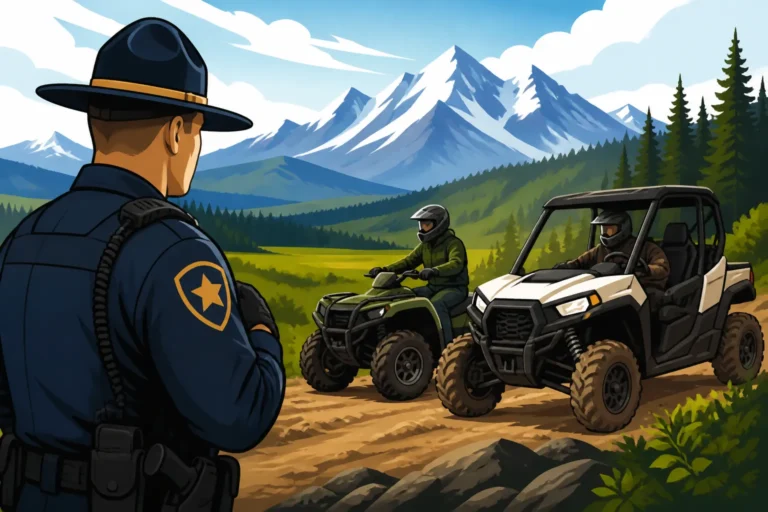
Alaska State Troopers and local law enforcement take road safety seriously, and that includes the proper use of APVs. If you're caught riding your APV illegally on a highway shoulder, you could face several penalties:
- Fines: The most common consequence is a citation with a monetary fine. The amount can vary depending on the specific violation (e.g., unauthorized road use, lack of required equipment, reckless operation). These fines can add up, making a quick, illegal ride a costly mistake. For an idea of general costs, you can look at [Alaska Ticket Costs for Road Riding].
- Impoundment: In more serious cases, especially for repeat offenses or dangerous driving, law enforcement might have the authority to impound your APV. Getting your machine back from impound can involve significant towing fees, storage costs, and further fines.
- Increased Insurance Rates: A citation for illegal APV operation on a roadway could be reported to your insurance provider, potentially leading to higher premiums.
- Accident Liability: If you're involved in an accident while illegally operating your APV on the shoulder, your liability could be significantly higher, and your insurance coverage might be denied. This risk alone should give every rider pause.
It's far better to err on the side of caution and ensure you're compliant than to face these consequences. The state's primary concern is public safety, and these rules are in place to protect all road users.
Checking Local City and Borough Rules
While Alaska has statewide regulations for APVs, local governments have considerable authority to implement their own ordinances regarding APV use on roads and shoulders within their jurisdiction. This means that what's technically permissible on a state highway's shoulder in one unorganized borough might be strictly forbidden on a city street's shoulder just a few miles away.
- Varied Regulations: Some cities have outright banned APV use on any public road or shoulder within their limits. [Alaska Municipal ATV Ordinances] discusses how these local rules can differ dramatically. You might find that while the state allows limited shoulder use, your specific town has opted to restrict it entirely.
- "Opt-Out" Communities: Alaska law provides for a mechanism where certain communities can "opt out" of the statewide APV road use allowances, essentially imposing stricter bans. It's vital to know which communities have done this. For example, [Eight Communities That Opted Out] provides a good starting point for understanding where APV road use is more heavily restricted.
- How to Check: Always, always check with the local city or borough offices, or consult their municipal code, before planning a ride that involves any road or shoulder travel. A quick phone call to the local police department or borough clerk's office can save you a lot of trouble. Don't rely on assumptions or what you've heard from others; official sources are the only reliable way to confirm local regulations.
Riding in Alaska offers incredible adventures, and understanding the rules about shoulder use is just one piece of ensuring those adventures are safe, legal, and stress-free. Always prioritize safety, respect the law, and do your homework on local regulations.
Disclaimer
This article is for general informational purposes only and does not constitute professional advice. Laws, prices and regulations vary by location and change over time. Consult a qualified professional for guidance on your specific situation.