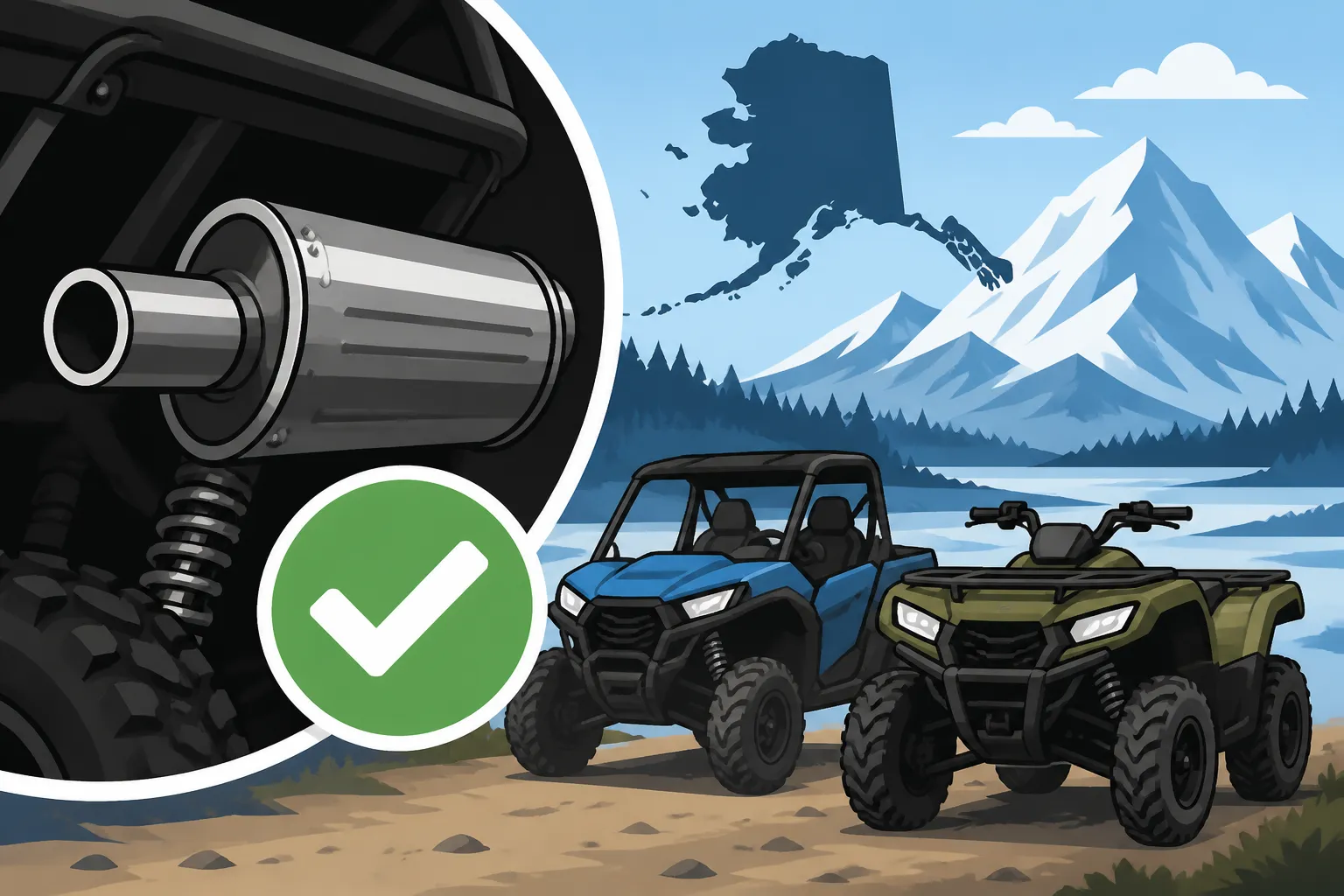
What Counts as a Legal Muffler in Alaska
There’s nothing quite like the sound of your ATV or UTV tearing through an Alaskan trail, but sometimes that sound can turn into a headache, not just for you but for everyone around. Figuring out what exactly counts as a "legal muffler" in Alaska for your all-purpose vehicle (APV) can feel like navigating a glacial river — confusing, ever-changing, and sometimes, frankly, a bit murky. This guide is here to clear the air, helping you understand the rules so you can ride with peace of mind and keep those magnificent Alaska trails open for everyone.
The Foundation of Alaska's APV Muffler Rules
Let's cut to the chase: Alaska law is pretty straightforward about the basic requirement for your APV's exhaust system. Simply put, your machine needs to be equipped with a muffler that is "in good working order" and designed to prevent excessive or unusual noise. This isn't just a suggestion; it's a legal expectation for anyone operating an APV on public lands. The goal here is to minimize noise pollution, which can disrupt wildlife, annoy other trail users, and even bother residents living near popular riding areas.
Think about it from a community perspective. When machines are excessively loud, it creates a negative perception of riders, which can lead to stricter regulations, trail closures, or even outright bans in certain areas. Nobody wants that, especially when we cherish our access to Alaska's incredible backcountry. So, having a proper muffler isn't just about avoiding a ticket; it's about being a good steward of the land and a respectful neighbor. The law also specifically prohibits muffler cutouts, bypasses, or anything that defeats the muffler's original purpose, so no quick fixes to make your machine louder. This means if you're thinking about modifying your exhaust, you need to be very careful to ensure it still meets these fundamental requirements. You'll find these rules are part of the broader [Alaska OHV Equipment Requirements] that cover everything from lights to brakes, all designed to keep you and others safe and respectful on the trails.
What "In Good Working Order" Truly Means
The phrase "in good working order" might sound a little vague, but in practice, it means your muffler should be performing as it was designed to. For most of us, this means the stock muffler that came with your ATV or UTV is your safest bet. These are engineered by the manufacturer to meet specific noise output standards and are generally accepted as compliant. If your stock muffler is free of holes, cracks, and has all its internal baffling intact, you're usually in good shape.
However, mufflers can degrade over time. Exposure to mud, water, rocks, and general wear and tear can lead to rust, punctures, or loose internal components. A muffler that once purred quietly might start rattling, hissing, or roaring due to damage. If you notice your machine getting progressively louder, or if you can see visible damage to your muffler, it's a pretty strong indicator that it's no longer "in good working order." Ignoring these signs isn't just annoying; it could put you in violation of the law. Regular inspections, especially after a particularly rough ride or before heading out for a long trip, can save you a lot of grief. It’s also important to remember that this "good working order" requirement isn’t just for brand new machines; it applies to every APV on the trail, no matter its age or mileage.
Why Factory Mufflers are the Gold Standard
When it comes to compliance, factory-installed mufflers are almost always the safest choice. Manufacturers spend a great deal of time and resources designing exhaust systems that balance performance with noise regulations, often in multiple jurisdictions. These systems are tested and certified to meet specific standards, making them inherently compliant with Alaska's general "good working order" stipulation. You’re not just getting a piece of equipment; you’re getting a design that has been thoroughly vetted.
If you're riding a machine with its original exhaust, and it's well-maintained, you likely don't have anything to worry about. The only exception would be if the muffler itself has suffered damage, as we discussed earlier. Many riders find that for general trail riding, the stock muffler provides perfectly adequate performance and sound without drawing unwanted attention. Plus, sticking with the factory design often ensures proper fitment and integration with other vehicle systems, which can sometimes be a challenge with aftermarket alternatives. It's a testament to the engineering that goes into these machines, providing a solid foundation for legal and enjoyable riding.
The Pitfalls of Aftermarket and Modified Exhaust Systems
This is where things can get a bit tricky for riders who want to customize their machines. While there's a huge market for aftermarket exhaust systems, not all of them are designed with legal compliance in mind, especially when it comes to noise. Many aftermarket mufflers are specifically designed to increase horsepower or torque, and often, that comes at the cost of increased sound output. The key is to understand the difference between a performance upgrade and a legal modification.
If you’re considering an aftermarket muffler, you really need to do your homework. Look for products that explicitly state they are "trail compliant" or "noise compliant" for specific jurisdictions. Be wary of anything marketed as "race only" or "for closed course use," as these are almost certainly going to be too loud for public trails. The intent of the law is to keep things reasonably quiet, not to ban all modifications. However, if your modification makes your machine significantly louder than stock, you're inviting trouble. [Alaska Muffler and Noise Rules] are in place to ensure a respectful environment for everyone, and a loud aftermarket exhaust can quickly put you on the wrong side of those rules. It’s also worth considering that a louder machine doesn't necessarily mean better performance in a real-world trail scenario; often, it just means more noise.
Banned Modifications: Cutouts and Bypasses
Alaska law explicitly outlaws muffler cutouts, bypasses, or any device that "defeats the operating effectiveness of the muffler." This is a critical point that many riders, particularly those new to the sport or new to Alaska, might overlook. A "cutout" is essentially a valve or flap that allows exhaust gases to bypass the muffler, making the machine much louder with the flip of a switch. A "bypass" system achieves the same effect, typically by routing exhaust gases around the muffler altogether.
These modifications are a definite no-go for APVs on public lands in Alaska. They are designed for one purpose: to make the machine louder. Even if you claim you only use the cutout on private land, the mere presence of such a device on your APV when you're operating it on public property can be enough for a violation. Law enforcement officers, including Alaska State Troopers and park rangers, are familiar with these types of modifications and will be looking for them, particularly in areas where noise complaints are common. The spirit of the law is clear: your muffler must be working all the time to reduce noise, not just when you decide to engage it. This isn't unique to Alaska; many states have similar prohibitions to combat excessive noise from off-road vehicles.
The Spark Arrester Requirement: A Related, but Separate, Issue
While we're talking about exhaust systems, it's crucial to mention spark arresters. Alaska law mandates that all APVs operated on public land must be equipped with a U.S. Forest Service approved spark arrester. This is a separate component from the muffler itself, though it's often integrated into the muffler design. Its purpose is to prevent hot carbon particles (sparks) from exiting the exhaust system, which could potentially ignite dry grass or other flammable materials and start a wildfire.
So, while your muffler handles the noise, the spark arrester handles fire prevention. Both are essential for legal and responsible riding in Alaska, especially given our often-dry summers and the vast expanses of wildland. Many aftermarket mufflers for trail use will come with an integrated spark arrester, but always double-check. If you have an older machine or a modified exhaust, make sure your spark arrester is present, in good condition, and hasn't been removed or damaged. A missing or ineffective spark arrester is not only illegal but could also be incredibly dangerous. For more details on this crucial piece of equipment, check out [Alaska Spark Arrester Requirements].
Navigating Aftermarket Choices and Avoiding Fines
So, you're looking to upgrade or replace your muffler and want to make sure you stay compliant. It's totally doable, but it requires careful selection. The aftermarket world is vast, and companies like SuperATV offer a range of products for ATVs and UTVs, including exhaust components. When looking at options, don't just focus on performance gains; prioritize those that specifically mention noise reduction or compliance with general off-road vehicle regulations.
A good rule of thumb: if it sounds too good to be true (e.g., promises huge horsepower gains with a ridiculously aggressive sound), it probably isn't compliant for public trail use. Look for phrases like "OEM replacement," "trail legal," or "designed to meet [specific noise standards, if applicable, although Alaska's are general]." Many manufacturers now produce "quiet core" inserts or specific "forestry legal" exhaust systems that are designed to meet stricter noise requirements. These are the kinds of products you should be seeking out.
| Muffler Type | Compliance Status (Generally) | Key Characteristics | Risks of Use on Public Land |
|---|---|---|---|
| Stock/Factory | Generally Compliant | Designed by manufacturer, tested for noise/emissions | Damage can make it non-compliant |
| Aftermarket "Quiet" | Generally Compliant | Explicitly designed for noise reduction/trail use | Must ensure proper spark arrester |
| Aftermarket "Performance" | Often Non-Compliant | Designed for max power, usually louder than stock | Increased risk of citations, noise complaints |
| Muffler Cutouts/Bypasses | Illegal (Explicitly Banned) | Allows exhaust to bypass muffler for loud output | Direct violation, higher fines |
| Damaged Stock Muffler | Non-Compliant | Holes, cracks, loose baffles, excessive noise | Seen as not "in good working order" |
| Straight Pipe | Illegal | No muffler at all, extremely loud | Direct violation, severe noise issues |
What to Ask Before You Buy (or Ride)
Before you hit "buy" on an aftermarket exhaust or head out on the trails with a questionable setup, ask yourself a few questions:
- Is it significantly louder than my stock exhaust was? If the answer is yes, you're likely heading into non-compliant territory.
- Does the product description explicitly state it's trail-legal or compliant for public land use? If not, assume it's not.
- Does it have a U.S. Forest Service approved spark arrester? This is non-negotiable.
- Can I hear my machine from a significant distance away when riding at a moderate speed? If so, others can too, and that often leads to complaints.
It's also worth checking with local riding clubs or forums. Experienced Alaskan riders often have valuable insights into what works and what doesn't for specific machines and local regulations. While not legal advice, it can be a good practical gauge. Furthermore, familiarize yourself with [Alaska Noise Complaints About Quads] to understand the real-world impact of loud machines.
Consequences of Non-Compliance
Riding with a non-compliant muffler isn't just a minor inconvenience; it can lead to legal penalties. If a law enforcement officer, such as an Alaska State Trooper or a park ranger, determines your muffler is not in good working order or is illegally modified, you could face a citation. The specific fines can vary, but generally, tickets for equipment violations can add up quickly. It's a lot more expensive and frustrating to pay a fine than it is to invest in a proper, compliant exhaust system upfront.
Beyond the monetary cost, there's the broader impact. Excessive noise can lead to public outcry, which in turn can lead to tighter restrictions on riding areas, reduced access, or even outright closures. We want to protect our access to Alaska's magnificent backcountry trails, and that means riding responsibly, including keeping our machines reasonably quiet. Nobody wants to be the reason an amazing trail system gets shut down because of noise complaints. So, making sure your muffler is legal is not just about personal compliance; it's about preserving the future of ATV and UTV riding for all of us here in Alaska. Remember, [What a Trooper Can Ask to See] includes your vehicle's equipment, so having everything in order is crucial.
Practical Tips for Muffler Maintenance and Compliance
Keeping your APV's exhaust system legal really boils down to regular maintenance and making informed choices when it comes to replacements or upgrades. Don't wait until you're pulled over or until your machine is making an unholy racket to address muffler issues. A little proactive effort goes a long way.
First, make regular visual inspections part of your pre-ride checklist. Look for obvious signs of damage: rust holes, cracks, loose heat shields, or anything that looks like it could be rattling or allowing exhaust gas to escape prematurely. Also, listen to your machine. Does it sound different than it used to? Is it noticeably louder? These are all indicators that something might be amiss with your muffler. If you’re considering an upgrade, definitely explore options that prioritize noise reduction and meet trail-friendly standards. For example, some performance exhaust systems are designed with removable quiet inserts, offering flexibility for different riding environments. Just make sure those inserts are in place and functioning when you're on public land.
Proper Installation and Sealing
Even a compliant muffler can become problematic if it's not installed correctly. Leaks in the exhaust system, often at the manifold or pipe junctions, can create additional noise that sounds like an exhaust issue. Ensure all clamps are tight, gaskets are properly seated, and there are no gaps where exhaust gases can escape. A loose bolt or a worn-out gasket can compromise the entire system's effectiveness and lead to unnecessary noise.
If you're installing an aftermarket system, make sure it fits perfectly without requiring excessive force or modification. Some aftermarket parts, even from reputable brands, might have slight variations, so taking your time during installation or having a professional do it can prevent issues. If you’re not comfortable tackling an exhaust replacement yourself, taking it to a trusted mechanic is always a wise choice. They can ensure everything is sealed correctly and that your machine meets all necessary requirements for the trails. This attention to detail will keep your machine running smoothly and quietly for longer.
Why Quiet Matters Beyond the Law
It's easy to focus solely on the legal aspects of muffler compliance, but there are broader reasons why a quieter machine is simply better. For starters, it enhances your own riding experience. Excessive noise can be fatiguing, making long rides less enjoyable. It also allows you to be more aware of your surroundings, hearing approaching wildlife, other riders, or even potential mechanical issues with your own machine that might otherwise be masked by loud exhaust.
Furthermore, a quieter APV is a courtesy to everyone else who shares the Alaskan wilderness. This includes hikers, campers, fishermen, hunters, and even the wildlife itself. Respecting the soundscape helps maintain a positive image for all riders and ensures continued access to the incredible network of trails we have up here. A little consideration for noise can go a long way in fostering good relationships with other user groups and protecting our privilege to explore Alaska by ATV and UTV. So, whether you're riding through the Mat-Su Valley or deep in a remote bush community, making sure your machine is quiet and compliant is a crucial part of being a responsible Alaskan rider.
Disclaimer
This article is for general informational purposes only and does not constitute professional advice. Laws, prices and regulations vary by location and change over time. Consult a qualified professional for guidance on your specific situation.