Riding to the Airstrip
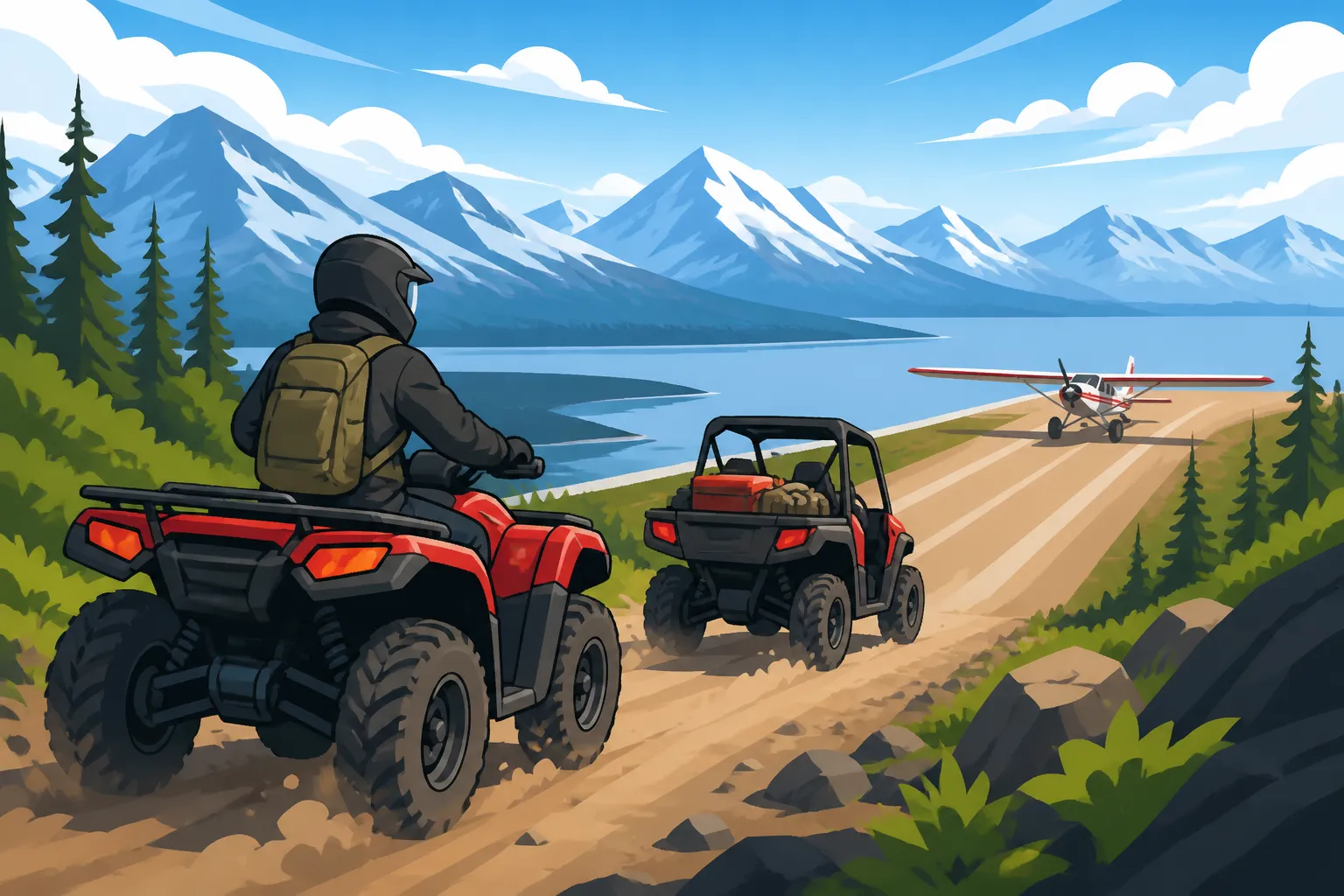
Getting to remote cabins, hunting grounds, or even just picking up supplies often means relying on a small plane, and that plane needs a place to land. For many Alaskans, those "airstrips" are far from paved runways and can require navigating challenging terrain. Trying to figure out the rules for riding your ATV or UTV to and from these vital hubs can feel like a maze, leaving you wondering what's allowed and, more importantly, what's safe. This guide will help you understand the unique considerations and practical steps for using your all-purpose vehicle to access Alaska's diverse airstrips, ensuring you get there and back without a hitch.
Understanding Airstrip Access and Regulations in Alaska
When we talk about "airstrips" in Alaska, we're often not picturing a bustling international airport with control towers and paved runways. Instead, we're thinking about everything from designated public airfields in small communities to gravel strips carved into the wilderness, private landing areas on homesteads, or even just a wide, flat stretch of river bar or tundra that a bush plane can use. Each of these comes with its own set of unwritten rules, and sometimes, very explicit regulations. The key frustration for many ATV and UTV riders is that the rules aren't always clear-cut, or they might be highly localized.
Public and Private Airstrips
Public airstrips, particularly those maintained by the Alaska Department of Transportation and Public Facilities (DOT&PF), generally have clearer guidelines. These are often found near villages or smaller towns and are designed for community access. While you might be able to ride to the edge of one of these, riding on the active runway or taxiways is almost universally prohibited for non-aircraft vehicles unless specifically authorized. This isn't just about safety; it's about protecting the integrity of the runway surface and preventing foreign object debris (FOD) that could damage an aircraft. If you're approaching a public airstrip, look for signs indicating ATV/UTV parking areas, or designated access routes that keep you clear of active air traffic. Remember, pilots often have very limited visibility from the cockpit, especially on approach or during taxiing.
Private airstrips are a whole different ballgame. These are often on private land, associated with a lodge, a remote cabin, or a personal property. Access to these will depend entirely on the landowner's permission. If you're visiting someone with a private strip, you absolutely need to ask them about their specific rules for ATV/UTV use. They might have designated paths, specific times of day they don't fly, or areas where they prefer you park. Disregarding these requests isn't just rude; it's trespassing and could put you and others in danger. For instance, a common frustration is not knowing if an airstrip is actively in use or not, leading to a surprise encounter. Always assume an airstrip is active unless proven otherwise, especially in Alaska where planes are often the primary mode of transportation.
Wilderness Landing Strips and Impromptu Sites
Then there are the informal landing spots – gravel bars along braided rivers, long stretches of beach, or even wide, flat tundra benches. These aren't "airstrips" in the traditional sense, but they serve the same purpose for bush pilots. When navigating to these locations, your ATV or UTV is your lifeline, and you might be riding miles over challenging terrain. The rules here are less about formal regulations and more about common sense, respect for the environment, and extreme caution. You are deep in the backcountry, likely on state or federal land, and you need to be acutely aware of [Alaska State Park Riding Rules] or [Alaska BLM Land Riding Rules]. The key takeaway: just because it looks like a wide-open space, doesn't mean it's safe or appropriate to treat as your personal drag strip.
| Airstrip Type | Common Ownership/Management | Typical ATV/UTV Access Rules | Key Consideration for Riders |
|---|---|---|---|
| Public Airfields | State (DOT&PF) | Ride to perimeter, designated parking. No riding on active runway/taxiway. | Watch for signage; assume active air traffic. |
| Private Airstrips | Private Landowner | Requires explicit permission and adherence to landowner's rules. | Always get permission first. Respect owner's directives. |
| Wilderness Strips | State/Federal Land | Often no specific rules beyond general land-use. Avoid disturbing land. | Extreme caution, environmental awareness. Treat as active landing zones. |
| Impromptu Sites | State/Federal Land | No formal rules. Use at your own risk. Very high caution advised. | Treat as a remote backcountry journey. Anticipate hazards. |
Essential Equipment for Airstrip Riding
Making the journey to an Alaskan airstrip, especially those off the beaten path, requires more than just a functioning ATV or UTV. You need to be prepared for the actual travel to the strip, and then ensure you're visible and respectful when you arrive. Many riders find it frustrating to constantly switch between trail-riding gear and specific items needed for higher visibility around aircraft.
Visibility and Safety Gear
Visibility is paramount when you're operating an ATV or UTV near any kind of air traffic. Aircraft move incredibly fast, and pilots have blind spots. Therefore, anything you can do to make your machine stand out is a wise investment. Consider adding a tall, brightly colored whip flag to your ATV or UTV. These flags, often seen on dunes, extend above your machine, making you much more noticeable, especially from the air. A well-placed flag can make all the difference, particularly if you're crossing an open area that might double as a landing zone. Some riders even add flashing amber lights to their machines, similar to what you'd see on construction equipment, to enhance visibility in low light or adverse weather.
Beyond external lighting, ensure your machine's standard lights are in perfect working order. [Alaska Night Riding Equipment Rules] are crucial here, as many flights, especially during hunting season or emergency situations, happen at dusk or dawn. You'll want bright headlights, taillights, and reflectors that meet state requirements. If you're carrying cargo, ensure it doesn't obstruct these lights. This might also be where heavy-duty components from brands like SuperATV come in handy – a robust bumper with integrated light mounts can not only protect your machine but also provide excellent platforms for additional visibility lighting.
Navigation and Communication Tools
Navigating to remote airstrips often means leaving marked trails behind. A reliable GPS unit, loaded with detailed topo maps, is essential. Cell service is spotty to non-existent in much of rural Alaska, so don't rely on your smartphone for navigation once you're off the road system. Always carry a physical map and compass as a backup, and know how to use them. For communication, a satellite messenger or satellite phone is highly recommended. [Choosing a Satellite Messenger for a Backcountry Ride] can be life-saving if you encounter an emergency, especially since you'll likely be traveling alone or in a small group to these remote spots.
Think about how you'll communicate with others, including potentially the pilot, if you're waiting for a pickup or drop-off. Some pilots might have handheld radios or specific frequencies they monitor. If you know the pilot's call sign or frequency, having a basic two-way radio might be beneficial, but don't assume they're listening unless pre-arranged. The most reliable method of communication is often simply your planned arrival and departure times shared with the pilot or your contact person, augmented by your satellite messenger for check-ins.
Emergency and Recovery Gear
Any trip to a remote airstrip is essentially a backcountry excursion. Pack for self-sufficiency. This means carrying spare fuel, a tire repair kit, a first-aid kit, emergency food and water, shelter, and appropriate layers of clothing. A small shovel, an axe or saw, and a winch (or heavy-duty tow strap if your machine isn't equipped with a winch) are invaluable for self-recovery if you get stuck in mud, snow, or soft river gravel. Even with the best tires, Alaska's terrain can be unforgiving. Consider heavy-duty suspension components or even portal gear lifts from a company like SuperATV if you frequently encounter deep ruts or large obstacles on your way to these strips, as they can significantly improve ground clearance and durability. You don't want to miss your flight because your ATV is buried in the mud a mile from the strip.
Safety Protocols and Best Practices Near Airstrips
Riding an ATV or UTV to an airstrip isn't just about getting there; it's about operating safely once you're in the vicinity of aircraft. This requires a different mindset than trail riding, focusing on awareness, communication, and environmental responsibility. The biggest frustration here is often the unpredictable nature of aircraft and not knowing when one might arrive or depart.
Awareness of Air Traffic
Always assume an airstrip is active, even if it looks deserted. Aircraft can arrive or depart with little warning, especially in remote areas where flight plans might be informal. When approaching any airstrip, slow down, be alert, and scan the sky and the runway area continuously. Listen for the sound of approaching aircraft. Engine noise can be difficult to discern over your own machine's engine, so periodically stop and listen. Teach anyone riding with you to do the same. If you see or hear an aircraft, immediately pull off the active runway or taxiway (if you are on one, which you generally shouldn't be) and stop. Park your machine far enough away so it doesn't obstruct the pilot's view or path. A pilot's perspective from the air can be very different from your ground-level view.
Never ride directly on an active runway or taxiway unless you have explicit permission and have coordinated with the pilot or airport management. Even then, extreme caution is necessary. Foreign object debris (FOD) is a major concern for aircraft. Your ATV or UTV can kick up rocks, mud, or other debris that could be ingested by a propeller or jet engine, causing catastrophic damage. Be mindful of this when operating near gravel or dirt strips.
Communication and Coordination
If you are expecting a plane, establish a clear communication plan with the pilot beforehand. This could involve specific times, radio frequencies, or even agreed-upon visual signals. For example, some pilots might ask you to set up a small campfire (where safe and permitted) to create a smoke column that helps them determine wind direction. If you have a two-way radio, confirm the pilot's frequency.
When a plane is on approach or taxiing, avoid sudden movements or bright lights that could distract or confuse the pilot. Make yourself and your machine as predictable as possible. If you need to cross a runway, ensure it's clear in both directions, and do so quickly and efficiently. But again, the best practice is to avoid crossing active runways at all. Your priority is to yield to all air traffic and ensure their safe operation. This isn't just a courtesy; it's a critical safety measure. [Alaska Accident Reporting for an ATV Crash] applies in remote areas too, and a collision with an aircraft would be devastating.
Environmental Responsibility
Many backcountry airstrips are in pristine environments. Your responsibility as an ATV/UTV rider extends beyond safety to environmental protection. Stick to established trails or roads leading to the airstrip. Avoid creating new tracks across sensitive tundra or wetlands. [Alaska Tundra Damage and Riding] and [Alaska Wetland Travel Restrictions Explained] are serious concerns in our state. Mud and water crossings should be approached with care to minimize erosion and sediment discharge into streams, especially those vital for salmon.
Proper disposal of waste, including any fuel or oil, is crucial. Pack out everything you pack in. If you're camping near an airstrip waiting for a plane, practice Leave No Trace principles. Remote Alaska airstrips are often gateways to incredible wilderness experiences; let's keep them that way for everyone.
Navigating Different Airstrip Types in Alaska
Alaska's diverse landscape means a diverse range of airstrips, each presenting unique challenges and requiring specific considerations for ATV and UTV riders. The journey to the airstrip is often just as demanding as the destination.
DOT&PF Maintained Airstrips
These are typically the most "formal" of the backcountry airstrips. They might have a designated windsock, a small shelter, or even primitive facilities. While they are maintained, they might still be gravel or dirt. The access roads to these airstrips can range from well-graded gravel to rough, unmaintained tracks. You might encounter other vehicles, including cars and trucks, on these access routes. Always adhere to posted speed limits and be aware of other traffic. When you get close to the airstrip, look for specific signs indicating ATV/UTV parking. Do not park on the runway, taxiways, or anywhere that obstructs aircraft movement or visibility. If you're picking up passengers, coordinate a safe meeting point off the active surface.
For these larger public strips, [Alaska APV Road Rules Explained] may even apply on the access roads leading directly to the facility, if those roads are considered part of the public road system. It's a fine line and one that local communities often interpret differently. So, if you're riding your machine to a village airstrip, make sure your registration is current, and you understand local ordinances.
Remote Wilderness Landing Strips (River Bars, Beaches, Tundra)
This is where the true Alaskan adventure begins, and your ATV/UTV is absolutely indispensable. Accessing these informal landing areas means traversing raw wilderness. The "road" might be a game trail, a frozen river, or simply an overland route you've scouted. For these trips, your machine needs to be robust, and you need to be an experienced backcountry rider. Consider heavy-duty tires from a brand like SuperATV that can handle sharp rocks, mud, and sand. A snorkel kit might be a good idea if you anticipate deep water crossings across braided rivers.
When you arrive at a river bar or beach that a plane uses, remember that these surfaces are dynamic. A river bar can shift, or a beach can be affected by tides. Be mindful of soft sand, quicksand, or mud that could trap your machine. Always scout the area on foot if possible, especially if it's unfamiliar. When the plane arrives, ensure your machine is parked well away from the landing and takeoff path, and preferably out of any soft spots where it might get stuck during the pilot's turnaround. [Alaska Rules for Riding a Frozen River] or [Alaska Rules for Riding a Beach] become especially relevant here, as these are often the "airstrips" themselves. The environmental impact of your travel is also magnified in these fragile areas; respect the land.
Private Airstrips on Homesteads or Cabins
Accessing these typically means you have a relationship with the landowner. The access "road" might be a private driveway, a cleared path through the woods, or simply a trail. Always confirm your route with the landowner. They'll tell you the best way to get there and where to park your ATV/UTV. Because these are private, the landowner's rules are paramount. They might have specific times they prefer no vehicle traffic, or certain areas they want to keep clear. Your machine might be needed to ferry gear or supplies from the plane to the cabin, so understanding the layout and the landowner's preferences is key. This is less about formal regulations and more about good neighborliness and communication.
No matter the type of airstrip, the overarching principle is safety, respect for air traffic, and environmental stewardship. Alaska's unique reliance on aviation means that ATV/UTV riders share these vital arteries with pilots, and understanding how to coexist is essential for everyone's safety and enjoyment of the Last Frontier.
Disclaimer
This article is for general informational purposes only and does not constitute professional advice. Laws, prices and regulations vary by location and change over time. Consult a qualified professional for guidance on your specific situation.