Riding Between Alaska Villages on a Trail
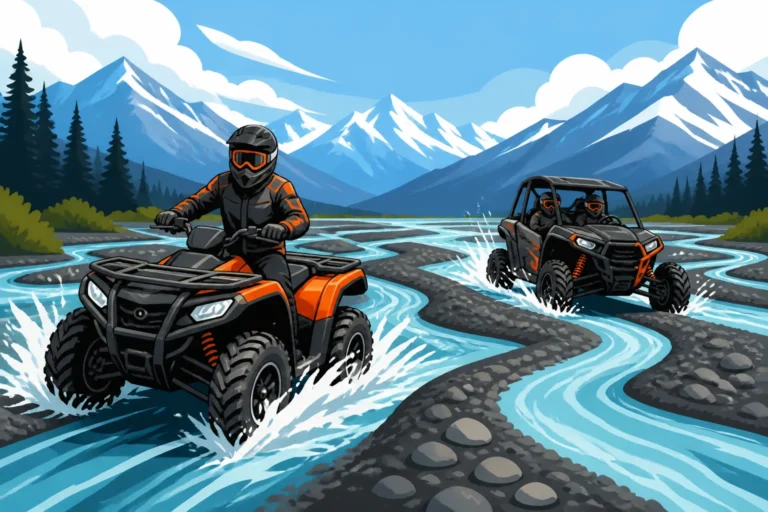
The idea of hopping on your ATV or UTV and making a trek between Alaska villages, especially those off the road system, holds a deep allure for many. It embodies a sense of freedom, adventure, and connection to the vast Alaskan wilderness that few other experiences can offer. However, the reality of these journeys often brings a complex web of land ownership, local customs, and environmental considerations that can be incredibly challenging to navigate without proper knowledge. This guide is here to walk you through the essential steps and considerations for planning a responsible and rewarding village-to-village ATV journey in Alaska.
Understanding Alaska's Unique Land Landscape for Inter-Village Travel
When you think about riding an ATV in other states, you might picture designated trail systems or vast tracts of public land. Alaska, especially off the main road grid, is a different beast entirely. It's a land of intricate legal and traditional boundaries, and understanding this patchwork is the first, most crucial step in planning any inter-village journey.
The Patchwork of Ownership Off the Road System
Alaska's land is a mosaic of different ownership types, a legacy of historical land claims and settlements. You'll encounter state-owned lands, federal lands (managed by agencies like the Bureau of Land Management, U.S. Forest Service, or U.S. Fish and Wildlife Service within their refuges), private lands (including homesteads and individual parcels), and, most significantly, lands owned by Alaska Native Corporations. Many villages are situated on or surrounded by Native Corporation lands, which are private. This means you can't just assume open access, even if a trail looks well-used. Imagine planning a trip from Bethel to Chefornak; you'll be traversing vast stretches of land that are not "public" in the traditional sense, but rather managed by specific corporations or entities. Knowing the difference and identifying who owns the ground beneath your tires is paramount, and often requires consulting land status maps or contacting local land managers. [Alaska Land Ownership and Who to Ask] is an invaluable resource here.
Navigating this can feel like piecing together a complex puzzle, but it’s absolutely essential. Riding across someone else’s property without permission, whether it's a private individual’s land or that of a Native Corporation, is trespassing and can lead to serious legal consequences, not to mention creating ill will within the communities you wish to visit. It’s not uncommon for these boundaries to be unmarked in the field, so relying solely on visual cues or past experiences of others can lead you astray. Always do your homework beforehand.
Designated Trails Versus Unofficial Routes
Many routes connecting Alaska villages evolved organically over centuries, originally used by dog teams, walkers, or traditional hunters and trappers. Today, some of these have become recognized "trails," while others remain informal lines of travel. The distinction is critical. A designated trail might have some level of public access, often through an easement or agreement, though permits may still be required. An unofficial route, however, might cross private property for its entire length, or parts of it could be on lands where ATV access is restricted or outright prohibited.
For instance, a "mail trail" connecting two villages might have a long history of public use, yet the land it traverses could still be owned by a Native Corporation or be within a federal refuge. This doesn't automatically grant you permission to ride. It simply means the route has historical significance. It's vital to inquire whether the trail you intend to use has any specific agreements for ATV traffic, or if it's simply a commonly traveled path that requires individual landowner permissions. Just because someone else has ridden it doesn't mean it's legal or advisable for you. These nuances are what make inter-village travel in Alaska so unique and require diligent research and respect for local norms.
Seasonal Changes and Their Impact on Travel
Alaska's seasons don't just change the scenery; they fundamentally alter the landscape and the very feasibility of ATV travel between villages. What might be a passable route in deep winter on frozen ground becomes an impassable, environmentally destructive swamp during breakup.
Here's how the seasons dictate your journey:
- Breakup (Spring): This period, typically from April to June, is when the ice melts and the ground thaws. Trails become quagmires of deep mud, water, and overflow. River crossings become treacherous, if not impossible, due to high, fast-moving water. Riding during breakup is not only incredibly difficult but also causes severe damage to tundra, wetlands, and trails, leading to closures and significant environmental impact. It's generally advised to avoid inter-village ATV travel during this time. [Breakup and Why Trails Close] explains why this period is so challenging.
- Summer: While the ground might be drier in some areas, summer often means more delicate tundra and wetlands. Riding off established routes or on saturated ground can cause irreversible damage. Insect populations also explode, adding another layer of challenge. River levels can fluctuate dramatically with rain or glacial melt.
- Freeze-Up (Fall/Early Winter): As temperatures drop and the ground begins to freeze, travel becomes easier. However, "freeze-up" itself can be a dangerous transition period with thin ice and unpredictable conditions. It's crucial to wait until the ground is solidly frozen and ice is thick enough for safe crossings. [Freeze-Up and When Riding Resumes] delves into the complexities of this transition.
- Winter: This is often the prime time for inter-village travel off the road system, as frozen ground, lakes, and rivers create stable "highways." Snow cover protects the delicate tundra, and frozen rivers allow for safe crossings. However, extreme cold, blizzards, and short daylight hours present their own severe challenges, demanding meticulous preparation and advanced cold-weather riding skills.
Always factor in the time of year and specific ground conditions before embarking on an inter-village ride. Local knowledge about current conditions is invaluable.
Navigating the Legalities: Permits, Permissions, and Respect
Beyond understanding the physical landscape, the legal and social landscape of inter-village travel is equally, if not more, complex. You're not just riding through nature; you're often moving through ancestral lands and active communities, and respect for their rules and traditions is paramount.
Securing Permission for Native Corporation and Private Lands
This is perhaps the single most important legal hurdle for village-to-village ATV travel. Most villages, particularly those not on the main road system, are surrounded by lands owned by Alaska Native Regional Corporations and Village Corporations. These are private lands, and riding on them without explicit permission is trespassing. It's not like a national forest where implied access is common.
Here’s what you need to know:
- Regional and Village Corporations: Alaska has 12 regional Native Corporations and over 200 village corporations. Each manages its land differently. Some may have formal permitting processes for non-shareholders, complete with fees and specific trail designations. Others might require direct contact with the village council or a land manager for permission. [Alaska Native Corporation Land Permissions] are not standardized across the state.
- Applying for Permits: Start early. Contact the relevant Regional and Village Corporations for the areas you plan to traverse. Be specific about your route, dates, and purpose. Be prepared to pay a fee, provide insurance information, and adhere to strict rules about where you can ride, what you can carry, and how you behave.
- Proof of Permission: Always carry physical copies of your permits. A simple verbal agreement might not hold up if you encounter a land manager or local authority in the field. This documentation proves you've done your due diligence and respected their land.
- Why it Matters: Beyond the legal ramifications of trespassing, obtaining permission shows respect for the land and its traditional owners. It fosters good relationships and ensures you're not inadvertently disrupting subsistence activities, traplines, or sacred sites. Ignoring this step is not only illegal but deeply disrespectful. [Alaska Village Corporation Land Rules] vary wildly, making individual outreach essential.
State and Federal Land Considerations
While Native Corporation lands require specific permissions, state and federal lands have their own sets of rules.
- Alaska State Lands: Much of Alaska is state land, managed by the Alaska Department of Natural Resources (DNR). For general recreational ATV use on state land, Alaska has a [Alaska's Statewide General Permit for ATV Use]. This permit allows you to operate an ATV on designated state lands without applying for individual permits for each trip. However, it does not cover state parks, private lands (including Native Corporation lands), or federal lands. It's a broad authorization but has significant limitations. You still need to ensure your machine is registered with the state if you're riding on public property.
- Federal Lands: If your route crosses federal lands managed by agencies like the BLM, U.S. Forest Service, or U.S. Fish and Wildlife Service, you'll need to understand their specific regulations. For example, wildlife refuges often have very strict rules about where and when ATVs are allowed, frequently limiting them to specific designated trails or corridors to protect wildlife. [Alaska BLM Land Riding Rules] are generally more permissive than those in a wildlife refuge, but still require adherence to "travel management plans" that dictate where you can and cannot go. It's never a one-size-fits-all situation; always check with the local field office for the specific federal land you intend to traverse.
Local Ordinances and Village-Specific Rules
Even if you have all your land permits in order, the villages themselves often have their own local ordinances regarding ATV use within their community boundaries. What might be perfectly acceptable out on the trail could be a major violation once you enter a village.
Consider these common village rules:
- Speed Limits: Villages almost universally have reduced speed limits, often as low as 10-15 mph, to ensure pedestrian safety, reduce dust, and minimize noise.
- Noise Restrictions: Loud exhausts can be a significant nuisance in a quiet village environment. Be mindful of your machine's noise output.
- Designated Routes: Some villages may restrict ATV travel to specific roads or trails within their limits, prohibiting riding through residential areas or across open fields. [Riding to the Airstrip] or [Riding to the Store] might be acceptable, but weaving through a neighborhood might not be.
- Curfews: Some communities may have curfews for ATV operation, particularly at night, to reduce disturbances.
- Asking Permission: It’s always a good idea, and a sign of respect, to check in with the Village Council or a local elder upon arrival, especially if you’re a stranger. They can provide valuable, up-to-the-minute information on local conditions, traditions, and any temporary closures or special considerations. [Asking Before You Ride Through] is not just good manners, it's often practical advice.
Ignoring these local rules not only risks fines but can also create resentment towards visiting riders, potentially jeopardizing future access for everyone. Your actions reflect on the entire ATV community.
Essential Preparation for Village-to-Village ATV Journeys
Alaska's backcountry is unforgiving. A breakdown or an oversight in preparation miles from the nearest road or village can quickly turn an adventure into a life-threatening situation. Meticulous planning and readiness are not optional; they are survival imperatives.
Machine Readiness and Maintenance
Your ATV or UTV is your lifeline in the Alaskan wilderness. It needs to be in peak condition for any inter-village journey. This isn't just about a quick oil change; it's about making sure every component is ready for sustained abuse and extreme conditions.
Key considerations for your machine:
- Pre-Trip Inspection: Go beyond the basics. Check every nut and bolt, inspect all fluids, tires (including spare), brakes, lights, and electrical systems. Look for worn belts, cracked hoses, or frayed cables. A loose battery terminal can strand you just as easily as a blown engine.
- Reliability Upgrades: Consider what might fail and reinforce it. Heavy-duty suspension components, reinforced skid plates (especially if you're crossing rocky terrain or ice chunks), and robust tires are vital. Brands like SuperATV offer a range of aftermarket parts specifically designed to enhance durability and performance in challenging conditions, from axles to winches. A good winch, for instance, is absolutely non-negotiable for self-recovery if you get stuck in mud, snow, or a riverbed.
- Tools and Spares: Pack a comprehensive toolkit specific to your machine, including wrenches, sockets, screwdrivers, a tire repair kit (plugs, patches, air pump), extra spark plugs, a spare drive belt, fuses, and basic fluids (oil, coolant). Knowing how to use these tools for basic field repairs is as important as having them.
- Fuel Management: Fuel sources are few and far between off the road system. Calculate your fuel consumption meticulously and carry extra fuel in approved containers. Consider fuel cached along a known route, but always verify its availability and reliability. [Fuel Cached Along a Route] and [Carrying Extra Fuel Safely] are crucial reads for this aspect of preparation.
Communication and Safety Gear
Cell phone service is virtually non-existent between villages off the main road grid. Your safety hinges on reliable alternative communication and a well-stocked safety kit.
What to pack and why:
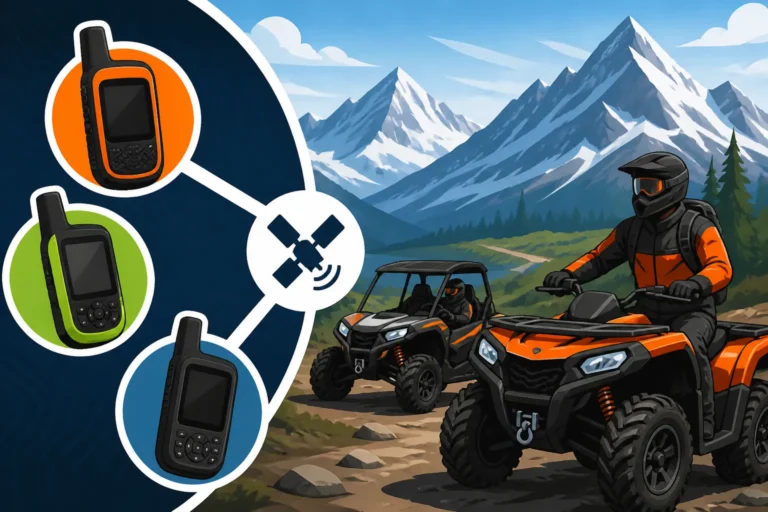
- Satellite Messenger/PLB: A satellite messenger (like a Garmin inReach or Zoleo) is essential for two-way communication and sending SOS signals when out of cell range. A Personal Locator Beacon (PLB) is a one-way distress signal but can save your life in an emergency. These devices are not optional for backcountry Alaska travel. [Choosing a Satellite Messenger for a Backcountry Ride] can help you decide.
- GPS Device and Maps: While you might have a GPS on your phone, a dedicated handheld GPS is more durable and reliable in extreme temperatures. Load it with detailed topographical maps of your route. Carry physical paper maps and a compass as a backup – batteries die, electronics fail.
- First Aid Kit: A comprehensive wilderness first aid kit is critical, capable of handling everything from minor cuts to severe trauma. Consider taking a wilderness first aid course.
- Survival Gear: This includes a fire starter, emergency shelter (tarp or bivy sack), knife, headlamp with extra batteries, and a whistle.
- Appropriate Clothing: Layers, layers, layers! Even in summer, Alaska weather can change rapidly. Waterproof outerwear, insulated layers, and warm hats/gloves are essential, regardless of the season.
- Bear Spray: Always carry bear spray (and know how to use it) in bear country. [Bear Encounters on a Trail] are a real possibility.
- Trip Plan: Always leave a detailed trip plan with a trusted person, including your route, expected timeline, vehicle description, and emergency contacts. [Filing a Trip Plan With Someone] is a basic but vital safety measure.
Packing for the Journey and Unexpected Delays
The vast distances and remote nature of inter-village travel mean you must be prepared for everything and anything. Unexpected delays are common, whether due to weather, a mechanical issue, or simply getting stuck.
Packing strategy for resilience:
- Food and Water: Carry enough non-perishable food for several extra days beyond your planned trip length. Water purification tablets or a filter are also wise, as readily available potable water might be scarce.
- Shelter and Warmth: Even if you don't plan to camp, carrying an emergency bivy bag or a small tent and a sleeping bag rated for colder temperatures can be life-saving if you're stranded overnight. A small, lightweight stove and fuel for melting snow or heating water can also make a huge difference in an emergency.
- Secure Your Load: Everything you pack needs to be securely fastened to your ATV/UTV. Bungees and cargo nets are good for light items, but for critical gear and fuel, use strong straps and secure containers. Riding on rough trails will shake everything loose if it’s not properly secured.
- Self-Recovery Gear: Beyond a winch, consider carrying a shovel, an axe or saw (for clearing downed trees or gathering firewood), and traction aids like Maxtrax or a similar product if you anticipate mud or snow. Getting stuck is not a matter of if, but when.
| Item Category | Essential for Inter-Village Travel | Why It's Crucial |
|---|---|---|
| Navigation | Satellite Messenger/PLB, GPS (pre-loaded maps), Paper Maps, Compass | No cell service; for communication, distress calls, and staying on track. |
| Machine Spares/Tools | Full Toolkit, Tire Repair Kit, Air Pump, Spare Belt, Fuses, Fluids | Field repairs are inevitable; self-reliance is key in remote areas. |
| Survival | First Aid Kit, Fire Starter, Emergency Shelter, Headlamp, Knife, Bear Spray | Preparedness for injury, unexpected overnight stays, and wildlife encounters. |
| Fuel & Hydration | Extra Fuel (approved containers), Water Filter/Tablets, Extra Food | Fuel stations are rare; reliable water sources may be contaminated; delays are common. |
| Clothing | Layered, Waterproof Outerwear, Insulated Layers, Warm Hats/Gloves | Alaska weather changes rapidly and dramatically; hypothermia is a constant threat. |
| Recovery | Winch, Shovel, Ax/Saw, Traction Aids | Getting stuck in mud, snow, or river crossings is a high probability. |
Respecting the Culture and Environment on the Trail
Riding between villages in Alaska is more than just a recreational activity; it's an immersion in a unique cultural and ecological landscape. How you conduct yourself can have lasting impacts, both on the environment and on your welcome within the communities you visit.
Minimizing Environmental Impact
Alaska's environment, particularly its vast tundra and wetlands, is incredibly fragile. Damage caused by irresponsible ATV use can take decades, even centuries, to recover. Preserving this pristine wilderness is a shared responsibility.
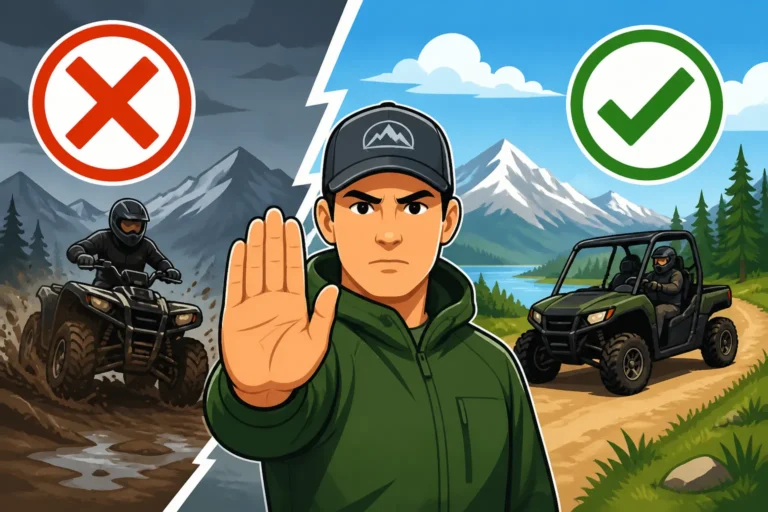
- Stay on Established Trails: This is the golden rule. Avoid creating new trails or cutting across open tundra, especially during the summer and breakup seasons when the ground is soft. Tundra mats, once broken, erode quickly and create long-lasting scars. [Alaska Tundra Damage and Riding] can show you the long-term effects.
- Respect Wetland Restrictions: Many areas are designated wetlands and have specific travel restrictions to protect delicate ecosystems. Riding through these areas can damage vegetation, disrupt wildlife habitats, and create deep ruts that alter natural water flow. [Alaska Wetland Riding Restrictions] are in place for a reason.
- Ride When the Ground is Frozen: Whenever possible, plan your inter-village trips during winter when the ground is solidly frozen and covered in snow. This significantly reduces the impact on fragile vegetation and allows for easier, less damaging travel.
- Practice Leave No Trace Principles: Pack out everything you pack in, including all trash, food scraps, and human waste. Leave no trace of your presence. This extends to not disturbing historical sites, natural features, or wildlife.
Interacting with Local Communities
The villages you pass through are not merely checkpoints on your route; they are vibrant, living communities with their own cultures, traditions, and ways of life. Approaching them with respect and humility is crucial.
- Slow Down in Villages: As mentioned earlier, reduce your speed to a crawl when entering any village. This isn't just about safety; it's about showing respect for residents, especially children and elders, and minimizing dust and noise.
- Be Mindful of Subsistence Activities: Many rural Alaskans rely on subsistence hunting, fishing, and trapping for their food and livelihood. Be aware of your surroundings; don't ride near active traplines, disrupt hunting grounds, or interfere with fishing camps. These activities are vital to local survival and culture.
- Ask Before You Trespass: Even for short detours, if you're unsure about land ownership, ask. Whether it's to cut across a field to the airstrip or to access a specific area, obtaining permission from a local resident or the village council is always the best approach. [Riding to the Store] or [Riding Between Alaska Villages on a Trail] should be done with local input.
- Be Polite and Courteous: A friendly wave, a respectful greeting, and a genuine interest in local life can go a long way. Remember, you are a guest in their home territory. Leave a positive impression.
Wildlife Encounters and Responsible Riding
Alaska is rich with wildlife, and encounters are an integral part of the backcountry experience. Your responsibility is to ensure these encounters are safe for both you and the animals.
- Give Wildlife Space: Never approach wildlife, especially large animals like moose and bears. Give them a wide berth and avoid actions that might stress or habituate them to human presence. If an animal is on the trail, wait patiently for it to move on or find a safe, wide detour. [Moose on a Winter Trail] can be surprisingly assertive.
- Secure Food: If you are stopping or camping, ensure all food and scented items are stored in bear-resistant containers or hung from a tree, away from your machine and sleeping area. This prevents attracting bears and other animals.
- Be Prepared for Encounters: Carry bear spray and know how to use it. Make noise when riding through dense brush to avoid surprising animals. Travel in groups whenever possible, as it can deter some wildlife encounters.
- Report Concerns: If you observe an injured animal or unusual wildlife behavior that could pose a public safety risk, report it to the Alaska Department of Fish and Game or the Alaska Wildlife Troopers.
By meticulously planning your route, obtaining necessary permissions, preparing for the extreme conditions, and riding with unwavering respect for the land and its people, your village-to-village ATV journey in Alaska can be an unparalleled and deeply rewarding adventure.
Disclaimer
This article is for general informational purposes only and does not constitute professional advice. Laws, prices and regulations vary by location and change over time. Consult a qualified professional for guidance on your specific situation.