Skid Plates for River Rock
River rock can turn a routine Alaska ride into an expensive repair when a quad or side-by-side bottoms out on a sharp stone. A properly fitted skid plate helps protect vulnerable underbody parts, but it cannot make every crossing safe. This guide explains what to protect, how to choose and inspect a plate, and how to ride rocky terrain with better judgment.
Why river rock is hard on an ATV or UTV
What can get damaged underneath
On rocky trails, the underside of a machine can meet obstacles even when the tires seem to clear them. A ridge of rock, a submerged boulder, or a sudden drop between stones can strike the frame or components below it. The risk is especially easy to underestimate in Alaska, where glacial rivers and creek beds can have uneven bottoms that are difficult to read from the bank.
The vulnerable parts vary by machine, but may include the engine case, transmission housing, frame rails, and other low-mounted components. A direct impact can crack a housing, bend a bracket, or leave a machine unable to continue. Even if there is no obvious break, a hard hit can loosen hardware or damage a plate enough to cause problems later.
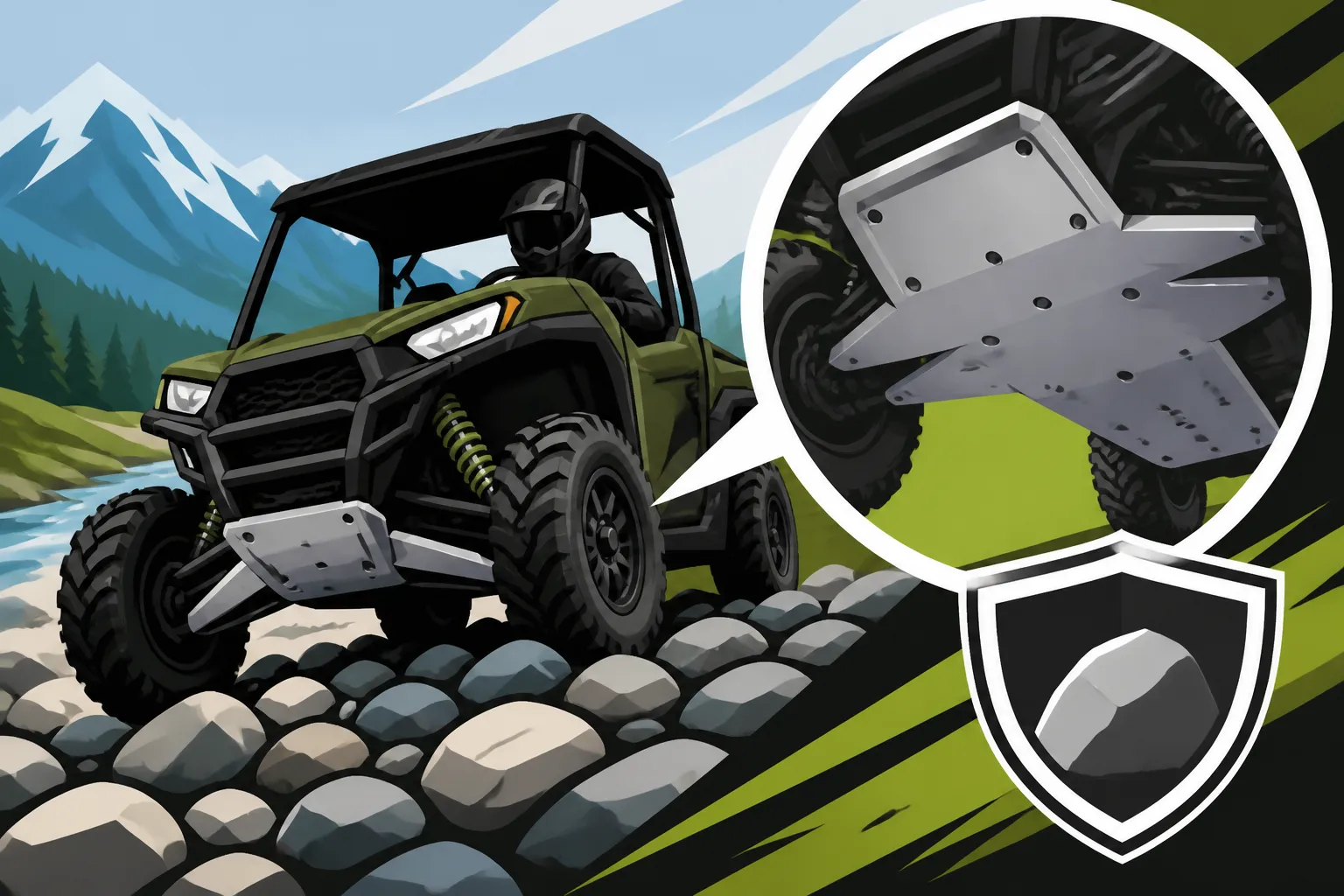
A skid plate is a protective barrier between obstacles and the machine’s underbody. It is not a promise that nothing can be damaged. It may spread or deflect an impact, but the result depends on the plate’s design, installation, the type of rock, and how the machine contacts it. A heavy strike can still transmit force through the plate and into the frame or nearby parts.
Why Alaska river crossings deserve extra caution
A riverbed is not a fixed trail surface. Water can conceal rocks, holes, and changes in depth, while glacial silt can make the bottom hard to see. Braided channels may split and shift, and what looked passable earlier in the day can change with water level or flow. A skid plate helps with underbody protection, but it does not reduce the risks of fast water, unstable footing, or getting stranded mid-crossing.
Before any crossing, assess the water and route from a safe position, and don’t treat another rider’s tracks as proof that the same line is safe now. Read Reading a Glacial River Before You Cross and Turning Back at a Deep Channel for the kind of judgment that matters more than armor. If the depth, current, or bottom is uncertain, the prudent choice may be to turn around.
It also helps to separate “rocky trail” from “river crossing.” A machine may handle a rough, dry section with little trouble but be poorly suited to a moving channel with submerged obstacles. For more context on what makes these routes challenging, see Alaska Braided Glacial River Crossings and Crossing a Braided Channel.
Choosing skid plates for rocky Alaska terrain
Match the plate to the machine and the exposure
Start with fitment, not appearance. A plate should be designed for the exact make, model, and year of your ATV or UTV, because mounting points and underbody layouts can differ even among machines that look similar. Check what the kit covers and whether it protects the areas you are most likely to expose to rock strikes. A partial plate may guard one central section while leaving other components uncovered.
Think about where and how you ride. Someone mostly traveling on maintained, relatively smooth routes may have different needs from a rider regularly tackling rocky approaches or uneven river margins. More coverage can offer protection, but it may also add weight, affect access for maintenance, or collect mud and debris. Choose based on your real use rather than assuming the most extensive option is automatically best.
Make sure the manufacturer’s fitment information aligns with any accessories or modifications already on the machine. A winch, frame component, or aftermarket part can affect installation or clearance. If you are unsure whether a plate will fit without interference, ask a qualified installer or the plate maker before modifying it. Cutting or drilling a plate without understanding the design can weaken it or create fitment problems.
Compare materials, coverage, and serviceability
Skid plates are commonly made from materials such as plastic, aluminum, or steel. Each option involves tradeoffs in weight, impact behavior, durability, noise, and maintenance. The right choice depends on the machine, terrain, and owner priorities; there is no single material that is best for every rider.
| What to compare | Why it matters on rocky terrain | What to check |
|---|---|---|
| Fitment | A poorly fitted plate may leave critical areas exposed or interfere with components | Exact machine model and year |
| Coverage | Different kits protect different sections of the underside | Engine, transmission, frame rails, and other vulnerable areas |
| Material | Weight, impact behavior, and upkeep vary | Manufacturer specifications and intended use |
| Mounting hardware | Loose or unsuitable hardware can compromise protection | Included fasteners, mounting points, and installation instructions |
| Maintenance access | Plates can make routine inspection or service less convenient | Drain, inspection, and service access described by the maker |
| Clearance | A plate may affect the space between the machine and obstacles | Installed fit and any changes to usable clearance |
Look for clear product information about coverage, mounting, and maintenance access. A plate that is difficult to remove or inspect may be neglected, especially when you are tired after a long ride. Keep the instructions and any installation notes with your machine’s service records so you know what was fitted and how it should be checked.
Don’t assume a plate will slide over every boulder or let the machine safely cross a deep channel. Its purpose is to protect against certain kinds of contact, not to replace sound route choices. Pair underbody protection with suitable tires, a conservative line, and good awareness of the conditions; Tires for Glacial Silt covers another part of preparing a machine for Alaska terrain.
Consider the rest of the machine’s setup
Skid plates are one piece of a broader preparation plan. Tires, clearance, load, and riding style all affect how likely the underbody is to hit rocks. A loaded UTV may behave differently from an unladen machine, and a route that was manageable on one setup may be uncomfortable or unsafe on another. Avoid assuming that a plate compensates for poor traction or inadequate clearance.
Other accessories should be chosen for specific needs, not simply because the terrain looks rugged. For example, a snorkel addresses water exposure for certain components; it does not make a machine safe in deep or fast-moving water. If you are evaluating that kind of equipment, see Snorkels for Deep Crossings and consider the separate hazards involved in entering water at all.
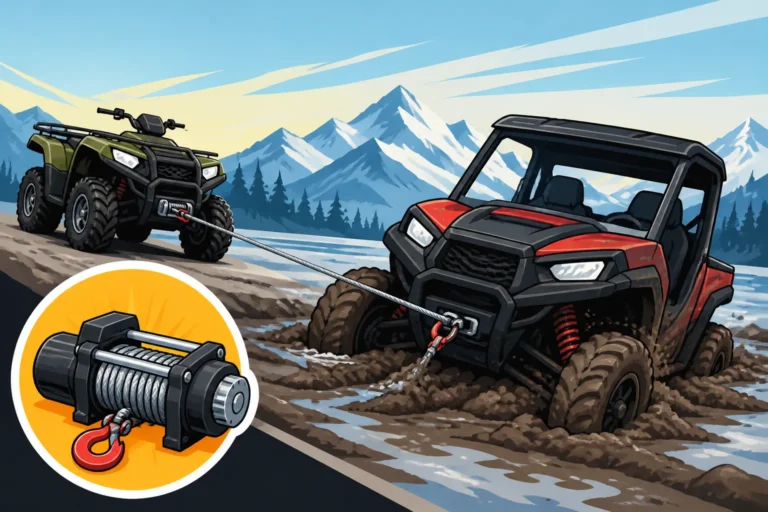
A recovery tool can also be useful in remote terrain, but it is not a reason to attempt a crossing that exceeds your ability or the machine’s limits. A winch may help in some stuck-machine situations, yet recovery can be hazardous and may be impossible if the anchor point or conditions are unsuitable. Plan around the possibility of turning back, not just the hope of getting through; Winches for a Stuck Machine explains a related part of recovery preparation.
Installing and inspecting a skid plate
Prepare before the first ride
Install the plate according to the manufacturer’s instructions. Work on a stable surface, secure the machine, and make sure you can reach the mounting points safely. If the instructions call for specific hardware or tightening procedures, follow them rather than improvising. For an installation that requires unfamiliar tools or access to critical components, professional help can be worthwhile.
Before fitting the plate, inspect the underside for existing damage, loose parts, or debris. Installing over a problem can make it harder to spot later. Check that the plate sits in the intended position and does not press against hoses, wiring, moving components, or other parts that need clearance. If something does not line up, stop and confirm the fitment rather than forcing it into place.
After installation, check the plate again after the first ride, especially if the route was rough. Look for shifted hardware, fresh scrapes, bending, or contact marks in unexpected places. Follow the product maker’s guidance for checking fasteners; don’t guess at a tightening value or procedure. Keep an eye on any inspection or service openings so the plate doesn’t hide a developing leak or other issue.
Check it after rock contact
A fresh scrape is not automatically a reason to replace a plate, but a deep gouge, crack, bent section, or loose mounting point deserves attention. Look for signs that the plate has pushed into a component behind it, changed position, or trapped stones and mud. If you hear new rattling or notice a change in handling or machine behavior after a hard hit, stop somewhere safe and inspect before continuing.
Pay attention to repeated impacts in the same area. They may indicate a riding line that is too aggressive, a clearance limitation, or a coverage gap. A plate that repeatedly catches on obstacles can also affect progress and control. Avoid trying to “power over” rocks simply because the underside is protected; a sudden impact can still upset the machine or leave it hung up.
At the end of the ride, clean enough material away to inspect the plate and surrounding underbody. This is especially useful after muddy or silty travel, where debris can conceal damage. Keep a simple record of notable impacts and repairs. Over time, that record can help you decide whether the plate is suited to your routes or whether your riding approach needs to change.
Riding rocky routes with better underbody protection
Choose a line slowly and deliberately
On a rocky trail, reduce speed enough to read the terrain and avoid rushing into an obstacle you have not assessed. Look ahead for the likely path of the tires and the lowest parts of the machine. A line that clears the front tires may still bring a frame rail or central underbody area onto a rock. If you cannot see the next section clearly, stop in a safe place and take a closer look rather than relying on momentum.
Where practical, keep the machine balanced and avoid abrupt steering or throttle changes around uneven rocks. Ask a passenger to stay seated as instructed by the vehicle maker, and avoid sudden weight shifts. If you are traveling with others, leave enough room to stop and communicate about hazards without crowding the rider ahead.
The best line is not always the most direct one. It may be safer to choose a longer route around a rock garden or retreat to firmer ground than to force a machine through a narrow gap. A skid plate can reduce some consequences of contact, but it cannot make a poor line good. For guidance on riding responsibly where trails and other users meet, review Alaska Trail Etiquette Locals Expect.
Plan for conditions, not just equipment
Before you head out, know where you are riding and who manages the land. Access rules, closures, and conditions vary by location, and a trailhead or land-use permission does not automatically authorize every route nearby. Alaska State Land Riding Explained is a useful starting point for understanding why land status matters. When planning with a mapping tool such as onX Offroad, use it to help orient yourself and review route information, then confirm access and conditions with the appropriate land manager where needed.
Carry the essentials appropriate to the route, and tell someone where you are going and when you expect to return. In remote areas, help may be far away and cell service may be unreliable. A well-equipped machine is useful, but preparation also means having a realistic turnaround plan and being willing to use it.
Finally, treat river rock as a changing hazard rather than a permanent obstacle you can solve with one accessory. A correctly fitted skid plate can be a sensible layer of protection for rocky riding, but cautious route choices, regular inspections, and the willingness to avoid uncertain water are just as important. If the surface or conditions are beyond what you can confidently assess, protect the machine and yourself by choosing another route.
Disclaimer
This article is for general informational purposes only and does not constitute professional advice. Laws, prices and regulations vary by location and change over time. Consult a qualified professional for guidance on your specific situation.