Alaska Rules for Riding After Dark
Riding your ATV or UTV in Alaska is an experience unlike any other, offering breathtaking vistas and unparalleled freedom, but as any seasoned rider knows, the sun doesn't stay up forever. As the long summer days eventually give way to shorter autumn light and then the deep, extended darkness of winter, the rules for riding after dark become not just a suggestion, but a critical part of staying safe and legal. It's frustrating to be out on a machine and suddenly realize the daylight is fading, leaving you wondering if your setup is even legal for the ride back to camp or the trailhead. This guide is here to shed some light on the specific regulations and best practices you need to know for riding your all-purpose vehicle (APV) in Alaska once the sun dips below the horizon.
The Legal Landscape of Night Riding in Alaska
Let's face it, nobody wants to get a ticket or, worse, end up in a dangerous situation because they weren't prepared for riding in the dark. Alaska's regulations for operating an APV after dark are in place to ensure your safety and the safety of others you might encounter, especially if you're venturing anywhere near a public road or shared trail system. It’s not just about seeing where you’re going; it's about being seen by others, whether they’re in another vehicle, on foot, or even another APV. These rules are distinct from the general daytime requirements and carry specific expectations for your machine's setup.
General Equipment Requirements for After-Dark Operation
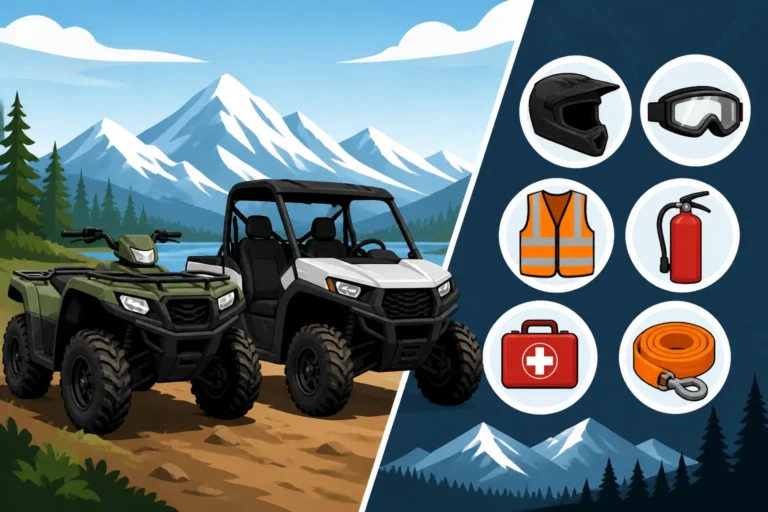
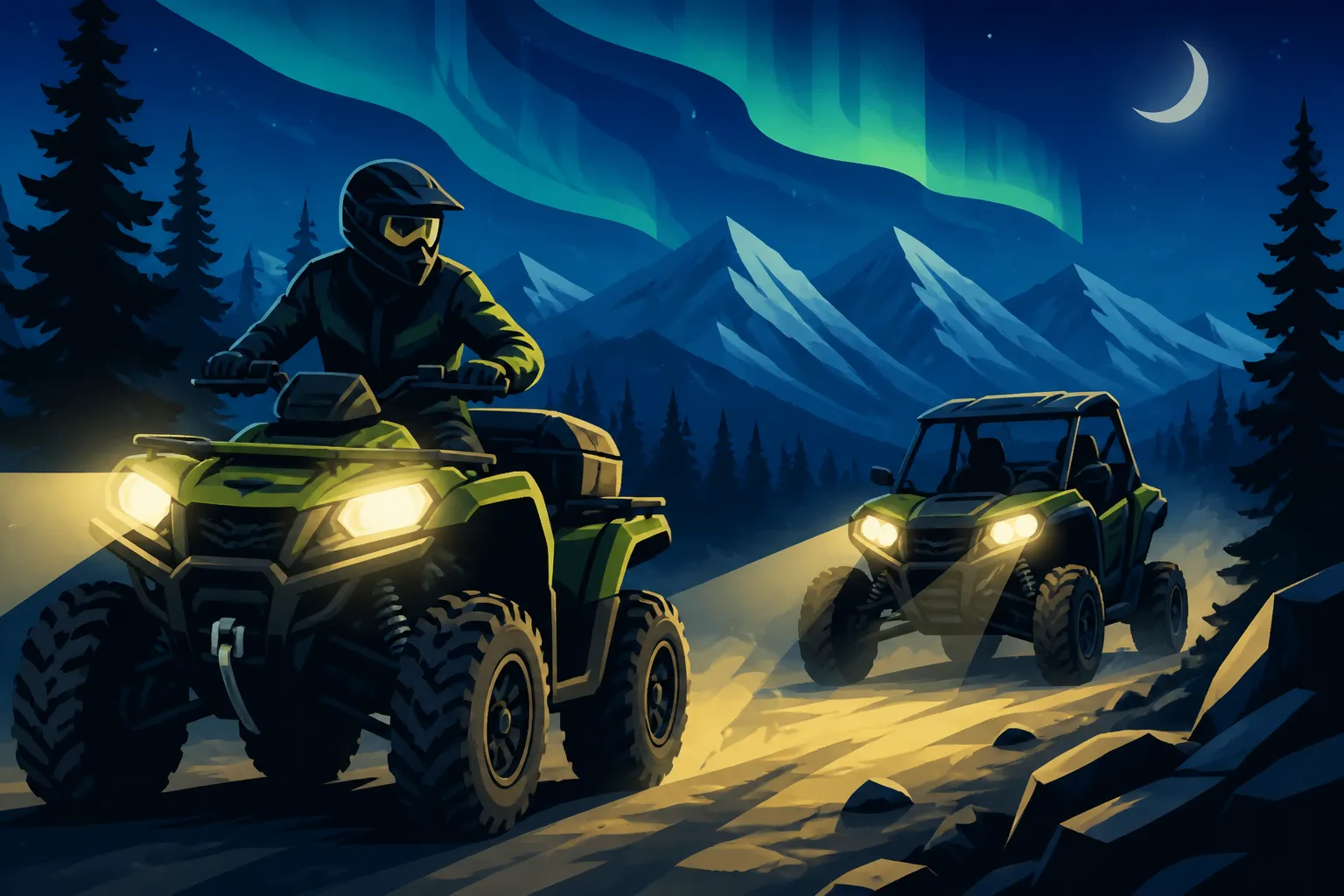
When it comes to outfitting your machine for night riding in Alaska, there are some non-negotiable items. The state wants to make sure that any APV operating between one-half hour after sunset and one-half hour before sunrise, or at any time when there is insufficient light or unfavorable atmospheric conditions, is properly equipped. This isn't just a suggestion; it's a legal mandate. Beyond the obvious lights, you also need to think about other equipment that enhances your visibility and control in low-light conditions. This means having properly functioning brakes, a working muffler to keep noise levels down—which can be even more startling in the quiet of the night—and a self-closing throttle to prevent accidents. You might consider looking at aftermarket options like those from SuperATV if your stock lighting feels insufficient or if you need more robust protection for night excursions. It’s all about creating a safer environment for everyone.
It's easy to overlook some of these details during daylight hours, but once darkness falls, these requirements become paramount. Imagine trying to navigate a winding trail or a snow-covered path without adequate illumination. The risks escalate dramatically. This is especially true in areas where trails might intersect with roads or where other recreational users, like snowmachiners in winter, might be present. The state's requirements are designed to prevent collisions and ensure that all operators are as visible as possible, given the challenging conditions Alaska can present. Understanding [Alaska OHV Equipment Requirements] is your first step to being prepared.
Headlight and Taillight Visibility Standards
One of the most critical aspects of night riding is your machine's lighting system. Alaska law specifies exactly how far your headlights and taillights must be visible. For your headlights, the requirement is that they must illuminate objects at least 100 feet ahead. This isn't just about having a light; it's about having one bright enough and aimed correctly to give you ample warning of obstacles, dips, or turns in the trail or road ahead. Think about hitting a moose at night – that 100-foot visibility gives you crucial seconds to react. Many stock headlights on older machines might barely meet this standard, and as the bulbs age, their output can diminish. It's often a good idea to upgrade to brighter LED systems or add auxiliary lighting for serious night riding, especially on rougher terrain where you need to see far and wide.
Just as important as seeing where you're going is being seen by others. Your taillight must be visible from at least 1,000 feet to the rear. This is an enormous distance, but it’s crucial for preventing rear-end collisions, particularly on shared roadways or trails where someone might be approaching from behind at a higher speed. Imagine another rider coming up behind you on a dusty trail; that 1,000-foot visibility ensures they see you long before they're on your tail. If your taillight is dim, cracked, or caked with mud, it dramatically reduces its effectiveness and could put you and others at risk. Always check your lights before heading out, especially if you anticipate being out after dark. You can learn more about specific requirements under [Alaska Headlight Distance at Night] and [Alaska Taillight Distance at Night].
Reflectors and Their Role in Nighttime Safety
Beyond active lighting, passive visibility aids like reflectors play a vital role in keeping you safe after dark. Alaska law requires your APV to be equipped with at least one reflector on each side of the machine, as far forward as practical, and at least one reflector on each side as far to the rear as practical. Additionally, you need at least one red reflector on the rear of the machine. These reflectors must be visible from a distance of 1,000 feet when illuminated by the high beam of a motor vehicle headlight. This means that even if your active lights somehow fail or are obscured, another vehicle's headlights can still pick up your machine.
Think of reflectors as a backup system, or an enhancement, to your active lighting. They become especially important if you're parked on the side of a trail or road, perhaps dealing with a mechanical issue, where your engine might be off and your lights no longer drawing power. Mud, snow, and ice can quickly obscure reflectors, so keeping them clean is paramount. Many riders add extra reflective tape to their machines, helmets, and gear for an added layer of safety, going above and beyond the minimum legal requirements. It's a small detail that can make a huge difference in preventing a collision when visibility is severely limited.
Navigating Specific Conditions After Dark
Riding after dark in Alaska isn't just about having the right lights; it's about understanding how the environment changes once the sun sets. The landscape transforms, familiar trails can become disorienting, and hazards that were easily spotted in daylight can suddenly appear out of nowhere. Adapting your riding style and your machine's setup to these specific conditions is key to a safe and enjoyable experience.
Challenges of Riding on Roads and Shoulders at Night
While APVs are primarily off-road vehicles, there are specific circumstances and locations in Alaska where riding them on roads or shoulders is permitted. When you’re doing so after dark, the stakes are significantly higher. You are sharing the space with larger, faster vehicles whose drivers might not expect to encounter an APV. The state has specific regulations for APV road use, and these often come with stricter lighting and visibility requirements. For example, if you are crossing a highway on a quad in Alaska, you need to be especially vigilant. Your headlights must not only meet the 100-foot illumination standard but also be correctly aimed to avoid blinding oncoming traffic. Your taillights and reflectors, visible from 1,000 feet, become your best defense against being rear-ended by a truck or car that might not see you until the last second.
Beyond the legal requirements, there are practical considerations. Road glare from streetlights or oncoming traffic can temporarily blind you, especially if you’re riding a machine with less powerful lights. Dust kicked up by other vehicles can reduce your visibility to near zero. Animals, often more active at night, might dart out into the road. If you're riding on a shoulder, the surface can be uneven, full of potholes, or littered with debris that’s invisible in the dark. It’s crucial to ride slower, be hyper-aware of your surroundings, and assume that other drivers might not see you. Planning your route to minimize road use after dark is always the safest bet. Remember, [Alaska Roads Posted 45 or Lower] are generally where APVs might be allowed, but always check local ordinances.
Special Considerations for Trails, Tundra, and Frozen Water
Off-road conditions after dark present a different set of challenges. On trails, familiar landmarks vanish, and the trail itself can seem to disappear into the darkness. Shadows become distorted, making it difficult to judge terrain features like dips, humps, or hidden rocks. Your depth perception diminishes, and even a slight incline can feel like a steep climb or drop. If you’re riding on tundra, the delicate vegetation that’s easy to navigate by day can become a treacherous maze of unseen hummocks and soft spots at night. It’s vital to stay on established trails to prevent [Tundra Damage in Summer] or getting lost.
Perhaps one of the most dangerous situations is riding on frozen rivers or sea ice after dark. Ice thickness is already a critical concern in daylight, but at night, cracks, open leads, or areas of overflow become nearly impossible to spot until it’s too late. The glare from your headlights on the ice can also create a disorienting effect. In these conditions, local knowledge, a powerful light bar, and perhaps even a handheld spotlight become indispensable. Always check ice conditions thoroughly before venturing out, and consider traveling with a group and a satellite messenger for safety. Knowing when the [Ice Thickness Before You Cross] is safe is paramount, especially at night.
Adapting Your Machine for Alaskan Night Riding
Given the unique challenges of Alaskan night riding, many riders choose to adapt their machines beyond the minimum legal requirements. The stock lighting on many ATVs and UTVs is often sufficient for daylight running but falls short when you're truly out in the dark, especially in the vastness of the Alaskan backcountry. This is where upgrades become critical. Adding auxiliary LED light bars to your machine can dramatically improve your forward visibility, casting a wider and brighter beam that illuminates the periphery and helps you spot hazards like wildlife or trail deviations. Companies like SuperATV offer a range of robust lighting solutions designed to withstand tough conditions, providing far more output than factory lights.
Beyond lighting, consider other adaptations. A good winch, for instance, is always a smart piece of equipment to have, but it becomes even more vital when you're stuck in the dark, potentially miles from help. Installing a quality windshield on a UTV can help keep your vision clear from mud, snow, or bugs that are attracted to lights. GPS devices with illuminated screens are essential for navigation, as paper maps can be impossible to read without a separate light source. Carrying extra fuel, a first-aid kit, and an emergency communication device like a satellite messenger are always good ideas, but their importance multiplies when riding in the dark, far from any road system or cell service. Taking a voluntary safety course can also provide valuable insights into preparing your machine for various conditions.
Avoiding Penalties and Ensuring Safety
Nobody wants their adventure to end with a citation or, worse, a preventable accident. Understanding and adhering to Alaska's rules for riding after dark is about more than just legal compliance; it's about minimizing risk and maximizing your enjoyment of the wilderness. Being caught unprepared for night riding can not only cost you money in fines but can also put your life, and the lives of your passengers, in jeopardy.
Common Violations and Their Consequences
Ignorance of the law is never a valid excuse, and Alaskan law enforcement, including Alaska Wildlife Troopers, takes APV regulations seriously. One of the most common violations for night riding is insufficient lighting. This could mean having headlights that don't meet the 100-foot visibility standard, taillights that aren't visible from 1,000 feet, or missing reflectors altogether. Operating without a working muffler or with an exhaust cutout can also lead to citations, as noise regulations apply equally at night and can disturb residents or wildlife. For younger riders, failing to wear a helmet, especially after dark when visibility is reduced, is a serious offense that carries specific fines. Check out [Alaska's Under-16 Helmet Fine] for details.
The consequences for these violations can range from a warning to significant fines, and repeated offenses can lead to more severe penalties. Beyond the financial cost, receiving a citation can be a major inconvenience, potentially requiring a court appearance or affecting your insurance rates. More importantly, operating an improperly equipped machine after dark dramatically increases your risk of an accident. A collision, whether with another vehicle, an animal, or a stationary object, can result in serious injuries, property damage, and even fatalities. It's simply not worth the risk to cut corners on safety equipment.
Best Practices for Safe and Legal Night Riding
To ensure both a legal and safe experience when riding after dark in Alaska, adopting some key best practices is essential. First and foremost, always conduct a thorough pre-ride inspection of your machine, paying special attention to all lighting components, reflectors, brakes, and tires. Make sure your headlights are clean, properly aimed, and functioning at full brightness. Verify that your taillights and all required reflectors are intact and visible. Carry spare bulbs if your machine uses traditional incandescent lights, or a repair kit for LED systems if you're venturing far from civilization.
Secondly, adjust your riding style. Slow down significantly when riding after dark. Your reaction time is reduced, and hazards are harder to spot. Maintain a greater following distance from other riders. If riding in a group, communicate clearly about obstacles and turns. Consider using a helmet-mounted light in addition to your machine's lights; this allows you to illuminate where you're looking, not just where your handlebars are pointed. Dress in layers, as temperatures drop quickly after sunset, and wear reflective clothing to make yourself more visible if you need to dismount from your machine. Always inform someone of your planned route and expected return time, especially if you're riding in remote areas, and consider carrying a satellite messenger for emergencies. This is critical as [No Cell Coverage Off the Road System] is a common reality in Alaska.
When to Avoid Riding After Dark Altogether
While it’s true that Alaska offers incredible opportunities for night riding, there are definitely times and situations when it’s simply best to pack it in and wait for daylight. If you find yourself unprepared—missing proper lighting, without adequate warm gear, or low on fuel—it’s a clear sign to avoid night riding. Similarly, if weather conditions are deteriorating rapidly with heavy snow, freezing rain, or dense fog rolling in, the smart decision is to seek shelter or head back to base. These conditions severely compromise visibility, making even the best lighting systems struggle.
If you’re unfamiliar with the terrain, it’s always best to scout it during daylight hours before attempting a night ride. What looks like a gentle slope in the afternoon sun can become a formidable, confusing obstacle course under the cloak of darkness. Lastly, if you or members of your riding group are feeling fatigued, impaired by alcohol, or simply uncomfortable with the idea of night riding, listen to those instincts. Pushing through exhaustion or apprehension can lead to errors in judgment and dangerous situations. There will always be another day to ride; your safety and the safety of those with you should always be the top priority.
| Equipment Requirement | Standard for After-Dark Operation | Importance |
|---|---|---|
| Headlights | Visible at least 100 feet ahead | Essential for obstacle detection and safe navigation |
| Taillights | Visible from at least 1,000 feet to the rear | Crucial for preventing rear-end collisions from other vehicles/APVs |
| Side Reflectors | One each side, front and rear; visible 1,000 feet (when illuminated) | Passive visibility aid, crucial if active lights fail |
| Rear Red Reflector | At least one; visible 1,000 feet (when illuminated) | Additional rear visibility, mandatory for safety |
| Brakes | Fully functional and capable of stopping machine safely | Critical for control and avoiding sudden hazards |
| Muffler | Meets noise regulations | Reduces disturbance, especially in quiet nighttime environments |
| Self-Closing Throttle | Functions correctly | Safety feature to prevent unintended acceleration |
Disclaimer
This article is for general informational purposes only and does not constitute professional advice. Laws, prices and regulations vary by location and change over time. Consult a qualified professional for guidance on your specific situation.