Filling Out a Fee Envelope at Jim Creek
A fee envelope at Jim Creek is easy to overlook when you are focused on unloading the machine and getting onto the trail. But an unclear payment, missing vehicle details, or envelope left in the wrong place can create avoidable trouble. Here’s how to approach the payment process, what to check before you leave the trailhead, and what to do if the kiosk instructions are unclear.
Before you fill out the envelope
Jim Creek’s trailhead is accessed from Sullivan Road, and riders should expect to follow the current instructions posted at the payment kiosk or fee station. The precise envelope layout and accepted payment methods can change, so treat the posted directions as the authority—not a remembered process from a previous visit.
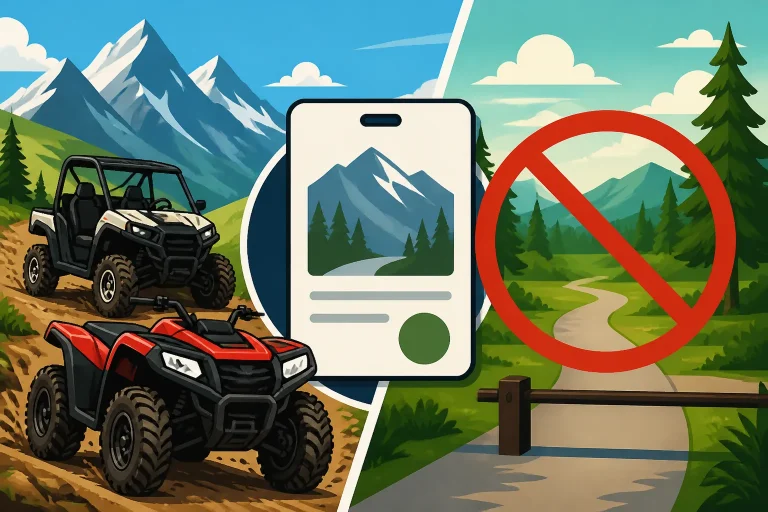
A fee envelope is generally a way to record a payment when there is no staffed counter. It is not a trail permit that grants access to every nearby parcel, and it does not replace any land-use permission or registration requirement that applies to your ride. For the bigger picture, see Alaska Trailhead Fees and Passes and Alaska’s Statewide General Permit for ATV Use. The trailhead fee and permission to ride on a particular piece of land are separate questions.
Before you start writing, take a moment to read the full notice at the kiosk. Look for:
- The fee that applies to your planned use, including whether the charge is per person, per machine, or per vehicle.
- Whether a day pass, annual pass, or another payment option is available.
- Which payment methods the station accepts.
- What information the envelope asks you to provide.
- Where the completed envelope or payment should go.
- Whether you must keep a receipt, pass, or other proof with you.
- Any separate rules for camping, overnight parking, or use of facilities.
The fee and the form’s fields are not safe to guess. For details about the charge itself, check Alaska Day Use Fees at Jim Creek and Jim Creek Day Use Fee Per Person, then confirm the current directions on site before paying. A rate discussed elsewhere may not cover your situation, and a previous visit does not guarantee that the same process still applies.
It also helps to decide on your payment approach before reaching the kiosk. If you plan to use an annual pass, make sure you know whether it covers the specific use and people in your group. If you plan to pay for a day, check that you have a payment method the station accepts. For other Mat-Su trailheads, payment arrangements may differ; Which Mat-Su Trailheads Need a Parking Pass explains why it is worth checking each location separately.
| Before you pay | What to verify at Jim Creek |
|---|---|
| Fee basis | Whether the posted charge applies per person, machine, vehicle, or another unit |
| Payment options | Whether cash, a check, a pass, or another method is accepted |
| Envelope fields | Which details are required and whether handwriting must be legible |
| Drop-off location | Where the payment and envelope must be submitted |
| Proof of payment | Whether to keep a receipt, display a pass, or carry another record |
| Scope of access | Whether the payment covers only the listed trailhead or use |
Fill it out carefully and follow the posted directions
The kiosk’s instructions should tell you which fields to complete. A fee envelope may ask for details such as your name, contact information, the date, the amount paid, or the number of people or machines covered. Only enter the information the form requests, and write it clearly enough that it can be read later. Do not assume every version of a fee envelope uses the same fields.
A practical sequence is:
- Read the notice and envelope before writing. Check that the envelope is for the use you are paying for and note any instructions about the fee, pass, or payment method.
- Complete each required field. Use the details that match your visit. If a field is unclear, look for an explanation on the kiosk or posted notice rather than inventing an answer.
- Calculate the payment using the posted fee rules. Pay the amount that applies to your party and use. If the notice describes a per-person fee, do not treat it as a per-machine charge. If you are unsure how a pass applies, ask the managing office before relying on it.
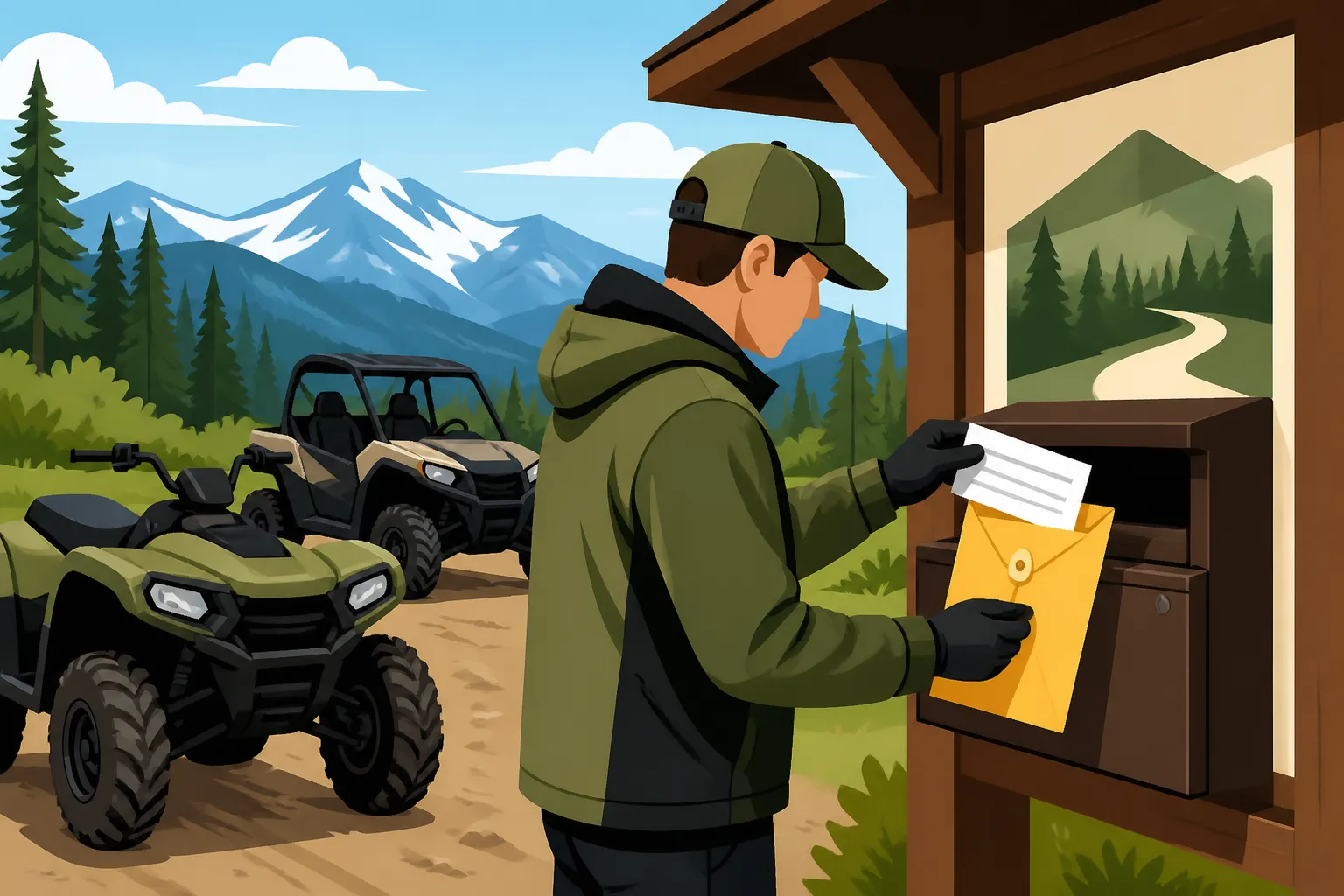
- Put the payment in the envelope only as instructed. Follow directions about checks, cash, or other accepted payment methods. Do not leave money loose in the kiosk or place the envelope in a slot unless the notice says to.
- Seal or close the envelope if instructed. Avoid leaving the contents exposed or the form incomplete.
- Submit it in the specified place. The correct drop box, collection slot, or other method should be identified at the station.
- Keep any proof the instructions tell you to keep. If the station provides a receipt or detachable portion, follow the directions about carrying or displaying it.
The essential principle is to match the payment to the instructions on the day you visit. A fee envelope is not a place to leave a guessed amount and hope that the details can be sorted out later. If the wording is confusing, pause before submitting payment.
For a broader explanation of what to expect at a self-service station, see What You Need at a Trailhead Pay Kiosk. If the kiosk has no staff available, Paying at a Trailhead When Nobody Is There can help you think through what to verify before you depart. Those situations do not make the posted instructions optional; they make reading them especially important.
Avoid the common paperwork mistakes
Most payment problems are preventable. Before you drop the envelope, check that:
- You used the correct envelope for the fee or pass option you selected.
- Required fields are filled in and readable.
- The amount matches the posted rule for your party and use.
- The payment method is accepted by the station.
- The payment is inside the envelope if the directions require it.
- The completed envelope is in the correct receptacle.
- You retained any receipt or pass that you are supposed to keep.
Do not put personal information on the envelope beyond what the form asks for. If you accidentally write the wrong date or amount, do not make an unexplained alteration if the form gives no correction instructions. Ask the managing office how to handle the error, or use a fresh envelope if one is available and the posted process allows it.
Likewise, do not assume that leaving a note or a phone number makes an incomplete payment valid. A note may help explain a problem, but it is not a substitute for following the fee directions. If you cannot pay as instructed, avoid treating the envelope station as permission to use the area without resolving the issue.
What the fee covers—and what it does not
The payment at a trailhead applies to the use described by the managing agency. It may cover a specific day-use or parking purpose, but the envelope itself does not automatically authorize all riding around Jim Creek. Fees and land access are different from vehicle registration, and both are different from permission to cross private property or enter land managed under separate rules.
Before heading out, confirm the land and route you intend to use. Jim Creek and the wider Knik River area involve more than one land manager and ownership type. A trailhead payment should not be treated as blanket approval to ride wherever a track appears to continue. Check Alaska Land Ownership and Who to Ask and Checking a Land Status Map if you are unsure who controls the ground beyond the trailhead. For the specific site, Jim Creek’s Trailhead on Sullivan Road in Alaska provides useful location context.
A valid state registration decal, where required for your machine and use, is another separate matter. Do You Need to Register an ATV in Alaska? and Alaska Registration Before Riding Public Land address that part of the checklist. Paying a fee does not register your ATV, and registration does not pay a trailhead fee.
Think of the visit as several checks that fit together:
| Question | What it concerns |
|---|---|
| Did you pay the posted fee? | The trailhead’s stated day-use or other charge |
| Is your machine registered if required? | State registration rules for the machine and where it will be used |
| Are you authorized to ride the route? | Land ownership, agency rules, and any access permission |
| Are you following site rules? | Posted limits, parking instructions, closures, and other conditions |
That separation matters most when plans change. For example, paying at the Jim Creek kiosk does not necessarily make a different trailhead’s fee arrangement valid, nor does it allow a shortcut across land where access is restricted. If you are considering camping, check the camping rules separately rather than assuming a day-use payment covers an overnight stay. See Jim Creek Campground’s Rates in Alaska and Booking a Site at the Jim Creek Campground for campground-specific considerations.
If the kiosk is confusing or something goes wrong
Sometimes the station is hard to read, an envelope is missing, the payment box appears full, or a posted direction conflicts with the form. Do not resolve that uncertainty by guessing. Take a moment to check for another notice or a phone number for the managing office. If the issue cannot be cleared up, contact the responsible office before relying on an improvised payment process.
A few practical steps can help:
- Read every sign at the station. Instructions may be posted on the kiosk itself, on a nearby notice board, or on the envelope.
- Check whether the kiosk offers another payment route. Some places distinguish between day passes and annual passes, and their payment methods may not be identical.
- Do not leave payment unsecured. Use only the designated submission method stated in the instructions.
- Keep a record of what you did. If a receipt is issued, retain it. If the station is malfunctioning, note the date and the nature of the issue and contact the managing office.
- Do not assume you can pay later. A broken or unclear station does not automatically create an exception to the fee requirement.
- Recheck the area on your return. Notices or conditions may be different from what you expected, especially if a closure or other update has been posted.
If you paid but are uncertain that the envelope was submitted correctly, contact the managing office promptly and explain what happened. Give the date, the payment method, and any details that help identify your visit. Avoid sending sensitive payment information through an unverified channel.
A little preparation reduces the chance of a rushed decision at the kiosk. Check the current fee and accepted methods before setting out, bring a payment option that matches the posted instructions, and leave enough time to read the envelope. Then treat the payment as one part of a larger ride plan: confirm registration, land access, route conditions, and any site rules before unloading.
Disclaimer
This article is for general informational purposes only and does not constitute professional advice. Laws, prices and regulations vary by location and change over time. Consult a qualified professional for guidance on your specific situation.