Alaska Taillight Distance at Night
Riding an ATV or UTV in Alaska often means venturing out when daylight is scarce, whether it's the long nights of winter, those early morning hunts, or late evening fishing trips. The last thing you want to worry about is whether other trail users, or even a wildlife trooper, can actually see you from behind. Many riders get caught off guard by specific equipment requirements, especially regarding taillight visibility, assuming their factory lights are always enough. This comprehensive guide will illuminate Alaska's specific regulations for taillight distance at night, helping you ensure your machine is seen and you stay safe and compliant.
Understanding Alaska's Taillight Visibility Mandate
The thought of navigating Alaska's vast wilderness on your ATV or UTV is exhilarating, but it also comes with a responsibility to operate safely, especially after dark. It's not just about what you can see, but what other people can see of you. Alaska's regulations are pretty clear-cut when it comes to the visibility of your machine's taillights at night, and understanding these rules is the first step toward safe and legal riding.
The Statute's Core Intent: Safety on the Trail
The primary reason Alaska has specific regulations for taillights isn't to make your life harder; it's purely for safety. Imagine you're on a snow-covered trail, the kind that might suddenly dip or narrow, and another rider is approaching from behind. If your taillights aren't bright enough or are obscured, they might not see you until it's too late to react, especially if they're traveling faster than you or visibility is poor due to blowing snow or dust. The law is designed to prevent these kinds of rear-end collisions, which can lead to serious injury or worse, in remote areas where help might be hours away. It's about ensuring every operator on public lands, or even just crossing a street, has ample warning of your machine's presence.
Beyond preventing collisions, these regulations help identify vehicles. A visible taillight isn't just a red glow; it's a signal to others that a machine is ahead and moving away from them. This distinction is vital when sharing trails with other recreational users, snowmobiles, or even full-sized vehicles on designated routes. For instance, knowing if a light ahead is a stationary camp or a moving ATV can significantly impact how another rider approaches or overtakes. The more clearly your machine communicates its presence and direction, the safer everyone on the trail becomes.
Specific Distance and Visibility: What 1,000 Feet Really Means
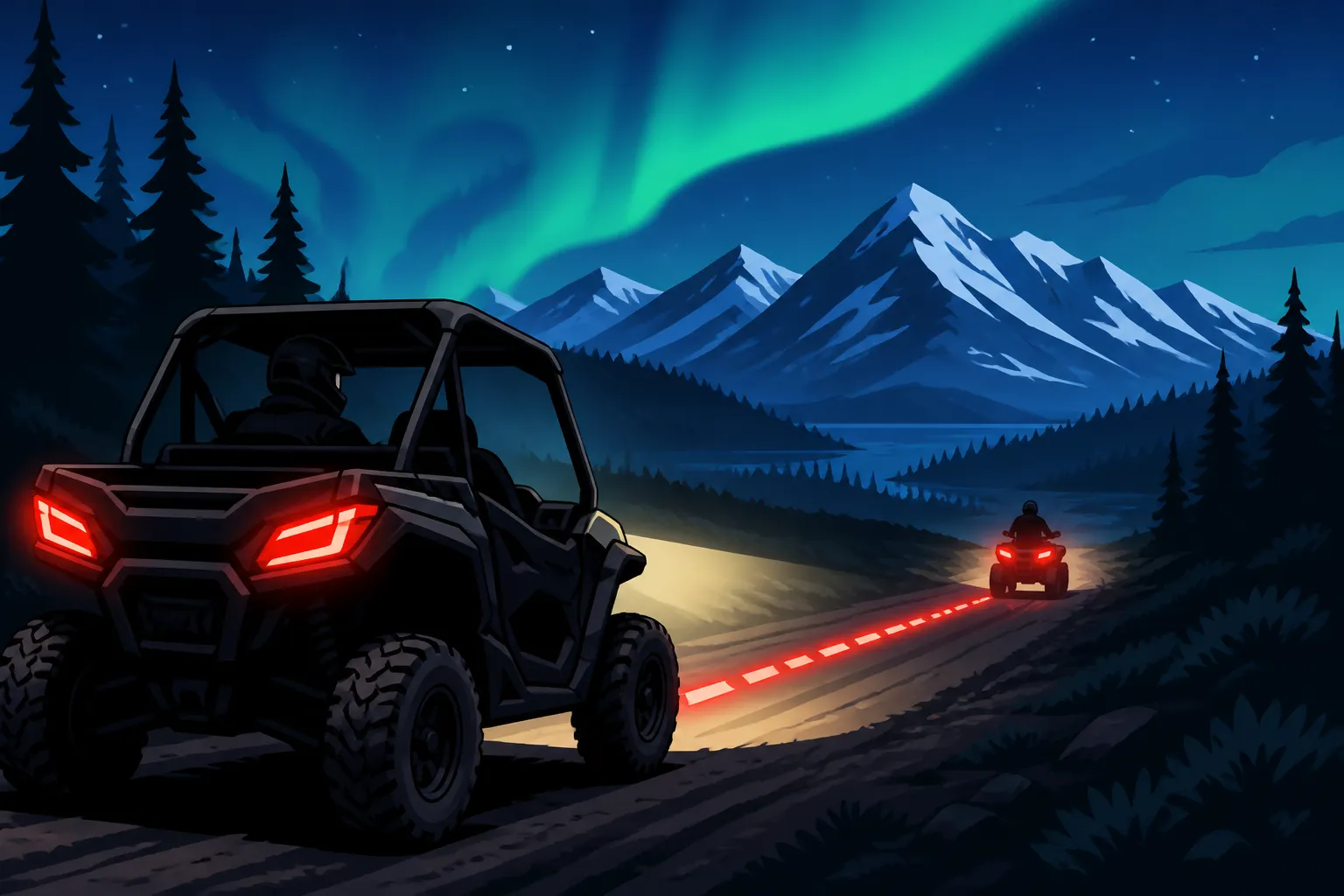
Alaska statute states that your taillight must be visible from a distance of 1,000 feet to the rear. Now, 1,000 feet is a considerable distance – think about three football fields laid end to end. This isn't just a vague suggestion; it's a measurable requirement that troopers and other law enforcement officials can, and sometimes do, check. It means that on a clear night, without obstructions, someone standing a quarter-mile behind your machine should be able to clearly see its taillight(s).
But what does "visible" truly entail? It's not enough for a faint red glow to be discernible. The intent is that the taillight should clearly indicate the presence of a vehicle. This implies a certain level of brightness and an unobstructed view. Factors like light intensity, the condition of your lens (cracked, faded, muddy), and even the angle of your light play a huge role. A dim, dirty taillight might technically emit light, but it won't effectively be "visible" at 1,000 feet, especially if there's any ambient light pollution, snow glare, or environmental haze. The best way to test this yourself is to have a friend ride your machine a measured distance away while you observe. You might be surprised by how quickly a seemingly bright light fades into obscurity at that distance.
Why Taillight Visibility Matters for Alaska Riders
While legal compliance is a significant factor, the importance of properly functioning and visible taillights goes far beyond simply avoiding a ticket. In Alaska, where riding conditions can be extreme and help can be remote, adequate visibility is a cornerstone of rider safety. Ignoring this crucial aspect can have serious repercussions for you, your passengers, and anyone else sharing the vast Alaskan landscape.
Safety for You and Others: Preventing Collisions in the Wild
The single most critical reason for ensuring your taillights meet Alaska's standards is safety. Imagine a scenario on a remote two-track trail near Paxson or even a wider gravel road like parts of the Denali Highway. You're cruising along, perhaps enjoying the quiet solitude of an evening ride, when another machine approaches from behind. Their visibility of your taillights is their primary indicator of your presence. If your lights are dim, dirty, or simply not up to par, they might not see you until they're too close, leading to a dangerous rear-end collision. These aren't just fender-benders; ATVs and UTVs often lack the protective cages of cars, and accidents can result in serious injuries, broken bones, or worse. In remote areas of Alaska, a serious injury could mean a life-threatening wait for medical assistance.
Furthermore, it's not just other ATVs and UTVs you need to worry about. On certain permitted roads, you might encounter snowmobiles, trucks, or even full-sized vehicles. Varying speeds and types of traffic amplify the risk. A driver in a larger vehicle might have a harder time spotting a smaller ATV, especially if its taillights are subpar. Ensuring your taillights are clearly visible at 1,000 feet provides a critical buffer, giving others ample time to react, slow down, or adjust their path, safeguarding everyone involved.
Visibility in Alaska's Unique Conditions: Beyond a Clear Night
While the 1,000-foot rule applies to clear nights, Alaska's environment rarely offers such ideal conditions. Our seasons bring distinct challenges that can dramatically reduce visibility, making robust taillights even more vital. Consider the long, dark winters: with only a few hours of daylight, most riding after dark is inevitable. Snow can reflect light in deceptive ways, creating glare or obscuring objects. [Alaska Night Riding Equipment Rules] are there for a reason! Then there's blowing snow, which can create whiteout conditions that make even bright lights appear as faint blurs.
During breakup or wet periods, mud and glacial silt are constant companions, coating everything, including your taillight lenses. This layer of grime can severely dim your lights, rendering them ineffective at the required distance. In the summer, even with the midnight sun, fog can roll in quickly, especially near coastal areas or glacial valleys, drastically cutting visibility to mere feet. Dust from dry trails, common in the Interior, can also hang in the air, creating a haze that swallows light. In all these scenarios, a taillight that barely meets the 1,000-foot requirement on a perfect night will be woefully inadequate. Investing in brighter, more durable lights and maintaining them diligently is a survival strategy in Alaska, not just a legal one.
Legal Compliance and Avoiding Trouble: What a Trooper Can Ask
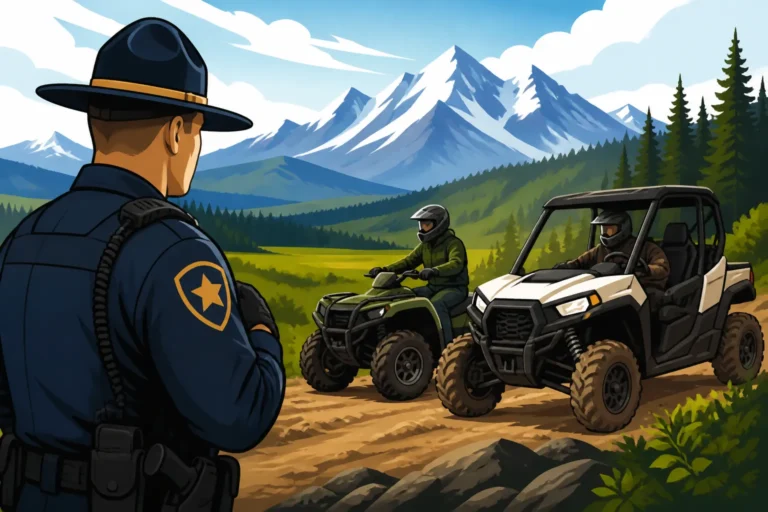
Of course, staying on the right side of the law is another strong motivator. Alaska State Troopers, local police in communities like Palmer or Wasilla, and wildlife troopers patrol various trails and designated routes where ATVs and UTVs operate. They are well-versed in [Alaska OHV Equipment Requirements], and that includes checking your lighting. If your taillights don't meet the 1,000-foot visibility standard, you could face a citation.
A trooper isn't just looking for a light to be on; they're assessing its effectiveness. If they pull you over and can clearly demonstrate that your taillights aren't visible from the required distance, you're looking at a fine. While the exact cost can vary, it’s always an unwelcome expense. Beyond the financial hit, a citation can interrupt your trip, requiring you to address the issue before you can continue riding legally. Imagine being miles from town on a multi-day trip, only to be told your machine is unsafe for night travel. It's a hassle that's easily avoided by taking a few proactive steps to ensure your taillights are bright, clear, and properly maintained. Don't give them a reason to ask [What a Trooper Can Ask to See] regarding your lights.
Meeting the Taillight Requirements: Practical Steps and Equipment
Now that we understand why proper taillights are so critical, let's dive into the practical aspects of ensuring your ATV or UTV is compliant with Alaska's 1,000-foot visibility rule. It's about more than just having a red light on the back; it involves understanding your equipment, its limitations, and how to maintain it for optimal performance in Alaska's challenging environment.
OEM vs. Aftermarket Lights: Are Factory Lights Always Enough?
When you buy a brand-new ATV or UTV, you generally assume that all its components, including the taillights, meet legal requirements. For the most part, original equipment manufacturer (OEM) lights do meet the basic federal and state requirements for visibility under ideal conditions. However, "basic" and "ideal conditions" are key phrases here. Factory lights are designed to be cost-effective for mass production, and while they pass minimum standards, they might not offer the robust performance needed for Alaska's unique challenges.
Consider the longevity and durability of OEM lights. Over time, plastic lenses can become scratched, faded by UV exposure, or brittle from extreme cold. Bulbs can dim or burn out. For a machine that sees heavy use in the mud, snow, and rough terrain of Alaska, factory lights might degrade faster or simply not provide the intense, reliable illumination you truly need. Many seasoned Alaska riders find that while OEM lights are a starting point, upgrading to aftermarket lighting solutions offers a significant boost in safety and peace of mind. Aftermarket lights, often LED-based, tend to be brighter, draw less power, and are built with more durable materials designed to withstand harsh environments.
Proper Placement and Angle: More Than Just "On the Back"
Where your taillights are mounted and their angle significantly impacts their visibility. Alaska's regulation about 1,000-foot visibility implies an unobstructed view. Most ATVs and UTVs have integrated taillights, but what if you've added accessories, a cargo box, or a large hunting rack? These additions, while useful, can sometimes partially or completely block your factory taillights from certain angles. It's vital to step back and visually inspect your machine from various perspectives, especially from the rear, to ensure nothing is impeding the light's path.
The angle also matters. A taillight pointed slightly downwards might illuminate the ground behind you but won't project its light effectively over the 1,000-foot distance. Ensure your taillights are mounted level and facing directly to the rear. If you've modified your machine or are installing aftermarket lights, pay close attention to the mounting instructions. For side-by-sides, ensuring both taillights are equally visible is important, as one might get more obscured by mud or cargo than the other. Think about how your [Alaska Decal Placement on a Side-by-Side] is important for identification; similarly, proper light placement is crucial for visibility. Sometimes, adding a second set of higher-mounted auxiliary taillights can provide an excellent failsafe and enhance overall visibility, especially if your primary lights are prone to getting caked with mud or snow.
Maintenance for Optimal Performance: Cleaning, Bulbs, and Wiring
Even the brightest taillight is useless if it's not maintained. In Alaska, this means a rigorous approach to upkeep.
Cleaning: This is perhaps the most frequent task. Mud, snow, ice, and dust are constant enemies of clear lenses. Before and after every ride, take a moment to wipe down your taillight lenses. Carry a small rag or even a handful of snow on the trail to clear them off if conditions are particularly dirty. A thick layer of mud can reduce a 1,000-foot visible light to a mere 100-foot glow.
Bulb Checks: For incandescent lights, bulbs burn out. Make it a habit to check your taillights before each ride – a quick walk around the machine with the ignition on is all it takes. Always carry spare bulbs, especially on multi-day backcountry trips. For LED lights, individual diodes can fail, though typically the entire assembly is more robust. If you notice a significant dimming or flickering, it’s time to investigate the wiring or consider a replacement.
Wiring Integrity: Vibration, water intrusion, and general wear and tear can damage wiring. Check for frayed wires, loose connections, or corrosion at the terminals. A compromised connection can lead to intermittent light function or reduced brightness. Use dielectric grease on electrical connections to protect them from moisture and corrosion, which is rampant in Alaska's environment. Ensuring your wiring is properly secured and protected from abrasions is key to long-term reliability.
Lens Condition: Over years of exposure to UV rays and abrasive cleaning, plastic lenses can become foggy or yellowed. This hazing significantly reduces light output. There are headlight restoration kits that can also work on taillight lenses, or sometimes a full replacement of the lens or the entire light assembly is the best solution for restoring maximum brightness.
Common Taillight Challenges and Solutions in Alaska's Environment
Riding an ATV or UTV in Alaska is an adventure, but it also means contending with some of the planet's most challenging environmental conditions. These conditions are particularly harsh on electrical components and lighting, making it tough to consistently meet that 1,000-foot taillight visibility requirement. Let's explore some common issues and practical solutions for Alaskan riders.
Fighting the Elements: Mud, Snow, and Ice Buildup
Alaska's trails are notorious for mud, especially during spring breakup and after summer rains. Glacial silt, a fine, almost clay-like mud, is particularly sticky and opaque. It doesn't just splash; it coats every surface, including your taillight lenses. A thick layer of mud can effectively block almost all light output, rendering your machine invisible from behind. Snow, too, can pile up on taillights, especially during heavy snowfall or if you're breaking trail in deep powder. Then there's ice buildup in freezing rain or during thaws and refreezes, encasing your lights in a frosty shell.
Solutions:
- Regular Cleaning: As mentioned, constant vigilance is key. Carry a small brush, scraper, or even use snow itself to clear off lenses regularly during a ride.
- Mud Flaps and Fenders: Ensure your machine's mud flaps and fenders are intact and effective at deflecting spray from your tires. If your factory setup isn't adequate, consider aftermarket fender extensions or larger mud flaps. This can significantly reduce the amount of crud that reaches your taillights.
- Auxiliary Light Mounting: If your factory taillights are consistently getting caked, consider adding auxiliary LED taillights mounted higher up on your machine, perhaps on a cargo rack or roll cage. These higher positions are often less prone to direct mud and snow spray, providing a secondary, clear light source. Brands like SuperATV offer robust light bars and pod lights that can be adapted for rear-facing visibility, providing intense, targeted illumination that can cut through some environmental haze.
- Lens Protection: Some riders apply clear protective films over their taillight lenses to make them easier to clean and resist scratching.
Power Draw and Battery Life: Adding More Lights
When you start adding brighter aftermarket taillights or multiple auxiliary lights, you introduce a new challenge: power consumption. Modern ATVs and UTVs often have decent charging systems, but they aren't limitless. If you add too many high-wattage lights without upgrading your charging system or battery, you could quickly drain your battery, especially if you're riding at low RPMs or frequently stopping. This is particularly problematic in cold Alaskan weather, where battery performance is already reduced.
Solutions:
- LED Upgrades: The best solution for power efficiency is to switch to LED lighting. LEDs consume significantly less power than traditional incandescent bulbs while producing far greater light output. If your factory taillights are incandescent, upgrading to LED replacements is an excellent first step.
- Amperage Monitoring: If you're planning extensive lighting upgrades, consider installing an ammeter to monitor your machine's electrical system. This helps you understand your power draw and ensure you're not exceeding your charging system's capacity.
- Heavy-Duty Battery: For significant electrical accessories, a heavy-duty or deep-cycle battery designed for powersports can provide more reserve capacity.
- Charging System Upgrades: In extreme cases, if you're running many accessories, you might need to look into a high-output stator or alternator upgrade for your machine to adequately support the increased electrical load.
Aftermarket Upgrades for Enhanced Safety: Beyond the Bare Minimum
While meeting the 1,000-foot requirement is the goal, many Alaska riders choose to go beyond the bare minimum for enhanced safety and visibility. Aftermarket lighting solutions offer a spectrum of options, from brighter, more durable taillight assemblies to additional safety lights.
Solutions:
- High-Intensity LED Taillights: Replacing your factory units with aftermarket LED taillight assemblies is one of the most effective upgrades. These are often brighter, more durable, and more weather-resistant than OEM lights. Many are designed specifically for the rigorous demands of off-road use.
- Rear Light Bars or Pod Lights: For ultimate visibility, especially for those who frequently ride in convoys or in very poor conditions, adding a small LED light bar or a pair of LED pod lights to the rear of your machine can dramatically increase your presence. These can be wired to come on with your regular taillights or as separate auxiliary lights. For instance, SuperATV offers a wide array of LED lighting options, including rear-facing utility lights or small light bars that are built tough enough for Alaska and can greatly exceed standard visibility requirements, ensuring you're seen no matter the conditions.
- Strobe or Flashing Brake Lights: While you must ensure these are legal in your specific riding area, some aftermarket brake lights incorporate a flashing function before settling into a solid glow. This can grab attention more effectively, especially during emergency braking. Always verify local regulations before installing such a system.
- Lighted Whips: For dune riding or open areas, lighted whips are common. While not specifically taillights, they provide a very high-mounted, highly visible light source that can be seen from a great distance and above most obstructions. While not universally needed in Alaska, they have their place in certain contexts.
| Taillight Challenge | Impact on Visibility | Recommended Solutions |
|---|---|---|
| Mud & Silt Accumulation | Significantly reduces light output, obscures lens. | Regular cleaning, effective mud flaps, higher-mounted auxiliary LED lights (e.g., SuperATV pods), protective films. |
| Snow & Ice Buildup | Blocks light, encases lens, dims output. | Regular clearing, heated lenses (if available), higher mounting, ensure all [Alaska Night Riding Equipment Rules] are followed. |
| Dim OEM Lights | Barely meets 1,000ft rule in ideal conditions. | Upgrade to high-intensity aftermarket LED taillights, add supplementary rear light bars. |
| Faded/Cracked Lenses | Scatters light, reduces intensity, allows moisture. | Lens restoration kits, full lens replacement, replace entire assembly with durable aftermarket unit. |
| Power Drain (with upgrades) | Risks dead battery, especially in cold. | Prioritize LED lighting, monitor amperage, heavy-duty battery, consider charging system upgrade for extensive accessories. |
| Obstructions (cargo) | Blocks factory taillights from certain angles. | Reposition cargo, add auxiliary lights mounted clear of obstructions. |
These proactive measures not only help you meet Alaska's required 1,000-foot taillight visibility but also significantly enhance your overall safety and confidence when riding in the wild Alaskan backcountry, especially after dark.
Consequences of Non-Compliance: Risks and Repercussions
Failing to meet Alaska's taillight visibility requirements isn't just a minor infraction; it carries a range of potential consequences, from immediate legal penalties to far more serious long-term impacts on your safety and financial well-being. It's crucial for every ATV and UTV rider in Alaska to understand these repercussions.
Fines and Citations: What to Expect from Law Enforcement
If you're caught operating an ATV or UTV after dark on public lands or designated routes with taillights that don't meet the 1,000-foot visibility standard, you can expect to receive a citation. Alaska State Troopers, wildlife troopers, or local law enforcement in areas like Anchorage (where APVs are generally banned from roads) or Fairbanks are well within their rights to pull you over for equipment violations. They might perform [Alaska Equipment Checks by Troopers] at trailheads or during patrols.
The specific fine amount can vary, but any citation is an unwelcome expense. It might also involve court costs and potentially even affect your driving record if it's considered a moving violation, depending on the specifics of the charge. Beyond the immediate financial penalty, receiving a citation can be a significant inconvenience. You might be required to fix the issue before continuing your ride, which could mean a premature end to a long-planned trip, especially if you're far from any retail outlets. For example, if you're deep in the Mat-Su Valley or on a remote section of the Denali Highway, sourcing a new taillight or bulb can be a major undertaking. Familiarize yourself with [Alaska Lighting Rules on a Machine] to prevent these issues.
Increased Accident Risk: The Real Cost of Poor Visibility
While fines are unpleasant, the greatest risk associated with non-compliant taillights is the increased potential for accidents. As discussed, the 1,000-foot rule is a safety standard designed to provide adequate warning to other users. When your taillights are dim, obscured, or non-existent, you drastically reduce that warning distance.
Consider a rider approaching you on a trail in low light or with reduced visibility due to weather. If they only see your machine when they are 100 feet away instead of 1,000 feet, their reaction time is severely compromised. At typical trail speeds, 100 feet might only give them a second or two to react – often not enough time to avoid a collision. The impact of a rear-end collision on an ATV or UTV can be devastating. Riders can be thrown from their machines, pinned, or struck by other vehicles. These accidents can lead to severe injuries, including head trauma, broken bones, and internal injuries, far from medical help. The real cost of poor visibility isn't just a ticket; it's the potential for life-altering injury or even fatality.
Impact on Insurance and Liability: After an Accident
Beyond the immediate accident and potential injuries, non-compliant equipment can have significant legal and financial ramifications, especially if an accident occurs. If you're involved in a collision and it's determined that your taillights did not meet Alaska's visibility requirements, your liability could increase dramatically.
Your insurance company, even if you have [Alaska Insurance Requirements for an APV], might question your coverage if you were operating your machine illegally at the time of the accident. They could deny a claim or reduce payouts, arguing that your non-compliance contributed directly to the incident. This could leave you personally responsible for medical bills, property damage to other machines, or even legal fees if lawsuits arise. Furthermore, if you are deemed at fault for an accident due to an equipment violation, it could lead to increased insurance premiums, loss of future coverage, or civil litigation where you are sued for damages. The minor cost of ensuring your taillights are compliant pales in comparison to the potential financial ruin and legal headaches that can follow an accident where your machine's visibility was compromised.
Disclaimer
This article is for general informational purposes only and does not constitute professional advice. Laws, prices and regulations vary by location and change over time. Consult a qualified professional for guidance on your specific situation.