Alaska Rules for Riding Wetland
Navigating Alaska's vast and wild landscapes with your ATV or UTV is an incredible experience, but it often brings riders face-to-face with extensive wetland areas. It's easy to feel a bit lost or frustrated when you encounter signs or see delicate terrain, wondering exactly where you can ride legally and responsibly without damaging these vital ecosystems. This guide is here to clear up the confusion, helping you understand Alaska's rules for riding in wetlands so you can continue to explore safely and ethically.
Understanding Alaska's Wetlands: Why the Rules Exist
When you're out riding across the Last Frontier, you'll inevitably encounter wetlands. From the spongy muskeg in Southeast to the vast tundra of the North Slope, these areas are a defining feature of the Alaskan environment. Understanding what they are and why they're protected is the first step toward responsible riding.
What Qualifies as Wetland in Alaska?
In Alaska, wetlands encompass a wide variety of landscapes, all characterized by water-saturated soil. This saturation influences the type of vegetation that grows there and often the unique soil composition. You might think of a swamp or marsh, but in Alaska, wetlands also include bogs, fens, and vast areas of permafrost that create incredibly delicate, waterlogged conditions when the active layer thaws in summer.
Muskeg, for instance, is a common term you'll hear in many parts of Alaska, referring to peatlands often covered in sphagnum moss, sedges, and stunted trees. These areas can be surprisingly deep and are essentially giant sponges. Tundra, especially moist tundra, also falls under the wetland umbrella, with its low-growing vegetation and often shallow permafrost layer beneath. These diverse wetland types are crucial to Alaska's ecosystem, acting as natural filters for water, storing vast amounts of carbon, and providing essential habitat for countless species of birds, mammals, and fish.
The ecological importance of wetlands cannot be overstated. They are critical nurseries for salmon, provide feeding grounds for migrating waterfowl, and support a unique array of plant life. What makes them particularly sensitive to human activity, especially motorized vehicles, is their inherent fragility. The spongy soil and delicate root systems are easily compressed, torn, or displaced, leading to long-lasting damage.
The Impact of ATV and UTV Riding on Wetlands
It's tempting to think that a single pass with your ATV or UTV won't make much of a difference, especially in such a massive state. However, the cumulative impact of vehicle traffic on wetlands can be severe and long-lasting. One of the most common and visible effects is rutting – the creation of deep tracks in the soft ground. These ruts can quickly fill with water, altering natural drainage patterns and creating new, artificial channels that can lead to erosion.
Beyond rutting, riding over wetlands can cause soil compaction. This means the soil is pressed down, reducing its ability to hold water and hindering plant growth. Roots struggle to penetrate compacted soil, and the overall biodiversity of the area can decline. The vegetation itself, which often grows slowly in these harsh environments, can be completely destroyed, taking decades or even centuries to recover. Think about the delicate mosses and lichens that form a protective mat on the tundra; a single pass can rip them away, exposing the fragile soil beneath to erosion and thawing permafrost.
Many riders simply want to explore and enjoy the wilderness, and it's frustrating to feel like every turn is a potential environmental hazard. We love our machines and the freedom they offer, but that freedom comes with a responsibility to understand and mitigate our impact. No one wants to inadvertently cause irreparable damage, especially in a place as wild and pristine as Alaska. Products like lift kits or larger tires from a company like SuperATV can help a machine clear obstacles, but they don't grant permission to travel where riding is prohibited or ecologically damaging. Even the most robust modifications don't make fragile ecosystems immune to harm.
Alaska's Statewide Regulations for Wetland Riding
Because wetlands are so prevalent and important in Alaska, they are often subject to specific rules and regulations. While some general guidelines apply across the state, it's crucial to understand which agency has jurisdiction over the land you're planning to ride on.
The Role of the Alaska Department of Natural Resources (DNR)
The Alaska Department of Natural Resources (DNR) manages the vast majority of state-owned lands, which include many of Alaska's wetland areas. For recreational users, including ATV and UTV riders, the DNR has developed guidelines to ensure responsible access while protecting natural resources. One important aspect to be aware of is [Alaska's Statewide General Permit for ATV Use], which covers certain activities on state lands.
This general permit, however, often comes with specific conditions and limitations, especially concerning sensitive areas like wetlands. It's not a blanket approval to ride anywhere. Instead, it's designed to provide a framework for appropriate use. The DNR's goal is to balance public access with conservation, meaning that while many areas are open for responsible recreation, some sensitive wetland habitats may be entirely off-limits or have very strict seasonal restrictions to prevent damage during vulnerable times of the year.
Specific Restrictions and Prohibitions
When it comes to wetland riding on state lands, the most critical distinction is often between frozen and unfrozen ground. [Alaska Wetland Travel Restrictions Explained] are largely based on this principle. During the summer and fall, when the ground is unfrozen, many wetland areas are either closed to motorized vehicle traffic or restricted to established, maintained trails only. The reasoning is simple: unfrozen, saturated soil is incredibly susceptible to rutting and compaction.
Once the ground freezes solid, typically in late fall or early winter, conditions change dramatically. [Winter Travel on Frozen Ground] allows for greater access in many wetland areas because the frozen ground provides a stable surface that minimizes impact. However, even on frozen ground, caution is advised. Overflow conditions on frozen rivers or lakes, or areas with thin ice over wetlands, can still pose significant hazards to riders. Moreover, state parks and other designated critical habitat areas often have their own, stricter rules, as outlined in articles like [Alaska State Park ATV Rules], which may prohibit wetland riding altogether regardless of ground conditions.
Riding off established trails in unfrozen wetland areas is generally discouraged and often prohibited. The idea is to concentrate traffic on routes that have either been engineered to withstand the use or have already been impacted, preventing further degradation of pristine areas. It's always best to assume that if you're not on a clearly marked and designated trail, you should avoid traversing wetlands unless you have explicit permission and are certain of the land status. Even with powerful accessories from SuperATV designed for tough conditions, such as heavy-duty winches or aggressive tires, these tools are for recovery or navigating approved challenging terrain, not for enabling illegal or irresponsible wetland travel.
Local and Federal Rules: It's Not Just Statewide
While the state of Alaska sets many of the overarching guidelines, it's a huge place with diverse land ownership. This means you can't just rely on statewide rules. You'll need to consider local borough and municipal ordinances, as well as the regulations on federal lands, which often have their own specific approaches to wetland access.
Borough and Municipal Ordinances
Just like with road use, local governments in Alaska, such as boroughs and cities, can implement their own ordinances that are often more restrictive than state-level rules. For instance, an article like [Alaska Municipal ATV Ordinances] highlights how different communities have tailored regulations to their unique environments and resident concerns. A borough might have specific zones where wetland riding is prohibited year-round, or they might have different definitions of what constitutes a "wetland" or "sensitive area" within their jurisdiction.
It's common for local communities to prioritize environmental protection or subsistence uses in certain wetland areas, leading to restrictions on recreational motorized vehicle use. Before you head out, especially if you're exploring a new area or riding near a populated center, it's essential to check the local borough or city ordinances. A quick call to the borough planning department or a look at their website can save you a lot of trouble and ensure you're riding respectfully within the community's established rules. For example, some areas might permit riding on the frozen surface of certain marshlands during winter for access to ice fishing, but strictly forbid it once the thaw begins.
Federal Lands: BLM, Forest Service, and Refuges
Beyond state and local jurisdictions, a significant portion of Alaska is managed by federal agencies, each with its own mandate and set of rules governing motorized access, particularly in wetlands. Lands managed by the Bureau of Land Management (BLM), the U.S. Forest Service (USFS), and the U.S. Fish and Wildlife Service (USFWS) within wildlife refuges often have very specific land use plans that detail where and when ATVs and UTVs are permitted.
For instance, [Alaska BLM Land Riding Rules] or [Alaska Forest Service Land Riding Rules] often involve designated trail systems, and riding off these trails in sensitive wetland areas is typically prohibited. Wildlife refuges, discussed in [Are ATVs Allowed on an Alaska Wildlife Refuge?], are particularly sensitive, as their primary purpose is habitat protection. Access might be highly restricted, limited to specific purposes (like hunting access during certain seasons), or completely off-limits to motorized vehicles in wetland areas to protect vulnerable species. These federal regulations are often based on detailed environmental assessments and are strictly enforced. While robust undercarriage protection from a brand like SuperATV is great for navigating approved rocky trails, it offers no legal protection or justification for entering a federally protected wetland area where vehicles are forbidden. Always prioritize understanding the specific regulations for federal land before venturing out.
Responsible Wetland Riding Practices
The good news is that with a bit of planning and a commitment to responsible practices, you can enjoy Alaska's incredible landscapes, including many wetland-adjacent areas, without causing undue harm. It's all about making informed choices and respecting the environment.
Planning Your Route and Knowing the Land
One of the most crucial steps to responsible wetland riding is thorough trip planning. This means not just checking the weather, but also understanding the land status of your intended route. Utilizing resources like [Alaska Land Status Maps] and conducting [Alaska Land Ownership Lookups] are invaluable. These tools help you identify whether the land is state, federal, borough, or even private, and therefore which rules apply. Many land managers, from the DNR to local offices, can provide maps showing designated ATV/UTV trails and areas where motorized use is restricted.
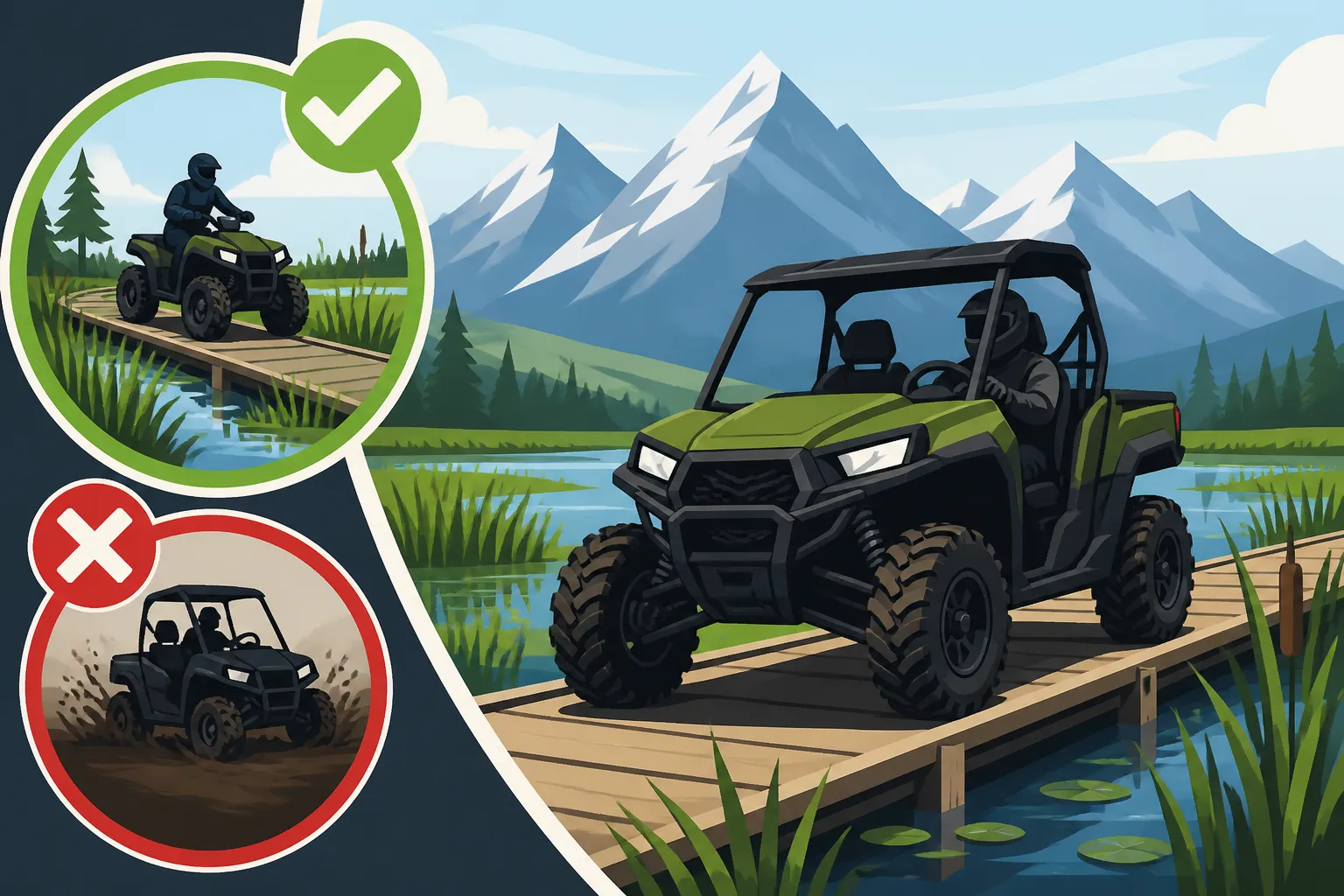
Always, always stay on marked and designated trails. If a trail crosses a wetland, it's usually designed or maintained to minimize impact, or it's an existing route that's part of an approved trail system. If you encounter conditions that are too wet, too muddy, or simply look like they could cause significant damage, it's always best to turn back. There's no shame in preserving the trail for future riders. Sometimes, a short section of a trail will be excessively muddy; while having quality components from SuperATV like heavy-duty axles might help your machine handle the stress, the responsible action is to assess if pushing through will cause excessive rutting or damage, and if so, to find an alternative or turn around.
Minimizing Your Impact and Protecting the Environment
Embracing the "Tread Lightly" principles is paramount when riding in Alaska's sensitive environments. This means traveling responsibly on land and water, respecting the rights of others, educating yourself, avoiding sensitive areas, and leaving a minimal impact. When riding through wetlands, even on designated trails, try to minimize wheel spin and travel at a speed that reduces disturbance. Slow and steady often causes less impact than high-speed, aggressive riding.
Carrying out what you carry in is a given – pack it in, pack it out. This includes all trash, broken parts, and anything else you brought with you. Avoiding sensitive areas like stream crossings where fish might be spawning or heavily vegetated areas off-trail is critical. If you see illegal activity or significant trail damage, such as deep ruts or illegal bypasses around wet areas, consider [Reporting Trail Damage on Alaska State Land] to the appropriate land management agency. They can often intervene to repair damage or enforce regulations, helping to protect these beautiful places for everyone. Even if your UTV is outfitted with SuperATV rock sliders, ensuring your machine can withstand impact, the goal is always to prevent any form of environmental degradation, not to push the limits of what the terrain can endure.
| Land Type | General Wetland Riding Rule (Unfrozen Ground) | General Wetland Riding Rule (Frozen Ground) | Key Consideration |
|---|---|---|---|
| State Land (DNR) | Restricted to designated trails; permit required in some areas. | Generally more permissive, but specific areas may have restrictions. | Check [Alaska's Statewide General Permit for ATV Use] and specific area rules. |
| Federal Land (BLM) | Restricted to designated routes and trails. | Follow designated routes; some areas may close. | Consult BLM field office for Travel Management Plans. [Alaska BLM Land Riding Rules] |
| Federal Land (USFS) | Restricted to designated routes and trails. | Follow designated routes; some areas may close. | Consult Forest Service office for Motorized Vehicle Use Maps. [Alaska Forest Service Land Riding Rules] |
| Federal Land (USFWS Refuges) | Highly restricted; often prohibited outside specific access routes for subsistence/hunting. | Highly restricted; often prohibited outside specific access routes. | Very strict rules; check refuge-specific regulations. [Are ATVs Allowed on an Alaska Wildlife Refuge?] |
| Borough/Municipal | Varies widely; check local ordinances for specific areas. | Varies widely; check local ordinances. | Local rules can be stricter than state/federal. [Alaska Municipal ATV Ordinances] |
| Private Land | Requires explicit permission from the landowner. | Requires explicit permission from the landowner. | Trespassing is illegal. Always ask first. |
Disclaimer
This article is for general informational purposes only and does not constitute professional advice. Laws, prices and regulations vary by location and change over time. Consult a qualified professional for guidance on your specific situation.