Alaska Roads Posted 45 or Lower
Riding an ATV or UTV in Alaska is a quintessential experience for many, offering unparalleled access to stunning backcountry and remote cabins. But the moment you consider taking your machine on a public road, the rules can feel like navigating a maze of confusing signage and whispered advice. Many riders get tangled up trying to figure out where they can legally operate their all-purpose vehicle (APV) and where they absolutely cannot, especially when it comes to speed limits. This guide aims to clear up that confusion, focusing specifically on how Alaska's "45 mph or lower" rule impacts your ability to ride your APV on the state's vast network of roads.
Understanding Alaska's All-Purpose Vehicle Road Rules
Alaska's approach to APVs on public roads is a bit unique, shaped by the state's vast distances, diverse terrain, and the vital role these machines play in many communities. Unlike some Lower 48 states where road-legal ATVs are commonplace everywhere, Alaska has a more nuanced system, designed to balance rider access with public safety and infrastructure preservation. It's not a blanket "yes" or "no," which is often the source of frustration for riders trying to do the right thing. You’re trying to enjoy the freedom of the trails without breaking the law, and that means understanding the specifics.
For many Alaskans, their ATV or UTV isn't just a recreational toy; it's a workhorse, a hunting vehicle, a primary mode of transportation for subsistence, or a lifeline connecting them to their cabins. The state recognizes this, but also knows that these machines behave differently than cars and trucks on paved or even well-maintained gravel roads. So, the regulations are a compromise, allowing limited road use under very specific conditions.
The "All-Purpose Vehicle" Definition in Alaska
First off, it's crucial to understand what Alaska defines as an "all-purpose vehicle," or APV, for the purpose of road use. This isn't just any old four-wheeler or side-by-side. The state law specifically categorizes certain machines as APVs, which affects everything from registration to how you can operate them on roads. Generally, we're talking about machines designed for off-road use but which meet specific criteria for registration and limited road operation. This classification is key because if your machine doesn't fit the APV definition, then none of these road rules even apply to you, and you're likely limited strictly to private land or designated off-road trails.
An APV in Alaska is generally a motorized vehicle with a weight of less than 1,000 pounds, a width of less than 48 inches, and an engine size of less than 1,000 cubic centimeters. It must have at least three low-pressure tires. This definition specifically excludes snowmobiles, which have their own set of rules, and certain other vehicles like homemade ATVs or those with tracks, as outlined in [Machines Alaska Will Not Register as an APV]. Understanding this foundational definition is the first step to knowing if your machine has any hope of legally touching a public road. Without this designation, your machine is purely an off-road vehicle, and any road use is strictly prohibited.
Why Roads Are a Grey Area for ATVs
The reason roads are such a "grey area" for ATVs in Alaska isn't just about speed; it's about the inherent design of the machines and the safety concerns they present when mixed with traditional vehicle traffic. ATVs and UTVs are built for rugged terrain, with knobby tires, high ground clearance, and suspensions designed to absorb bumps, not necessarily for smooth pavement or high-speed stability. Their braking systems might be different, their visibility lower, and their handling characteristics on hard surfaces less predictable than a car's.
Imagine trying to navigate a busy intersection on a quad designed for mud pits; it’s not ideal. The state is trying to find a balance where people can get from point A to point B using their machines for legitimate purposes, especially in communities where roads are scarce or serve as access points to trails, without creating undue risk. This balancing act leads to specific rules, like the 45 mph limit, to mitigate some of those risks. It's about safety first, for both the APV rider and other motorists sharing the road. This is why you'll find restrictions not just on speed, but also on where and when you can ride, and what equipment your machine needs to have, as detailed in [Alaska APV Road Rules Explained].
Navigating the "45 MPH or Lower" Rule
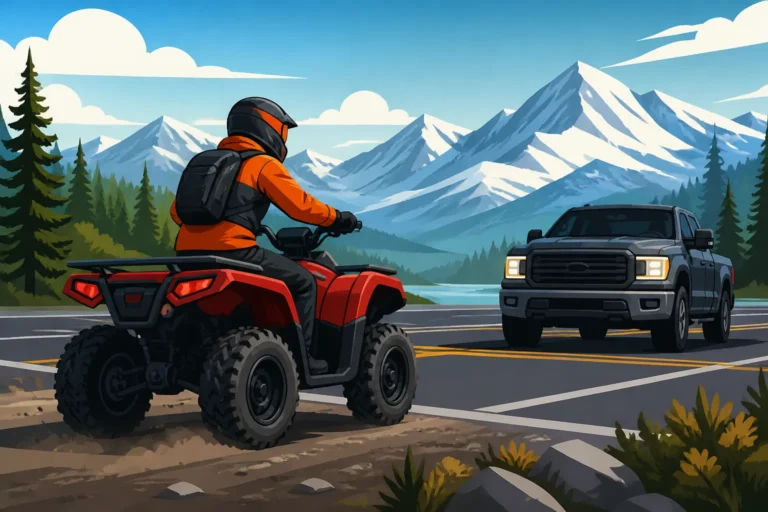
This is where the rubber meets the road, quite literally. Alaska law specifies that if you're operating an APV on a public highway or road, it must be on a section where the posted speed limit is 45 mph or lower. This isn't just a suggestion; it's a hard and fast rule that can land you in trouble if you ignore it. Many riders initially misunderstand this, thinking it means they can go 45 mph on any road. That's not the case. It means you can only operate on roads where the maximum posted speed limit for that section of road is 45 mph or less. If you see a sign that says "Speed Limit 55," even if you only drive 45 mph, you're breaking the law by merely being on that stretch of road.
This rule is a critical differentiator for APV riders in Alaska. It immediately restricts access to most major highways and arterial roads, pushing APV use towards more rural, secondary, or local roads. The rationale is largely safety: higher speeds mean less reaction time, greater impact forces in a collision, and more instability for machines not engineered for freeway speeds. It's designed to keep these vehicles in environments where lower speeds are already the norm and traffic volume is generally lower.
What "Posted Speed Limit" Actually Means
When the law says "posted speed limit 45 mph or lower," it's referring to the actual speed limit signs you see along the road. It's not about the speed you choose to drive, but the speed limit that applies to all vehicles on that particular stretch of road. This is an important distinction because some riders mistakenly believe they can ride on any road as long as they don't exceed 45 mph, which is a common and costly misconception.
Think of it this way: if you're on a road with a 60 mph speed limit, even if you putter along at 40 mph, you are in violation simply because the posted limit is over 45 mph. Troopers and local law enforcement will be looking at the signs, not your speedometer. This means you need to be constantly aware of the posted limits as you ride. A road might start out at 45 mph, allowing you legal access, but then transition to 55 mph a mile down the line. You'll need to know exactly where that transition occurs and exit the road if it goes above the allowed limit. Understanding this nuance can save you from a ticket and ensure you're riding safely and legally. For more on this, check out [Why a Highway Posted Above 45 Is Off Limits].
Practical Implications for Road Riding
The 45 mph rule has significant practical implications for planning your rides. It means you can't simply hop on your APV and take the quickest route to your destination if that route involves higher speed limit roads. You'll need to study maps, know local ordinances, and be constantly vigilant for speed limit signs. This often means taking a longer, more circuitous route on secondary roads, gravel roads, or even unimproved paths that run parallel to main highways.
For example, if you're riding from Palmer to Wasilla, you generally won't be able to use the Parks Highway directly, as much of it is posted above 45 mph. Instead, you might need to use a network of side roads, or even ride on the shoulder where allowed, being mindful of changing speed limits. This is also why many communities have their own specific rules for APV use within city limits, often restricting access even further, or designating specific "APV corridors." It's about understanding the mosaic of local and state regulations rather than looking for one simple answer. It can be a hassle, especially when you just want to get to the trailhead, but it’s the reality of navigating Alaska’s roads on an APV.
Specific Road Types Where APVs Are Allowed
While the 45 mph rule is the overarching guideline, it naturally funnels APV use towards certain types of roads. Generally, these are roads that inherently have lower speed limits, less traffic, and are often less developed. This includes a lot of Alaska's rural infrastructure, where an APV might be the most practical or even the only way to get around for parts of the year.
This is where you'll find the most legal opportunities to ride your machine on public thoroughfares. It's not about paved vs. gravel necessarily, but about the official speed designation of that stretch of road. Many communities in Alaska, especially those off the main road system or in more remote areas, have an abundance of these types of roads.
Gravel Roads and Unimproved Paths
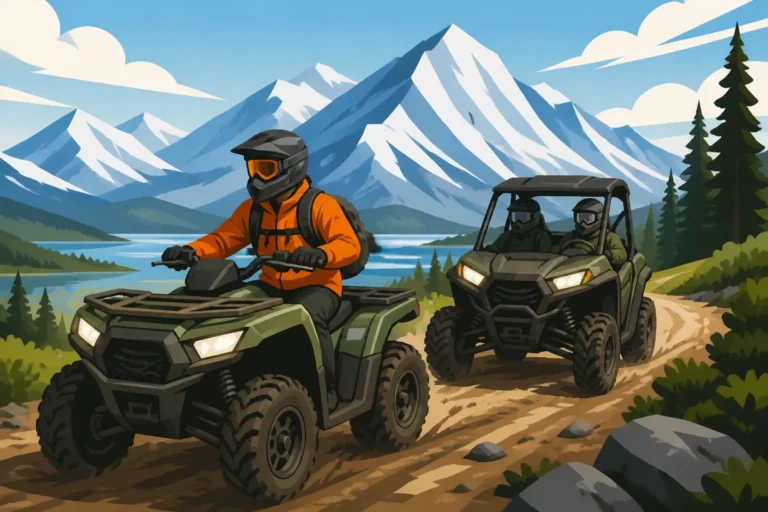
Gravel roads are often the most common type of public road where you'll find APVs legally operating. These roads, by their very nature, usually have lower posted speed limits – often 45 mph or less – due to their surface, dust, and potential for washboarding or potholes. In many rural parts of Alaska, gravel roads are the primary arteries, connecting homes, cabins, and trail systems. Riding on these roads can be a fantastic experience, offering a blend of utility and adventure. [Alaska Rules for Riding a Gravel Road] details more specific considerations for this type of terrain.
Beyond official gravel roads, you might encounter unimproved paths, old logging roads, or maintenance trails that are technically public access ways but rarely see conventional vehicle traffic. These often fall under the "45 mph or lower" umbrella and are prime candidates for APV use. However, always verify their status. Just because a path looks abandoned doesn't mean it's automatically legal for APVs, and trespassing is always a concern. When exploring these less-traveled routes, it's wise to have good tires, maybe even an aftermarket set from a company like SuperATV, to handle the varied conditions from loose gravel to muddy sections.
Local Streets in Qualifying Communities
Many smaller towns and villages in Alaska rely heavily on APVs for local transportation. In these communities, you'll often find that the speed limits on local streets are well within the 45 mph threshold. Some villages even have specific ordinances that embrace APV use, allowing them to operate freely on most streets to get to the store, the clinic, or a friend's house. These are typically places where the road network is less complex, traffic is minimal, and the APV is a cultural norm.
However, even in APV-friendly communities, there can be exceptions. Main street areas, school zones, or specific residential developments might have stricter rules or even outright bans on APV use. Always check local city or borough ordinances before assuming you have full access. It's not uncommon for a town to have a general "APV permitted" rule but then ban them from specific high-traffic areas for safety. Knowing these local nuances is paramount to a trouble-free ride.
| Road Type | Typical Speed Limit | APV Access (State Rule) | Common Use Cases | Key Considerations |
|---|---|---|---|---|
| State/Federal Highways | 55-70 mph | No | Inter-city travel, high traffic | Avoid; typically well above 45 mph limit |
| Major Arterials (Urban) | 45-55 mph | Limited/No | Connecting urban areas, moderate traffic | Check specific sections; often exceed 45 mph |
| Secondary Gravel Roads | 25-45 mph | Yes | Rural access, trail connections | Dust, washboarding, other vehicles, wildlife |
| Local Residential Streets | 15-35 mph | Yes | Neighborhood travel, short commutes | Check local ordinances, school zones, pedestrians |
| Unimproved/Service Roads | Varies, often < 35 mph | Yes | Remote access, utility corridors | Verify public access, rough terrain, private land |
| Shoulders (Adjacent to Hwy) | Varies, if allowed | Limited | Crossing highways, short transitions | Must be explicitly allowed, safety highly critical |
Crossing a Highway and Riding Shoulders
There are specific instances where you might legally encounter a higher speed limit road. Alaska law does allow APVs to cross a highway, even if the posted speed limit is above 45 mph, but this is for direct crossings only and must be done safely and efficiently. You cannot ride along the highway for any significant distance, just traverse it at a 90-degree angle to get from one legal APV route to another. [Crossing a Highway on a Quad in Alaska] provides more detail on this specific maneuver.
Riding on the shoulder of a highway is another area with strict limitations. In some cases, if the shoulder is wide enough and the APV is making a short transition between two legal APV roads, it might be permitted. However, this is not a general permission to use shoulders as alternative roadways. The intent is usually for minimal, brief travel to facilitate movement between designated APV-friendly areas. Always exercise extreme caution when near high-speed traffic, and ensure your machine is clearly visible. Adding bright flags or upgraded lighting from a brand like SuperATV can enhance safety in these situations.
Equipment, Licensing, and Insurance Requirements for Road Use
Just because a road has a 45 mph speed limit doesn't mean you can just hop on your machine and go. Alaska has specific requirements for APVs that operate on public roads, covering everything from the rider's license to the machine's equipment and insurance. These are non-negotiable and are in place to ensure a basic level of safety and accountability when APVs share space with other vehicles.
Many riders, especially those new to Alaska or transitioning from purely off-road riding, overlook these requirements. But a quick stop by a state trooper can quickly turn an enjoyable ride into a costly citation if your machine isn't up to snuff or you're missing the proper documentation. It's not just about the posted speed; it's about being fully prepared for a road environment.
Driver's License and Insurance
First and foremost, if you're operating an APV on any public road in Alaska, you must possess a valid driver's license. This isn't just an "off-road endorsement"; it's a standard Class D driver's license, the same one you'd need to drive a car or truck. This requirement underscores the state's view that road-legal APVs are, in these contexts, treated much like other vehicles on the road, requiring the same basic level of driving competency. [Alaska Requires a Class D License] explains this in more detail.
In addition to a license, Alaska law mandates that APVs operated on public roads must carry liability insurance. This is crucial for protecting yourself and others in the event of an accident. Just like with cars, this insurance covers damages or injuries you might cause to another person or their property. Driving an uninsured APV on a public road is a serious offense and can result in significant fines and penalties. While the exact coverage amounts can vary, the principle is clear: if you're on the road, you need to be insured. Don't assume your homeowner's policy or general vehicle insurance automatically covers your APV on public roads; always verify with your insurance provider. [Alaska Requires Liability Insurance for an APV] is a good resource for understanding these obligations.
Essential Equipment for Road-Legal APVs
Beyond licensing and insurance, your APV itself needs to meet certain equipment standards to be street-legal on qualifying roads. These aren't suggestions; they are explicit requirements designed to make your machine visible, controllable, and safe for road use. Many stock ATVs and UTVs, especially those not designed with street legality in mind, will need aftermarket modifications to meet these standards.
Here's a breakdown of the typical requirements you'll encounter, some of which you might find yourself sourcing from a reliable aftermarket provider like SuperATV:
- Headlights and Taillights: Your APV must have at least one functional headlight visible from 100 feet and at least one functional taillight visible from 1,000 feet to the rear. This is especially important for riding at dusk, dawn, or in Alaska's long winter nights.
- Brakes: Your machine must have a functional braking system that can stop it safely.
- Muffler and Emission Controls: All APVs must have an adequate muffler to prevent excessive noise, and their exhaust system must be in good working order. Exhaust cutouts are generally not allowed.
- Spark Arrester: To prevent wildfires, your machine must be equipped with a U.S. Forest Service-approved spark arrester. This is critical for off-road and road use in dry conditions.
- Reflectors: APVs must have at least one red reflector on the rear and amber reflectors on each side, visible from 1,000 feet. These greatly enhance side visibility for other drivers.
- Mud and Snow Flaps: To minimize debris thrown by tires, your APV may need mud flaps or similar equipment, particularly on the rear.
- Self-Closing Throttle: The throttle must be designed to return to the idle position when the rider releases it.
- Horn: A functional horn or other warning device is usually required.
These equipment rules are designed to bring APVs closer to the safety standards of other vehicles on the road. For a comprehensive list of what you need, refer to [Alaska OHV Equipment Requirements].
Community-Specific Road Ordinances
While state law provides the overarching framework for APV road use, it's crucial to understand that individual boroughs and cities in Alaska have the authority to enact their own ordinances that can further restrict or, in some cases, even expand APV access within their specific jurisdictions. This means that what's legal in one town might be completely illegal just a few miles down the road in another. This patchwork of regulations is one of the most confusing aspects for riders trying to navigate Alaska.
It's common for communities, especially larger ones, to outright ban APVs from most or all public roads within their boundaries, regardless of the speed limit. These bans are often driven by concerns about traffic safety, noise, and the general integration of off-road vehicles into a more urban environment. For residents of these areas, APVs are strictly for trailers to the trailhead or for use on private land.
Communities That Ban APV Road Use
Several of Alaska's larger population centers and their surrounding boroughs have chosen to ban APVs from most public roads within their limits. These include, but are not limited to, cities like Anchorage, Fairbanks, and Juneau, as well as many of their suburban and urbanized areas. In these places, you generally cannot legally ride your APV on any public road, even those posted at 45 mph or lower, unless it's a very specific, designated exception (which are rare). The rule here is simple: if you're in Anchorage, your APV should be on a trailer when it's on a public road.
The reasons for these bans often stem from high traffic volumes, denser populations, and a desire to maintain traffic flow and safety. APVs, with their different handling characteristics and lower profiles, are seen as a greater risk in these environments. It's a significant point of frustration for many urban APV owners, but it's the reality of local control. It’s always best to check the specific municipal code of any city or borough you plan to ride in. [Alaska Communities That Ban APV Road Use] and [Eight Communities That Opted Out] provide a good overview of some of these restrictions.
Communities That Allow Limited APV Road Use
On the flip side, many smaller, more rural communities, particularly in areas off the main road system or in the Mat-Su Valley and parts of the Interior, embrace APV use on local roads. In these places, it's not uncommon to see residents using their quads and side-by-sides for everything from short commutes to the store, to accessing hunting grounds, or simply as a convenient way to get around the village. These are the areas where the state's 45 mph rule truly comes into play, as most local roads will naturally fall within that limit.
Even in these APV-friendly communities, there might still be nuances. Some may restrict APV use during certain hours, on specific main streets, or around schools. Others might require extra decals or permits beyond state registration. The key takeaway is: never assume. Always make it a point to inquire with local authorities, check community websites, or look for posted signs detailing local APV rules when you're in a new area. What's accepted in Nome might be very different from what's accepted in Palmer. [Alaska Boroughs With Their Own Rules] gives insight into how local governments can influence these regulations.
Safety and Best Practices for Road Riding
Even when you're legally operating your APV on a road posted 45 mph or lower, the reality is that you're still sharing the road with other vehicles that are often larger, faster, and operated by drivers not always accustomed to seeing an ATV or UTV. Therefore, safety isn't just about following the rules; it's about exercising extreme caution, being highly visible, and riding defensively.
Riding an APV on any public road introduces a different set of risks than off-road riding. You're no longer just dealing with natural obstacles; you're dealing with traffic, distracted drivers, and hard, unforgiving surfaces. A little extra preparation and a heightened sense of awareness can go a long way in ensuring your road rides are safe and enjoyable, keeping you and your machine out of harm's way.
Enhancing Visibility on the Road
Visibility is paramount when riding an APV on the road. These machines are often smaller and lower to the ground than cars and trucks, making them harder for other motorists to spot, especially in Alaska's often-challenging weather conditions like fog, rain, or low light. Do everything you can to make yourself and your machine stand out.
Consider the following:
- Wear Bright Colors: Opt for brightly colored helmets, jackets, and vests. Fluorescent yellow, orange, or green are excellent choices, especially with reflective strips.
- Lights On: Always have your headlights and taillights on, even during the day. Consider adding auxiliary LED lights for increased visibility, especially from the front and rear. Companies like SuperATV offer a range of lighting solutions that can significantly improve your machine's road presence.
- Flags: Mounting a bright, tall flag on the rear of your machine can make you more visible over rises in the road or when partially obscured by other vehicles.
- Reflectors: Ensure all required reflectors are clean, intact, and properly positioned. You might even consider adding extra reflective tape to your machine.
- Ride Predictably: Maintain a consistent speed and lane position (where applicable). Avoid sudden swerving or erratic movements that might confuse other drivers.
Remember, even if you see them, they might not see you. It's an unfortunate truth when sharing the road on a smaller vehicle.
Defensive Riding and Situational Awareness
Defensive riding is your best friend when on any public road, especially on an APV. Assume other drivers don't see you and be prepared to react. This mindset can literally be a lifesaver.
Key defensive strategies include:
- Scan Constantly: Keep your eyes moving, checking mirrors, and scanning ahead, to the sides, and behind you for potential hazards. Look for vehicles entering the road from driveways, turning without signaling, or approaching quickly from behind.
- Maintain Distance: Keep a safe following distance from vehicles ahead of you. This gives you more time to react if they stop suddenly.
- Road Hazards: Be extra vigilant for road hazards like potholes, gravel patches, oil slicks, or debris that might not be an issue for a car but could be dangerous for an APV.
- Intersections: Approach intersections with extreme caution. Even if you have the right-of-way, make eye contact with other drivers to ensure they see you before proceeding.
- Weather Conditions: Alaska's weather can change rapidly. Rain, snow, ice, or even just wet gravel can significantly impact your APV's handling and braking capabilities. Adjust your speed and riding style accordingly.
By being proactive and aware of your surroundings, you significantly reduce the risk of an accident. While the freedom of riding your APV on Alaskan roads is incredible, it comes with the responsibility of ensuring your own safety and the safety of those around you.
Disclaimer
This article is for general informational purposes only and does not constitute professional advice. Laws, prices and regulations vary by location and change over time. Consult a qualified professional for guidance on your specific situation.