Alaska Riding in Fairbanks
Fairbanks, with its vast wilderness and endless skies, calls to many of us who love to explore on an ATV or UTV. But if you've ever tried to figure out where you can actually ride your machine within the Fairbanks North Star Borough, you know it can feel like navigating a maze blindfolded. This guide is here to shed some light on the reality of riding ATVs and UTVs in and around Fairbanks, helping you understand the local nuances and legalities so you can enjoy the trails without unexpected headaches.
The Fairbanks ATV/UTV Landscape: What's Different Here?
Riding an ATV or UTV in Alaska is a quintessential experience, but what holds true for a remote village or a vast public land area out in the Mat-Su Valley doesn't always apply within the more developed and populated Fairbanks North Star Borough. This can be a huge source of frustration for riders, especially those new to the area or visiting from other parts of the state or country. You see the trails, you hear the rumble of machines, but the rules aren't always crystal clear from the saddle.
The primary difference stems from local ordinances. While the state of Alaska has general rules governing all-purpose vehicles (APVs), individual boroughs and cities have the power to enact their own, often more restrictive, laws regarding where and how these machines can be operated. Fairbanks, being a major population center, leans towards tighter controls, particularly concerning road use and access within city limits and more populated areas of the borough. This means that unlike some other areas, you can't just assume open season on every trail or gravel road you encounter. It requires a bit more homework, but it's worth it to avoid fines or unintended issues. It’s no secret that [Alaska Bans APVs in Fairbanks] on most city streets, which immediately sets it apart from communities that might allow limited street access.
Understanding Borough Ordinances vs. State Law
It’s easy to get caught up in the excitement of a new machine or a crisp day, but taking a moment to differentiate between state law and borough ordinance is crucial in Fairbanks. State law, for instance, dictates general registration requirements for your ATV or UTV if you plan to ride on public land. It also sets forth requirements for things like insurance if you operate on a road or highway (even if briefly crossing). However, the Fairbanks North Star Borough, through its own legislative process, has crafted specific rules that often supersede or add to these state requirements, particularly concerning areas of operation.
For example, while state law might outline helmet requirements for riders under 16, a borough ordinance could specify limitations on where riders of any age can operate, or even outright prohibit certain types of machines from specific public spaces. This layered approach to regulation means you always need to consider the most restrictive rule that applies to your location. It's not about trying to find loopholes; it's about being a responsible rider and respecting the local community's desire to manage noise, safety, and environmental impact.
Challenges for Fairbanks Riders
Fairbanks riders face unique challenges that riders in, say, the Knik River Public Use Area might not. For starters, access to extensive, legal trail systems directly from urban areas is limited. This often means trailering your machine some distance to reach designated riding areas, which adds an extra layer of planning and cost to your outing. The sheer size of the borough means that while there's plenty of open land, much of it is private, federal, or state land with its own set of rules, some of which prohibit or severely restrict ATV/UTV use.
Another challenge is the varied terrain and extreme weather. Fairbanks experiences everything from deep, silty glacial mud in spring and summer to extreme cold and deep snow in winter. Your machine needs to be equipped for these conditions, which might mean specialized tires, a good winch, and even a heavy-duty skid plate. Companies like SuperATV offer a range of robust accessories that many Fairbanks riders find indispensable for tackling the demanding conditions, ensuring their machines can stand up to the challenge. All of these factors contribute to the complexity of planning a ride in the Interior, but with proper preparation, the rewards of exploring Alaska’s vast beauty are immense.
Where Can You Actually Ride Your ATV or UTV in Fairbanks?
This is the burning question for many and, honestly, it's not always a straightforward answer. The Fairbanks North Star Borough is a huge area, encompassing everything from densely populated city blocks to sprawling rural homesteads and vast tracts of wilderness. The key to successful and legal riding lies in knowing who owns the land and what their specific rules are. You can't just assume that because it's "Alaska," every piece of ground is fair game for your machine.
Broadly speaking, your best bets for riding in and around Fairbanks will be on designated trails on public land, certain private lands with permission, or on your own private property. Riding on public roads within Fairbanks, particularly paved ones, is almost universally restricted. For specific examples, understanding [Alaska State Land Riding Explained] is a great start, as many opportunities exist on state-managed lands outside the immediate city grid.
Public Land Riding Opportunities Near Fairbanks
While Fairbanks city limits are largely a no-go for recreational ATV/UTV riding, the surrounding areas, particularly state lands, offer significant opportunities. The Tanana Valley State Forest, for instance, has extensive areas where ATV/UTV use is permitted on designated trails and unmaintained roads. These areas are often a bit of a drive from Fairbanks proper, requiring you to trailer your machine, but they open up vast stretches of beautiful Alaskan wilderness.
It's absolutely essential to consult current land status maps and specific management plans for any area you intend to ride. What might be allowed in one section of state forest could be restricted in another, particularly if it's near a wildlife refuge or a designated recreation area. Always check with the Alaska Department of Natural Resources (DNR) or the local borough office for the most up-to-date information. They are your best resource for avoiding accidental trespass or violations. Some areas might require [Alaska General Permit Requirements] for state land use, so be sure to check that as well.
Riding on Private Land and Designated Trails
If you own private land outside city limits, you generally have the right to ride your ATV or UTV on your property. This is where many rural residents enjoy their machines without having to worry about complex public land regulations. However, if you're riding on someone else's private property, express permission is non-negotiable. Always ask first, and ideally, get that permission in writing. This not only prevents potential legal issues but also fosters good relationships within the community.
Beyond personal property, there are sometimes privately managed or designated trails that allow ATV/UTV use, often for a fee or as part of a club membership. These can be excellent resources, as they are typically well-maintained and clearly marked, offering a safer and more predictable riding experience. While not as common as in some other regions of Alaska, researching local riding clubs or community groups might uncover such opportunities. For those who frequently venture out with their machines, investing in durable accessories from a company like SuperATV can significantly enhance the longevity and capability of your UTV, making those longer rides on designated trails more enjoyable and less prone to mechanical issues.
Navigating Fairbanks Road Rules for ATVs and UTVs
One of the biggest sources of confusion and frustration for ATV and UTV riders in Fairbanks revolves around road use. Many people move to Alaska or visit with the assumption that they can simply ride their machine down the road to a trailhead, or even use it for errands within town. The reality in Fairbanks is much stricter. For the most part, public roads in the Fairbanks North Star Borough, especially paved and maintained roads, are off-limits to ATVs and UTVs. This stands in stark contrast to many rural villages where these machines are primary modes of transportation.
The general rule of thumb is that ATVs and UTVs are not considered "street legal" in the same way a car or motorcycle is, and thus, their operation on most public roadways is prohibited. This isn't just about safety; it's about traffic flow, noise ordinances, and the classification of these vehicles under Alaska state law and local borough ordinances. While [Alaska APV Road Rules Explained] covers the state perspective, it's the local rules that truly shape what you can and cannot do in Fairbanks.
The General Prohibition on Road Use
Within the Fairbanks North Star Borough, especially the denser areas, you simply cannot legally ride your ATV or UTV on public roads. This includes city streets, state highways that pass through the borough, and most maintained borough roads. This is a crucial distinction that new residents or visitors often overlook, leading to citations. The intent is to keep these machines, designed for off-road use, off busy thoroughfares where they can pose a safety risk to themselves and other motorists, and contribute to noise complaints in residential areas.
There are very limited exceptions, such as crossing a road at a 90-degree angle to access a legal riding area, or using an unmaintained borough road that is explicitly designated for multi-use access. However, these exceptions are rare and highly specific. Do not assume you can ride on the shoulder, or for short distances, without first confirming the exact legality for that specific stretch of road with local authorities. Relying on "everyone else does it" is a recipe for a ticket and an expensive lesson. Remember, [Alaska's 45 mph Road Limit for APVs] is a general state rule for where APVs are permitted on roads, but in Fairbanks, the primary issue is whether they're permitted at all.
Crossing Roads and Limited Access Points
So, what about crossing a road to get to a trail? In some specific instances, and always according to state law, an APV rider might be permitted to cross a public road or highway at a 90-degree angle if doing so is the safest and most direct way to access a legal riding area on the other side. This is not a license to ride down the road, even for a short distance; it's a very specific, limited maneuver.
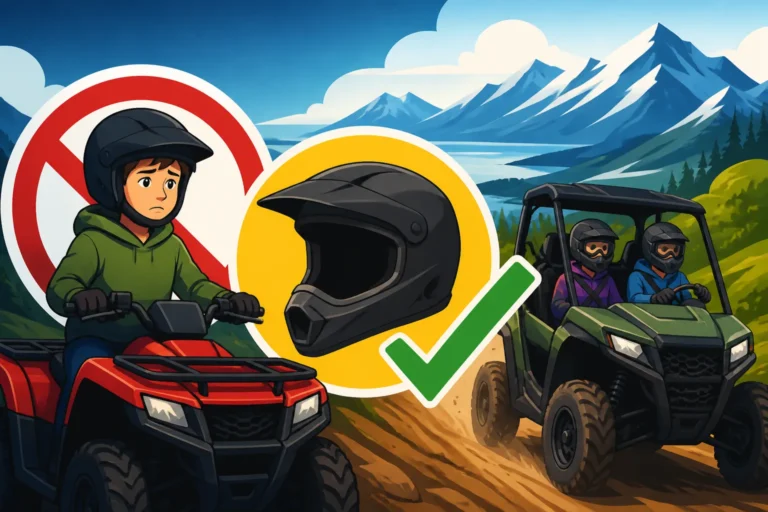
When making such a crossing, you must yield to all vehicular traffic, obey all traffic laws, and exercise extreme caution. Your machine should have the necessary equipment for limited road operation, such as functional headlights, taillights, and reflectors, as outlined in [Alaska OHV Equipment Requirements]. It’s also wise to wear a helmet, regardless of age, as safety should always be your top priority, especially when interacting with road traffic. For young riders, keep in mind [Alaska Helmet Law for Riders Under 16] is always in effect. If you're unsure about a specific crossing, it's always best to find an alternative route or trailer your machine to the other side. Better safe than sorry, and certainly better than a costly citation.
Gear and Considerations for Fairbanks Riding
Riding an ATV or UTV in Fairbanks isn't just about knowing where you can go; it's also about being prepared for what Alaska throws at you. The Interior can be unforgiving, with extreme temperatures, rapidly changing weather, and often remote conditions. Equipping yourself and your machine properly is not just a recommendation; it's a necessity for a safe and enjoyable experience. From cold-weather gear to crucial machine upgrades, thinking ahead can make all the difference when you're miles from the nearest paved road.
Consider the diverse seasons: mud and mosquitoes in summer, freezing temperatures and deep snow in winter. Each presents its own set of challenges and demands specific preparations. Having the right setup, much like ensuring you have robust parts from a company like SuperATV for critical components, can prevent a minor issue from becoming a major backcountry emergency.
Essential Gear for All Seasons
No matter the time of year, certain gear is non-negotiable for Fairbanks riding:
- Helmets: Always wear one. While state law specifically mandates helmets for riders under 16, a helmet is your best protection against head injury, period. Invest in a good quality, CPSC-compliant helmet that fits well.
- Layered Clothing: Alaska weather changes quickly. Dress in layers, avoiding cotton, which loses its insulating properties when wet. Synthetics and wool are your friends. This applies to [Alaska Riding in Winter] just as much as a cool summer day.
- Navigation & Communication: Cell service is non-existent in many riding areas. Carry a GPS device, a satellite messenger (like an InReach or SPOT), and physical maps. File a trip plan with someone responsible.
- First Aid Kit: A comprehensive kit, suitable for trauma and minor injuries, is essential. Know how to use it.
- Repair Kit & Tools: Spare parts (spark plugs, belts), tire repair kit, basic tools, zip ties, duct tape. Know how to make basic field repairs.
- Winch: Especially useful for muddy or snowy conditions. Even if you're a seasoned rider, getting stuck happens. A good winch, perhaps one with a heavy-duty line from SuperATV, can be a lifesaver.
- Water & Food: Carry enough for your trip, plus extra for unexpected delays.
- Bear Spray: Black and brown bears are present. Know how to use bear spray effectively.
- Appropriate Tires: Aggressive tread for mud, or specialized snow tires for winter riding. [Alaska Mud and Snow Flap Rules] also indicate a need for robust protection against thrown debris.
Preparing Your Machine for Fairbanks Conditions
Beyond personal gear, your ATV or UTV needs to be ready for the demanding Alaska environment. Regular maintenance is paramount. Before every ride, check fluid levels, tire pressure, brakes, and lights. For the gnarlier trails, consider these upgrades:
- Skid Plates: Protect the underside of your machine from rocks, stumps, and ice.
- Heavy-Duty Suspension: The trails are often rough. Upgraded shocks and springs can improve ride quality and durability.
- Snorkels: If you anticipate deep water crossings, a snorkel system can protect your engine. Remember that [Alaska Rules for Riding a Frozen River] or through wetlands require special care and often have restrictions on [Alaska Wetland Travel Restrictions Explained] to prevent damage.
- Lighting: Beyond basic headlights and taillights, consider auxiliary LED light bars for enhanced visibility, especially when [Alaska Rules for Riding After Dark] come into play.
- Full Doors/Windshields (UTVs): Provide protection from cold, mud, and flying debris. Heated cabs are a luxury for winter.
- Reliable Battery: Cold weather drains batteries quickly. A robust battery and knowing how to jump-start in the field are important.
Ultimately, riding in Fairbanks offers incredible adventures, but it demands respect for the land, adherence to local rules, and thorough preparation. By understanding the specific challenges and opportunities, you can ensure your rides are safe, legal, and truly unforgettable.
Disclaimer
This article is for general informational purposes only and does not constitute professional advice. Laws, prices and regulations vary by location and change over time. Consult a qualified professional for guidance on your specific situation.